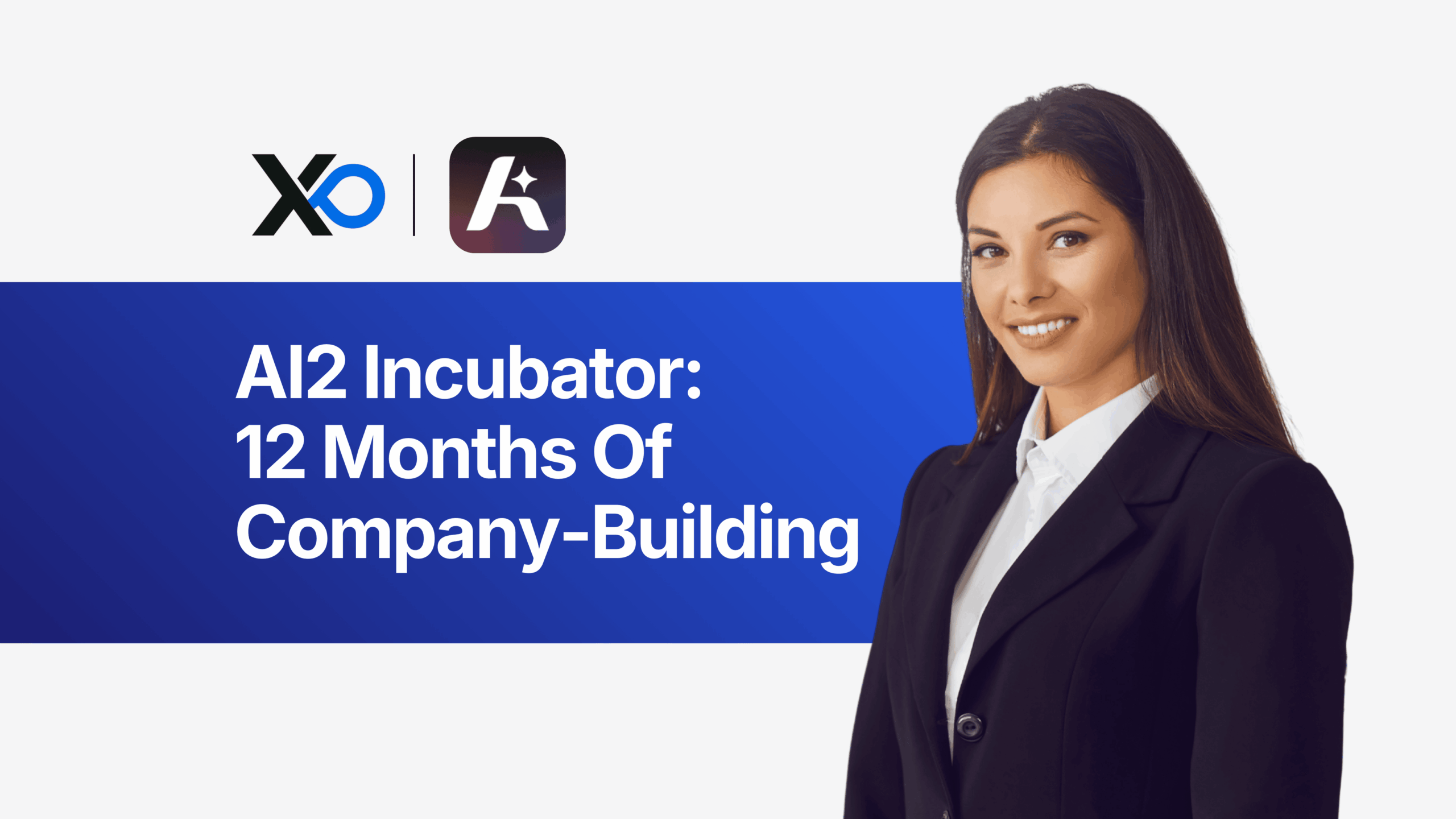
Apply to AI2 Incubator if you’re building an applied AI startup and want long-term, hands-on company building (not a short bootcamp) with founder-aligned terms.
TL;DR
This article provides a short overview of how AI2 Incubator works and how to apply through XRaise.



- Designed for top technical founders and deep domain experts ready to build full-time.
- Best fit for applied AI startups solving real-world problems (Seattle or hybrid/remote).
- Ideal timing is when you can show a credible wedge, early pilots, or near-term traction plan.
- Key benefits include up to $600K SAFE (cap-based) plus up to $1M+ non-dilutive cloud credits.
When Should You Apply to AI2 Incubator Accelerator?
Timing matters more for AI2 than for typical 8–12 week accelerators because it’s structured as a deep, hands-on incubation model “up to 12 months,” designed to go beyond surface-level mentorship.
Ideal stage to Apply to AI2 Incubator
You’re typically at the right moment if most of these are true:
- Your wedge is clear: one sharply defined user, workflow, or industry pain you can own.
- You can ship quickly: even if your model work is hard, your iteration loop is fast.
- You’re close to real-world validation: pilot conversations are active, or you can plausibly run them soon.
- You’re ready to commit: AI2 describes founders as needing to be “deeply engaged,” and full-time focus is the expectation once accepted.
Rolling admissions changes the “deadline” game
Unlike fixed-cohort programs, AI2 states it has rolling admissions, so you don’t need to wait for a single annual deadline. As a result, you should apply when your materials are strongest rather than when a calendar forces you.
Seattle vs remote: choose the operating mode that increases your output
AI2 describes remote incubation as supported, while also highlighting the option to work from “AI House” in Seattle. Practically, pick the mode that increases your pace:
- Remote/hybrid: keep your local customer access and team stability.
- Seattle relocation / time in AI House: concentrate your build cycle, recruiting, and network density.
For general timing strategy, use XRaise’s guide on When You Should Apply to an Accelerator.
How to Choose the Right Accelerator
Most founders pick accelerators based on brand. Better approach: pick based on compounding leverage.
1) Program model: incubation vs cohort bootcamp
AI2 positions itself as long-term, hands-on incubation rather than a short sprint. Therefore, it’s best for founders who want a partner to help build the company over time, not just polish a pitch.
2) Terms and economics: what you’re giving up
AI2 discloses two key economic elements:
- Equity: AI2 describes its incubation economics as 7% in common stock (same class as founders).
- Investment: up to $600K on a SAFE with a $10M cap, with staged allocations described for solo vs cofounding teams.
This matters because common-stock economics can align incentives differently than preferred-only accelerator structures.
3) Practical leverage: compute, pilots, hiring, and GTM
If you’re building applied AI, “mentorship” is vague unless it turns into:
- Compute runway (credits)
- Customer access (pilots)
- Hiring help (operators + recruiting)
- GTM clarity (packaging, pricing, commercialization)
AI2’s FAQ explicitly lists support across AI architecture/model development, UX/UI design, product strategy, customer pilots, hiring, fundraising, and more, so evaluate whether your current gaps match that list.
4) Evidence: outcomes and portfolio examples
AI2’s framework page highlights outcome-style stats (e.g., companies per year, venture funding rate, dollars raised, acquisitions). While you should still validate fit founder-to-founder, these metrics help you compare programs on expected upside.

How to Apply to AI2 Incubator Accelerator
If your priority is speed, reuse, and clean tracking, the best move is to Apply to AI2 Incubator on XRaise first.
Step 1: Create your XRaise founder account
Start on the XRaise startup platform and build your reusable base once: team, one-liner, demo links, traction, market, and deck.
Step 2: Open the AI2 Incubator program page on XRaise
Go to the AI2 Incubator accelerator profile on XRaise.
Step 3: Click “Apply Now” and submit on XRaise
Submit your application through XRaise so your answers stay reusable across your next 5–10 applications (especially helpful because AI programs often have overlapping questions on product, model strategy, data access, and GTM).
Step 4: Apply to AI2 Incubator accelerator with a “proof package”
Because AI2 focuses on applied AI and real-world outcomes, prioritize proof over hype:
- A crisp wedge (who, what workflow, what pain, why now)
- A working demo (even scrappy)
- Pilot-ready story (who will test it, how you’ll measure success)
- Founder advantage (technical depth or unique domain access)
- A 12-month plan (what you build, validate, hire, and sell, quarter by quarter)
Step 5: Build your backup shortlist in parallel
While you apply, shortlist alternatives inside the XRaise Accelerator Directory so you don’t lose momentum if timing shifts.
Benefits of Applying to AI2 Incubator Accelerator
1) Long-term company-building (not just advice)
AI2 repeatedly frames its model as deep, hands-on engagement and “up to 12 months” of personalized support, useful when your product requires real engineering, deployment constraints, and enterprise-grade trust.
2) Funding terms that are explicit
AI2 states:
- Up to $600K investment via SAFE with a $10M cap (with early allocations described by team shape and traction).
- 7% common stock as incubation economics.
This clarity helps you plan dilution and runway realistically.
3) Non-dilutive cloud credits for real experimentation
AI2 notes up to $1M+ in non-dilutive cloud credits, which can materially extend runway for training, inference, data pipelines, and experimentation.
4) Customer introductions and pilot access
In applied AI, pilots are everything. AI2 says it provides introductions to potential customers or design partners and emphasizes pilots as part of support.

Startup Perks AI Assistant
Have questions about credits? Let's chat instantly.
5) Community density (especially if you choose Seattle time)
AI2 highlights “AI House” and a founder/researcher/operator community in Seattle, while also supporting remote incubation. That flexibility is valuable if your customer base is elsewhere but you still want periodic network density.
Top Accelerators to Consider
Even if AI2 is your top choice, comparing against a few benchmarks makes your decision cleaner.
1) Y Combinator (global benchmark)
YC is still the most common benchmark for application quality and founder network effects. Use the XRaise guide to Apply to Y Combinator Accelerator as a reference for application crispness and interview readiness.
2) Founder’s Box (AI + narrative leverage)
If your technical clarity is strong but your “why now / why you” story is weak, Founder’s Box is a useful contrast because it emphasizes narrative and investor-ready communication. See Apply to Founder’s Box Accelerator.
3) Foundation Capital Accelerator (VC-backed perspective)
If your goal is to internalize fundraising psychology, term-sheet dynamics, and investor perspective early, a VC-backed program can be a better match. Reference: Apply to Foundation Capital Accelerator.
To explore more applied AI, incubators, and hybrid programs, use the full accelerator directory on XRaise.
Challenges of Applying to AI2 Incubator Accelerator
1) Dilution and structure complexity
AI2’s disclosed economics combine 7% common stock plus a SAFE investment structure. That’s not “bad” or “good” by default, however, it means you should understand:
- how the 7% is granted/structured (timing, paperwork, vesting if any)
- how the SAFE converts in your next priced round
- how future investors perceive the combination
AI2 explicitly compares itself to both accelerators and studios, which is helpful, still, you must do your own legal review.
2) High expectations on founder engagement
AI2 states founders should plan to be deeply engaged, and the model is not a light-touch bootcamp. Therefore, if your team can’t commit or your roadmap is too fuzzy, the program may create pressure rather than leverage.
3) Selectivity by design
AI2 emphasizes signal density and not competing on volume. As a result, the bar for “why you / why now” and execution speed is likely high.
4) Applied AI means real-world constraints
If your product depends on regulated environments, proprietary data, or complex deployment, you’ll need to show a realistic path to pilots and adoption, not just model performance.
Why Apply to AI2 Incubator Accelerator in 2025–2026
Applied AI is shifting from “cool demos” to deployment + distribution. In 2025–2026, the winners are teams that can:
- ship into real workflows,
- get pilots fast,
- price correctly,
- and prove ROI under real constraints.
AI2’s positioning, applied AI, long-term incubation, and practical support across pilots, hiring, and fundraising, maps directly to what founders now need to survive the noise.
For the broader market context, read XRaise’s analysis on AI Startup Investment 2025 – Funding Boom and AI Investment Bubble 2025 – XRaise Analysis.
Conclusion & Recommendations
If you’re a top technical founder or deep domain expert building applied AI, Apply to AI2 Incubator when you can articulate a sharp wedge, show a credible pilot path, and commit to a serious build cycle.
For extra background only (not as your primary application path), you can also review the official AI2 Incubator website.