
Dylan Field is the co-founder and CEO of Figma, but founders should treat him as more than a design-software operator. Public evidence shows Field appears to remain an active angel investor across software-driven manufacturing, workflow software and AI infrastructure.
Product-led and technical software founders may reasonably consider him, but this is not an “AI angel only” profile. Field’s portfolio is broader than AI, and no formal public angel mandate or personal check size was found.
TL;DR: Dylan Field Angel Investor Snapshot
| Area | Current evidence |
|---|---|
| Current role | Co-founder and CEO, Figma |
| Investor status | Active, based on 2025–2026 announcements |
| Observed stage | Seed, Series A, later-stage participation |
| Observed sectors | Product software, developer tools, AI infrastructure, workflow software |
| Geography | No public geography mandate confirmed |
| Check size | Not public |
| Strongest founder fit | Technical or product-led teams with a clear wedge |
Who Is Dylan Field?
Field co-founded Figma in 2012 and remains listed by Figma as CEO. Figma’s investor-relations profile also describes him as an angel investor.




For founders, the relevant biography is simple: Field built Figma as a collaborative product-design platform, then backed companies near product creation, technical tooling and workflow change.
Is Dylan Field Still an Active Angel Investor?
Yes. The public evidence supports an active classification as of August 27, 2026.
The clearest recent signal is Senra Systems. In June 2025, Senra announced a Series A led by Dylan Field and CIV. In July 2026, Senra announced a Series B with Field participating.
Ambrook is another strong example. In July 2025, Ambrook announced a Series A led by Thrive Capital and Dylan Field at Field Ventures. In 2026, Field referenced Ambrook as one of his investments.
Gimlet Labs adds an AI-infrastructure signal. Its October 2025 seed announcement named Dylan Field among angels in agentic AI workloads.
Investment Thesis and Observed Pattern
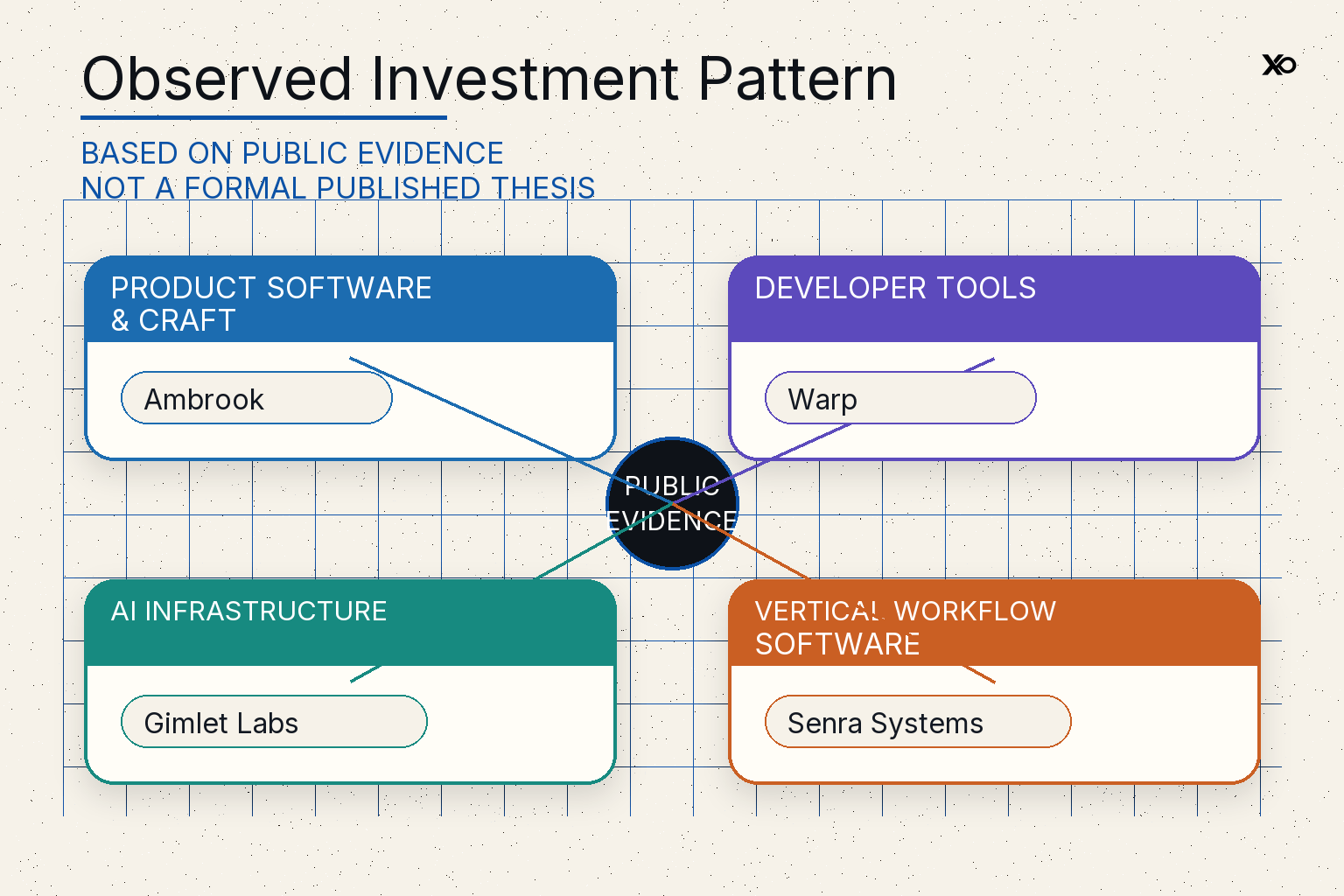
No formal public angel investment thesis was found. Do not treat the companies below as a stated Dylan Field mandate.
The observed pattern is useful. Verified investments suggest interest in products that make complex work more accessible or efficient. Warp fits developer tools. Senra fits software-enabled industrial workflow. Ambrook fits vertical financial software. Gimlet Labs fits AI infrastructure. OpenSea is a historical marketplace example.
XRaise’s read of the public evidence is not “anything AI.” The observed pattern is closer to “software products with a real wedge and a chance to reshape serious work.”
Stage, Sector, Geography and Check Size
| Area | Current evidence |
|---|---|
| Stage | Seed and Series A are visible; later-stage participation appears in Senra’s 2026 Series B. |
| Sector | Product software, developer tools, AI infrastructure and vertical workflow software are strongest. |
| Geography | No narrow public geography mandate confirmed. Do not infer one from Figma’s location or portfolio geography. |
| Check size | Not publicly confirmed. Round sizes are not personal check size. |
Representative Dylan Field Investments
| Company | Category | Stage / round | Why it matters |
|---|---|---|---|
| Senra Systems | Software-driven manufacturing | Series A lead; Series B participation | Shows software-led operational workflows. |
| Ambrook | Vertical financial software | Series A | Shows appetite for workflow software in real-world industries. |
| Gimlet Labs | AI infrastructure | Seed | Supports the AI-infrastructure signal without making him AI-only. |
| Warp | Developer tools | Series A | Connects to collaborative developer productivity and tool quality. |
| OpenSea | Marketplace / crypto network | Strategic investment participation | Shows a product-led network signal. |
Is Dylan Field a Good Fit for Your Startup?
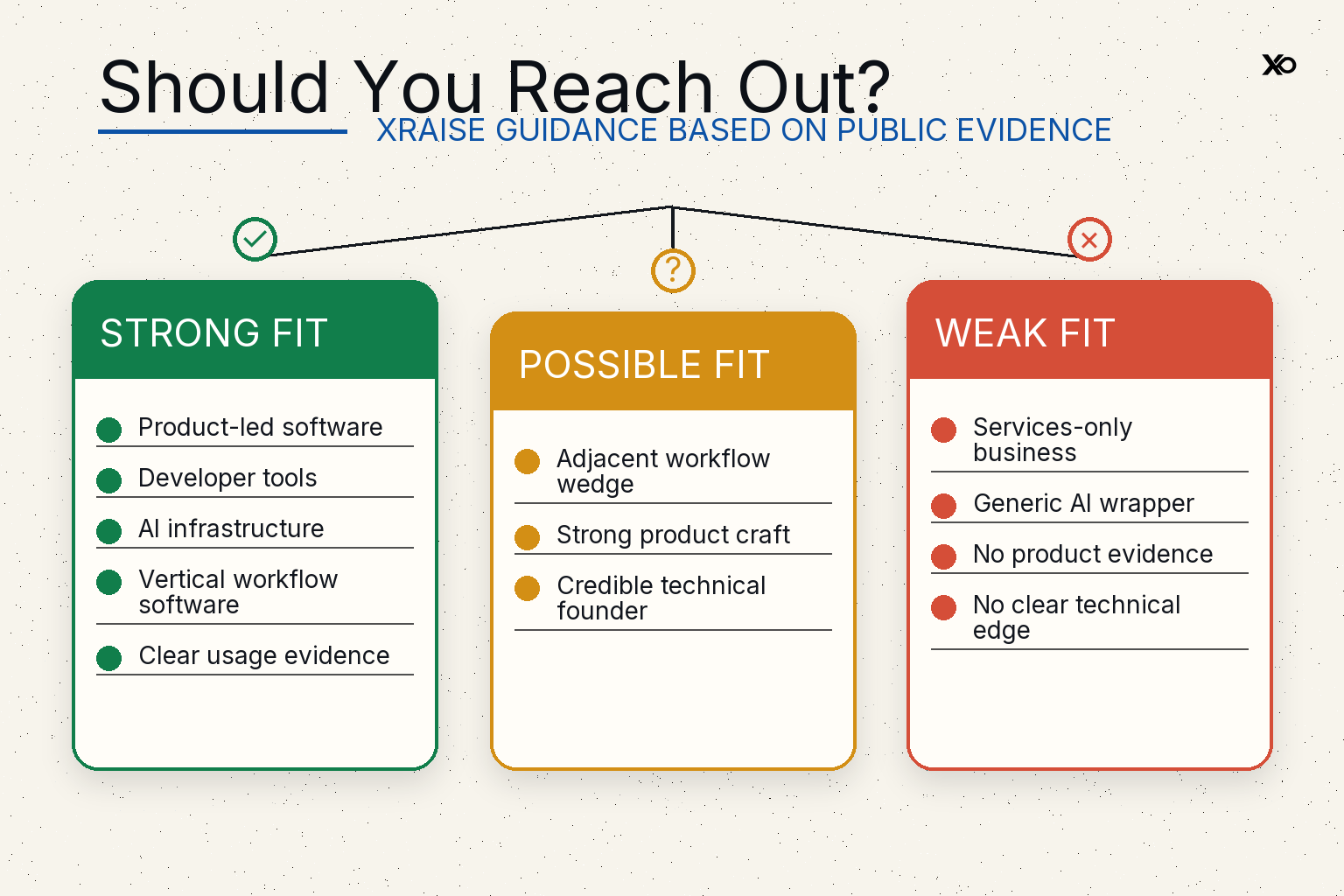
This is XRaise editorial guidance based on public evidence, not Dylan Field’s official investment criteria.
Strong-fit founders are technical or product-led teams where quality is central to the edge. If your product changes how people design, build, collaborate, operate or reason with AI systems, Field may be worth researching. Compare this with other product-focused angels, including David Shen, before outreach.
A possible fit is a founder outside his obvious zones but with unusually strong product insight. Ambrook and Senra show the pattern can extend into operational categories.
A weak fit is a services-only business, generic AI wrapper or company that cannot show why the product deserves attention.
What to Emphasize in Your Pitch
This is XRaise editorial guidance, not Dylan Field’s official checklist.
Emphasize the product wedge first. Show what users can now do that was too slow, fragmented, expensive or inaccessible. Then show evidence: usage, retention, workflow depth or customer pull. If AI is central, explain why it creates a better product.
Also explain why Field belongs in the round. A celebrity-operator pitch is weaker than a clear connection to collaborative creation, developer workflows, product craft or vertical software.
How Should Founders Approach Dylan Field?
Public routes include Figma’s official profile, Field’s X profile and LinkedIn. No verified public angel application form, pitch email or warm-introduction requirement was found.
If you reach out through public channels, keep it concise. Make the wedge obvious, include one or two proof points and explain why Field is relevant.
Use XRaise’s Angel Investors category to compare angels.
FAQ
Is Dylan Field an active angel investor?
Yes. Recent public examples include Senra Systems, Ambrook and Gimlet Labs.
What does Dylan Field invest in?
No formal public thesis was found. Observed investments point to product-led software, developer tools, AI infrastructure, vertical workflow software and marketplaces.
What is Dylan Field’s angel check size?
Not publicly confirmed. XRaise found no direct reliable source confirming his personal angel check range.

Startup Perks AI Assistant
Have questions about credits? Let's chat instantly.
Should AI founders pitch Dylan Field?
Maybe, but only if the AI company has real product or technical differentiation. Gimlet Labs supports AI-infrastructure exposure, but the portfolio is not AI-only.
Does Dylan Field have a public investment thesis?
No formal public angel thesis or mandate was found. XRaise therefore separates observed portfolio patterns from official criteria.
How can founders contact Dylan Field?
Public routes include X, LinkedIn and Figma’s official profile. No verified angel application form, pitch email or warm-introduction requirement was found.
Final Founder Recommendation
Put Dylan Field on your target list if your startup has a serious software product wedge, strong craft and evidence users care. He looks most relevant for founders building technical products that improve how people design, build, operate or scale workflows. If your pitch depends on buzzwords or access to a famous CEO, find a better-matched investor first.