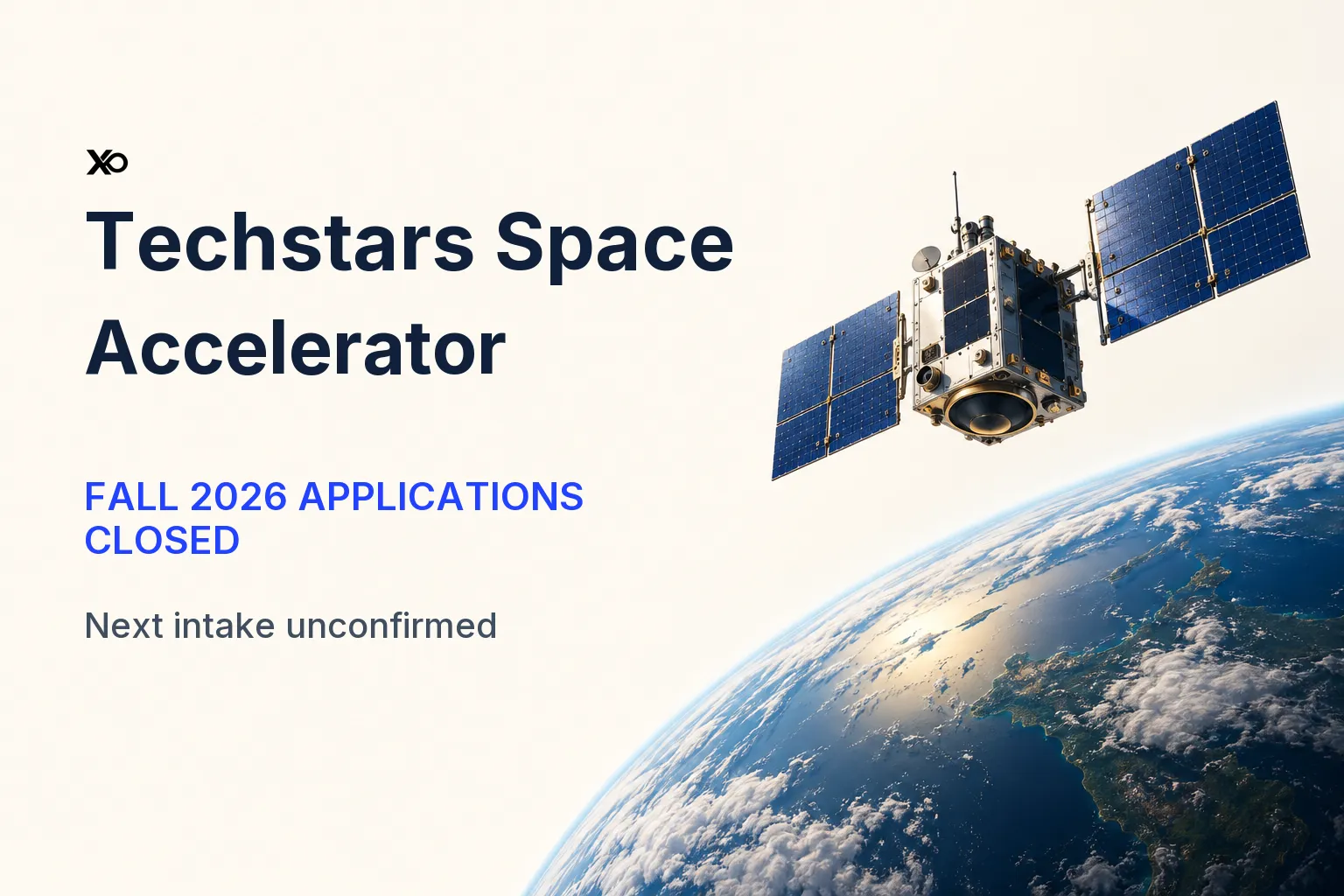
The Techstars Space Accelerator supports early-stage companies with commercial applications in space and aerospace, in partnership with the United States Space Force and NASA’s Jet Propulsion Laboratory. Its strongest potential benefit is sector-specific help turning technical capability into customers and a clearer market position. The trade-off is dilution and the attention required for an intensive accelerator.
Applications for the verified Fall 2026 cohort are closed. As checked October 10, 2026, the official deadline was June 10, the cohort began September 8, and Demo Day is December 10. A subsequent Space intake has not been publicly confirmed. Treat this as preparation for a future verified opening, rather than an invitation to submit for the current class.
Consider preparing if aerospace is a real commercial market for your company, including a dual-use business. The published Techstars offer is $220,000, subject to acceptance and checks; it carries 5% equity plus additional SAFE dilution. Review the official Space program and investment terms before deciding whether that exchange serves your next milestone.
Related Posts

TL;DR: Current Program Snapshot
| Decision | Verified position | Founder action |
|---|---|---|
| Timing | Fall 2026 applications closed; next intake unconfirmed | Prepare; recheck the program page |
| Location | Los Angeles, California | Confirm attendance and travel expectations |
| Capital | $20,000 CEA + $200,000 uncapped MFN SAFE | Model both sources of dilution |
| Opportunity | Aerospace commercialization and mentorship | Identify one customer milestone |
Techstars lists Los Angeles in its current locations directory. The program lasts approximately three months. Current Space-specific format, relocation obligations and the exact end date are not publicly confirmed in the sources reviewed; Demo Day is a separate dated event.
What Does Techstars Space Look For?
Verified focus: space and aerospace technologies, dual-use applications, and adjacent businesses using aerospace as a primary route to market. Autonomy and robotics are named examples. A company does not need to build a spacecraft to have relevant sector fit.
Inferred selection signal: the announced Fall 2026 Space class includes spacecraft autonomy, radiation-tolerant solar power and Earth observation. These examples suggest commercially specific technical problems matter. They do not establish a mandatory technology list or admissions rubric.
Techstars’ general selection guidance emphasizes founder execution, team collaboration, differentiated insight and honesty about weaknesses. Space-specific scoring weights and acceptance rates are not publicly disclosed.
Who Is a Strong Fit?
XRaise editorial guidance: a stronger application connects technical evidence to a named buyer and shows why aerospace access would change the company’s next milestone.
| Position | Useful evidence | Gap to resolve |
|---|---|---|
| Direct space application | Prototype results and a customer problem | Who purchases and on what timeline? |
| Dual-use technology | Credible terrestrial and aerospace use cases | Which market comes first? |
| Adjacent industry | A specific aerospace entry plan | Why is this a primary sales channel? |
These are fit recommendations, not official eligibility thresholds. No current Space-specific minimum revenue, mandatory technology-readiness level or citizenship rule was confirmed. Ask the team about restrictions relevant to your company. General Techstars investment requirements include an acceptable corporate structure; incorporation changes may be needed before investment.
When Should You Apply?
Prepare now, but wait for an officially confirmed Space opening before treating any deadline as actionable. A generic Techstars application button does not establish that Space is accepting applicants.
The official application portal supports Techstars applications. Its application preview explains that program preferences are drawn from accelerators accepting applications. A general submission is not confirmation of entry into a Space intake. Check the program page again when you are ready.
How to Build a Strong Application
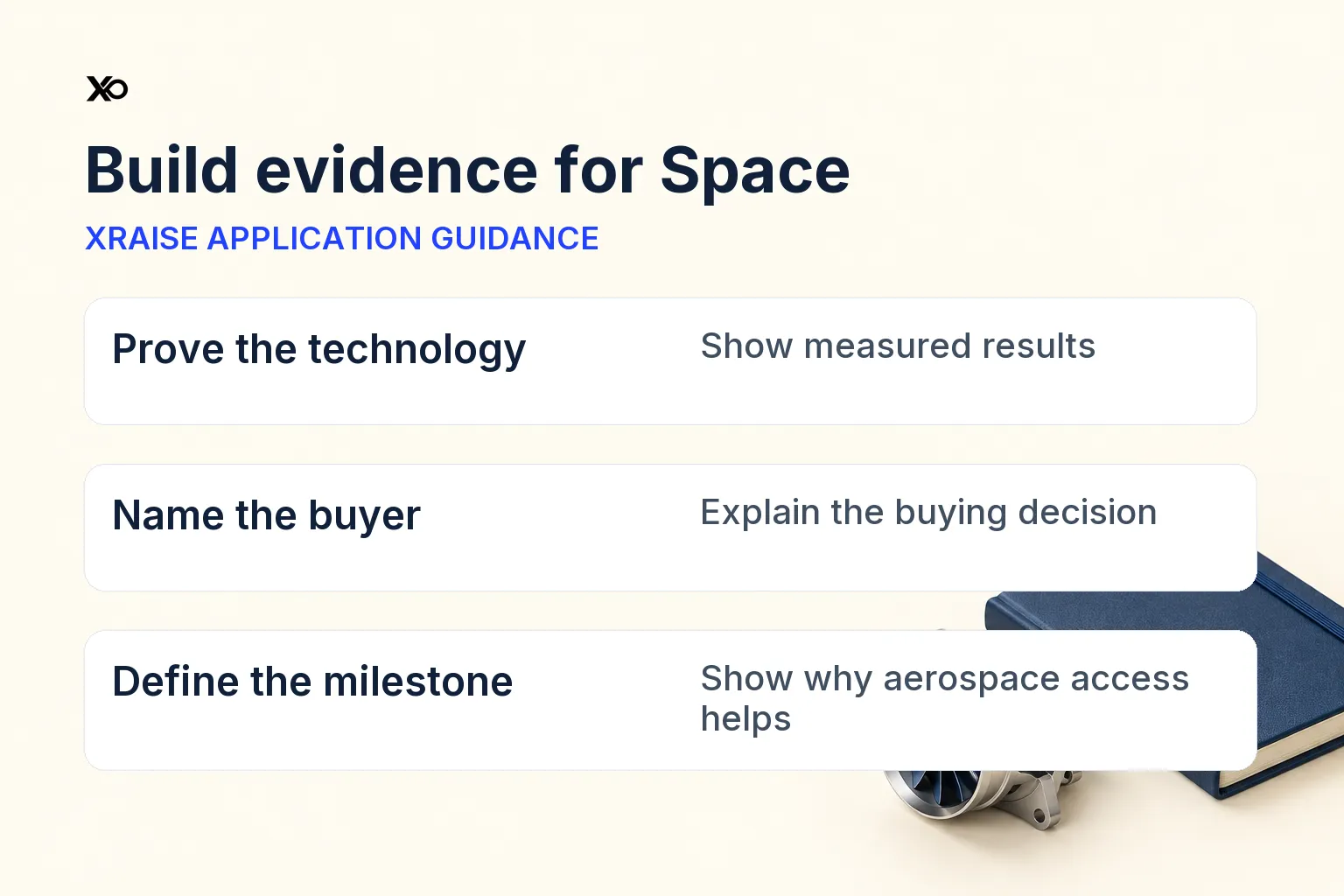
Use the published questions to assemble a concise evidence file. XRaise recommends four priorities:
- Explain the commercial problem. Name the customer, operational constraint and measurable improvement. Replace “huge space market” with a buying decision you understand.
- Show what works. Link a short demo and distinguish bench results, simulations, field tests and paid deployments. State remaining technical risks plainly.
- Prove team execution. Explain who built the product, how founders divide responsibility and what changed after customer feedback. Make specialist expertise easy to assess.
- Specify the accelerator milestone. Choose a concrete outcome, such as validating a buyer segment or qualifying a pilot opportunity. Explain how sector mentorship could help.
Keep traction, revenue and fundraising figures consistent across the deck and form. Label exploratory discussions separately from signed contracts. For a dual-use company, explain the first market and the resources needed to enter the second. Use XRaise’s accelerator application checklist to organize supporting materials.
Interview and Selection Process
Techstars’ general application and interview process describes interview rounds and a virtual screening committee. This is network-wide guidance; a current Space-specific interview schedule is not confirmed.
Prepare concise answers about customer learning, team advantage, competition and the most important unresolved risk. XRaise recommends having cofounders explain the same commercial story consistently, while acknowledging uncertainty. Review the broader Techstars acceptance guide for general preparation.
Program Terms and Trade-Offs
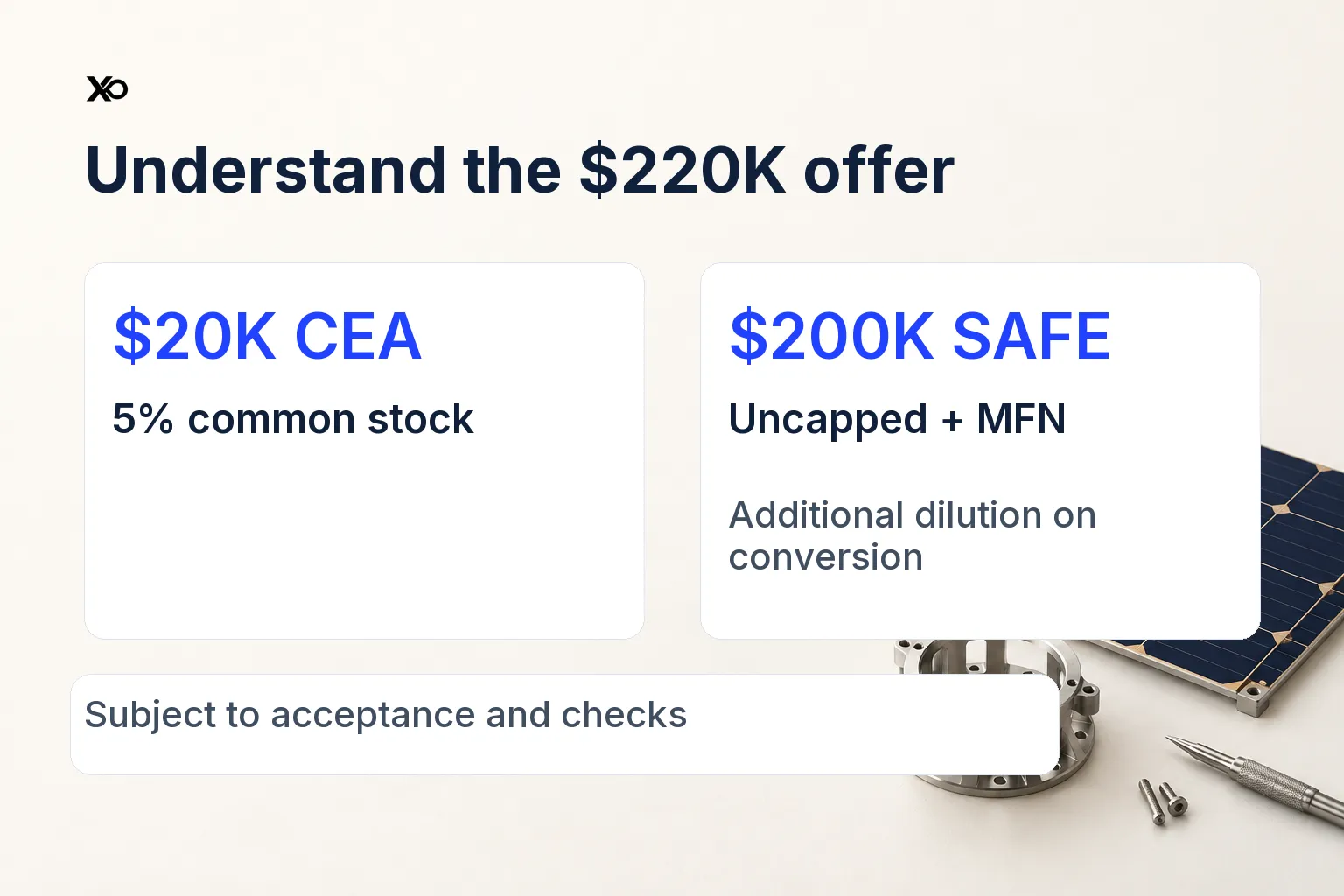
The $20,000 post-money convertible equity agreement converts into 5% common stock; the $200,000 uncapped MFN post-money SAFE adds ownership on conversion. Uncapped does not mean dilution-free. MFN can adopt favorable terms from later SAFEs during the specified period. The published conversion trigger is a priced round of at least $1 million.

Startup Perks AI Assistant
Have questions about credits? Let's chat instantly.
Techstars charges no monetary program fee. Investment follows required checks, and the side letter creates ongoing rights and reporting obligations. Model the financing documents with your adviser. Aerospace relationships may help commercialization, but partner participation does not guarantee contracts, flight access or follow-on funding.
Common Weak Application Signals
XRaise guidance: vague references to NASA, unexplained technical claims and a customer list without buying evidence weaken the story. Avoid treating a simulation as an operational deployment or a conversation as a committed pilot. If the application cannot explain why aerospace is commercially relevant, strengthen that evidence before prioritizing this program. These are preparation risks, not disclosed reasons for individual Techstars rejections.
FAQ
Is Techstars Space accepting applications?
The verified Fall 2026 intake is closed. The next Space deadline is not publicly confirmed as of October 10, 2026.
Is the investment $220,000 for 5%?
The published offer includes 5% equity plus additional ownership from the $200,000 SAFE. It is not a fixed 5% total exchange.
Is it worth preparing?
Yes, if aerospace customers are central to your growth and the financing trade-off fits. Reconsider if you mainly need unrestricted capital or have no credible sector use case. Compare XRaise’s accelerator resources, then verify timing and participation requirements directly before committing.