
Last verified: July 10, 2026
TL;DR
- Value: 10 free Emergent credits every month on the $0 plan.
- Best fit: founders validating one focused MVP, prototype, or internal-tool workflow.
- Key benefit: generate and refine full-stack web or mobile experiences with natural-language prompts.
- Action: claim the XRaise-listed offer, scope a small test, and measure credit use before paying for development.
What Is Emergent for Startups?
Emergent for startups is a free entry point to an AI app-building platform that turns natural-language instructions into working web and mobile experiences. The XRaise-listed offer provides 10 free monthly credits, matching Emergent’s current free plan, so founders can test the workflow before committing engineering budget or a paid subscription.
Emergent can generate interfaces, backend logic, databases, authentication, and integrations. It works best with a specific hypothesis, user, workflow, and success condition.
Related Posts



Emergent for Startups
10 free credits for an AI-powered app builder.
What Do Founders Get with the Emergent Startup Offer?
The free plan refreshes 10 credits monthly at $0. Current pricing includes core features, web and mobile experience building, advanced models, and one-click LLM integration.
| Offer item | Founder decision detail |
|---|---|
| Monthly cost | $0 |
| Included allowance | 10 free monthly credits |
| Renewal | Subscription credits reset each monthly cycle |
| Product scope | Natural-language generation for web and mobile experiences |
| Best first milestone | One narrow prototype, screen flow, or internal-tool proof of concept |
| Main constraint | Building, testing, debugging, integrations, and deployment can all consume credits |
This is a recurring allowance, not cash or a guaranteed finished app. Unused subscription credits reset at the next billing cycle.
What Do Founders Get with the Emergent Startup Offer?
The Emergent free plan suits founders who can reduce an idea to a small testable slice. It can support a customer interview, workflow demonstration, or early technical scaffold.
Strong fits include:
- Solo or non-technical founders turning a written concept into a clickable or working prototype
- SaaS teams validating an onboarding flow, admin dashboard, customer portal, or lightweight vertical tool
- Operations teams testing an approval flow, tracker, intake form, or internal dashboard
- AI founders prototyping an agent interface before investing in production architecture
- Product managers demonstrating a workflow to users, developers, or stakeholders
- Mobile-first founders exploring a cross-platform concept
It is weaker for complex migrations, regulated data, heavy compute, or guaranteed production reliability. Those projects still need technical review.
What Can Startups Build with Emergent’s Natural-Language App Generation?
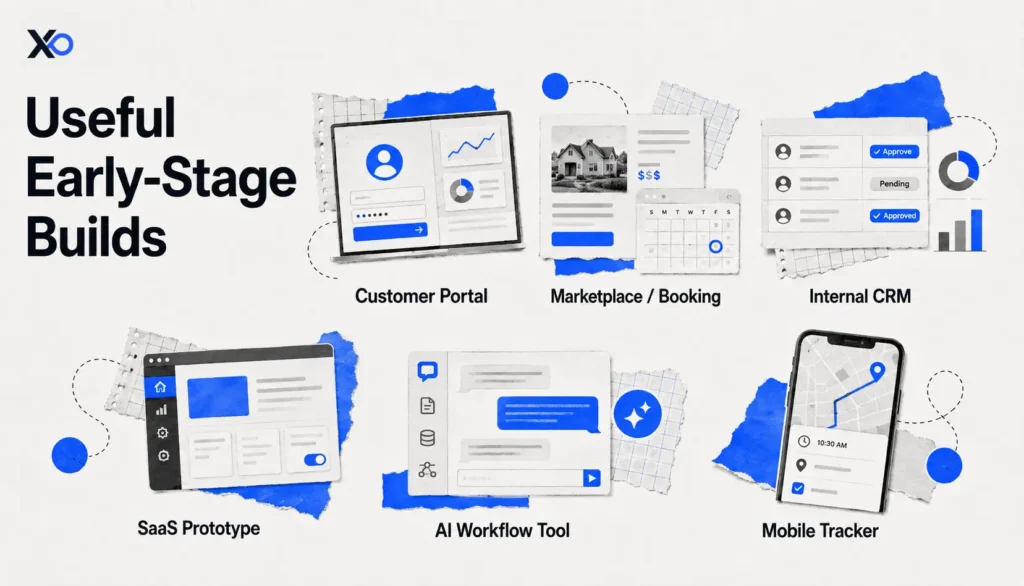
Emergent describes generation across frontend, backend, databases, authentication, roles, APIs, and integrations, more than a static landing page.
Useful early-stage builds include:
- A customer portal with login, basic roles, records, filters, and status updates
- A marketplace or booking concept with listing, search, and request flows
- An internal CRM, approval queue, inventory tracker, or reporting dashboard
- A SaaS prototype with onboarding, account settings, a core action, and an admin view
- An AI-assisted content, research, support, or workflow tool
- A mobile tracker, booking flow, or field-operations app
Start with the smallest journey that proves value. “A coordinator assigns an intake request and sees its status” is better than “build a healthcare platform.”
How Do Emergent Credits Work in 2026?
Credits are consumed by agent work, including generation, code changes, testing, debugging, integrations, and deployment. At zero, AI-driven development pauses until refresh, upgrade, or an eligible top-up.
Three rules matter:

Startup Perks AI Assistant
Have questions about credits? Let's chat instantly.
- Monthly subscription credits reset each billing cycle and do not roll over.
- Paid top-up credits are listed as non-expiring, but the free plan currently does not include top-up access.
- Emergent’s plan comparison lists deployment as unavailable on Free, while its deployment documentation describes managed deployment at 50 credits per deployed app per month.
Treat 10 credits as a prototyping allowance. Evaluate build quality and credit burn; do not assume it funds continuous production hosting.
How Can Founders Make 10 Free Emergent Credits Go Further?
Define the user, single workflow, data, screens, and completion criteria before building.
Then use a milestone sequence:
- Ask for a plan and data model before requesting implementation.
- Build one happy-path workflow first.
- Test before adding integrations or polish.
- Batch related changes into precise prompts.
- Record credit use to estimate the paid build budget.
For corrections, specify the issue, expected behavior, and acceptance test instead of requesting a full rebuild.
How Do You Claim the Emergent Startup Perk Through XRaise?
The XRaise listing describes 10 free app-builder credits, not cash or a guaranteed approval tier.
- Open the Emergent perk on XRaise.
- Confirm the current offer still states 10 free credits.
- Create or sign in to your Emergent account.
- Confirm the free plan and monthly credit balance before building.
- Write a narrow MVP brief with one user and one core workflow.
- Build in preview and monitor credit use.
- Compare paid plans, external hosting, and custom development before launch.
The XRaise snapshot states no separate eligibility requirements. Confirm live account and usage terms because rules can change.
What Hidden Constraints Should Founders Check Before Building?
Deployment is the key constraint. Current plans documentation says 50 credits per month per app and marks deployment unavailable on Free. A separate guide contains first-deployment wording, so confirm the dashboard terms.
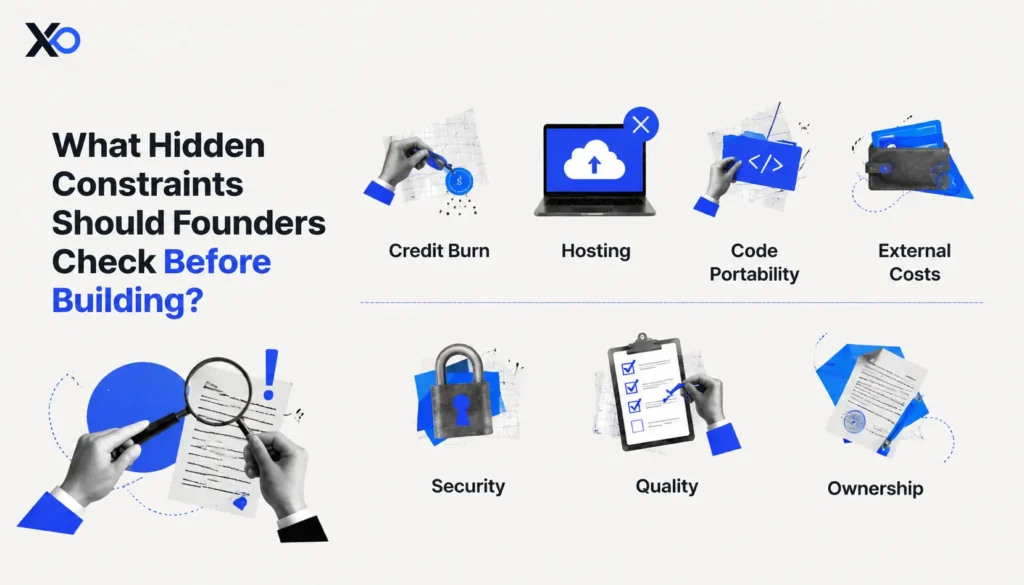
Check:
- Credit burn: generation, testing, debugging, and integrations reduce the balance.
- Hosting: a preview is not a continuously available production app.
- Code portability: GitHub integration is listed on Standard and Pro, not Free.
- External costs: model APIs, databases, messaging, payments, storage, domains, and app stores may bill separately.
- Security: review authentication, secrets, retention, and customer requirements before using real data.
- Quality: test errors, responsive layouts, validation, permissions, and recovery paths.
- Ownership: read current terms before adding sensitive intellectual property.
Founders remain responsible for testing, compliance, and production readiness.
How Does Emergent Fit with Other Startup Programs?
Emergent can accelerate the app layer. Use AWS Activate, Google Cloud startup credits, or Microsoft Azure for Startups for infrastructure, then the HubSpot startup perk for CRM.
These are a stack, not interchangeable benefits. A generated MVP does not automatically include scalable infrastructure or sales execution.
What Does Emergent Pricing Look Like in 2026?
Emergent’s official pricing page lists these plans as of July 10, 2026; recheck before upgrading.
| Plan | Details | Best for |
|---|---|---|
| Free | $0/month; 10 free monthly credits; core platform access | Testing the builder with a tightly scoped prototype |
| Standard | $20/month or $17/month billed annually; 100 credits/month; private project hosting, extra-credit purchases, GitHub integration, and task forking | First-time builders moving beyond a free test |
| Pro | $200/month or $167/month billed annually; 750 monthly credits; larger context, advanced controls, custom AI agents, higher-performance computing, and priority support | Serious product builds with heavier iteration |
| Enterprise | Custom pricing with more usage, SSO, domain capture, and organization-oriented controls | Larger teams with security, governance, and volume requirements |
Estimate development and deployment credits before upgrading. Review the current credit documentation because subscription price alone does not show live-app cost.
Which Emergent Alternatives and Related App-Building Perks Should Startups Compare?
Softr
Softr for Startups builds structured no-code business apps. Choose it over a prompt-driven coding agent when predictable platform patterns matter; the snapshot lists two months free annually.

Softr for Startups
Get 2 months free on a yearly plan to build AI-powered apps.
Webflow
Webflow for Startups suits polished websites and CMS publishing, not full-stack MVP logic. The snapshot lists a free CMS plan.

Webflow for Startups
Free CMS plan for a no-code website builder for startups.
Instapage
Choose Instapage when you need to validate positioning, landing page conversion, or campaign messaging before investing deeper product resources.

Instapage for Startups
Free 14-day trial for an AI-powered landing page builder.
Make.com
Make.com for Startups automates data, notifications, and routing. It complements Emergent; the snapshot lists a free Teams plan.
| Alternative | Best for | When to choose it |
|---|---|---|
| Softr | Structured no-code business apps | Choose when a platform-led app workflow is preferable to agent-generated code. |
| Webflow | Marketing websites and CMS | Choose when brand, content, and website design are the priority. |
| Instapage | Landing-page experiments | Choose when you need demand validation before product development. |
| Make.com | Cross-tool automation | Choose it alongside an app builder for workflow orchestration. |
What Should Founders Know About Emergent Credits in the FAQ?
How do startups get Emergent credits in 2026?
Open the XRaise-listed offer, create an Emergent account, and select Free. Official pricing currently includes 10 monthly credits at $0; confirm the dashboard balance before building.
Who is eligible for Emergent startup credits?
The XRaise snapshot lists no funding, age, headcount, accelerator, or new-customer requirements. It appears to use free-plan access; verify live signup conditions.
Do unused Emergent credits roll over?
No. Subscription credits reset each billing cycle. Monthly credits are used before paid top-ups, while top-ups are described as non-expiring.
Can 10 Emergent credits build and deploy a complete MVP?
Do not assume so. Current documentation lists deployment at 50 credits monthly per app and marks it unavailable on Free. Ten credits are better for prototyping.
What can startups use Emergent credits for?
Credits support app and code generation, frontend and backend work, testing, debugging, integrations, troubleshooting, and eligible deployment. Start with one clear workflow.
Is Emergent worth it for early-stage startups?
Yes, for turning a narrow idea into something testable. Ten free credits are not a realistic budget for complex engineering, production hosting, compliance, or maintenance.
Should You Claim Emergent for Startups?
Claim Emergent for startups through XRaise if you have one specific app workflow to validate and want evidence before hiring developers or buying a larger plan. Use the 10 free monthly credits to build a narrow prototype, test it with real users, and measure credit burn. Then decide whether Emergent, another no-code tool, or custom engineering is the right production path.
Emergent for Startups
10 free credits for an AI-powered app builder.
Do not wait until the scope becomes a full platform. Claim the Emergent startup perk through XRaise, define one success metric, and validate the riskiest workflow first.