Apply to Bio Healthcare if your startup needs focused investor conversations in biotech, healthtech, or life sciences. startup needs direct investor conversations, not another generic pitch deck exercise. This guide explains timing, benefits, trade-offs, and the XRaise-first application path.
TL;DR
This article provides a short overview of…
- Designed for biotech, healthtech, and life sciences startups ready to pitch investors.
- Best fit for founders with a clear deck, strong problem, and investor-relevant milestones.
- Ideal timing is before the June 10, 2026 event and before your next fundraising push.
- Key benefits include curated 1:1 investor meetings, sector focus, and faster feedback.
When Should You Apply to Bio Healthcare Lightning Rounds Accelerator?
Apply when investor conversations can change your next milestone
The best time to Apply to Bio Healthcare Lightning Rounds is when one good investor meeting could move your company forward. That does not mean you need a priced round open tomorrow. However, you should have enough proof to make a short meeting useful.
Related Posts

For a healthtech startup, that proof may include pilots, clinical workflow validation, payer interest, early revenue, or a regulatory plan. For a biotech startup, it may include preclinical progress, platform data, IP direction, grant history, or a credible development roadmap.
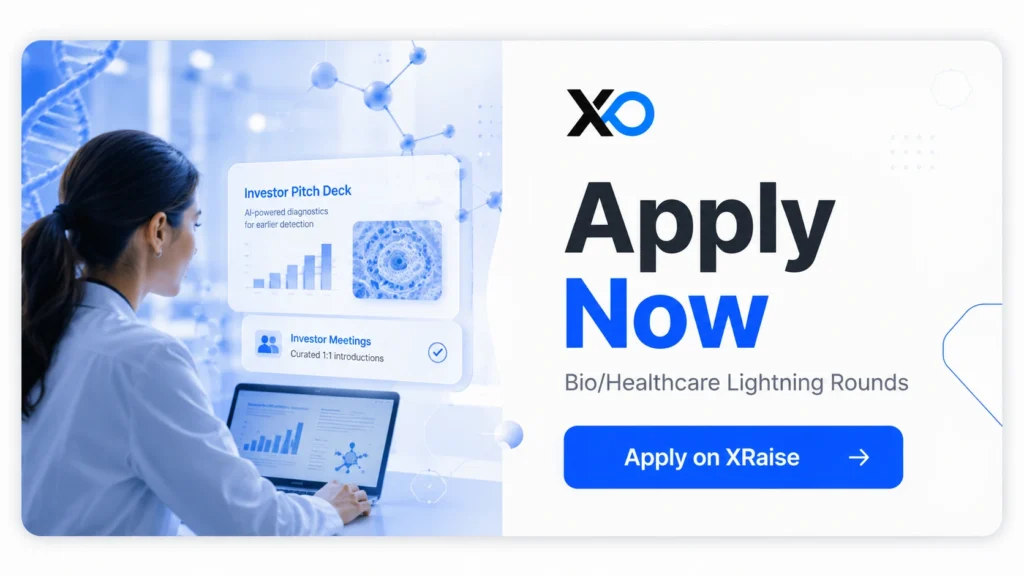
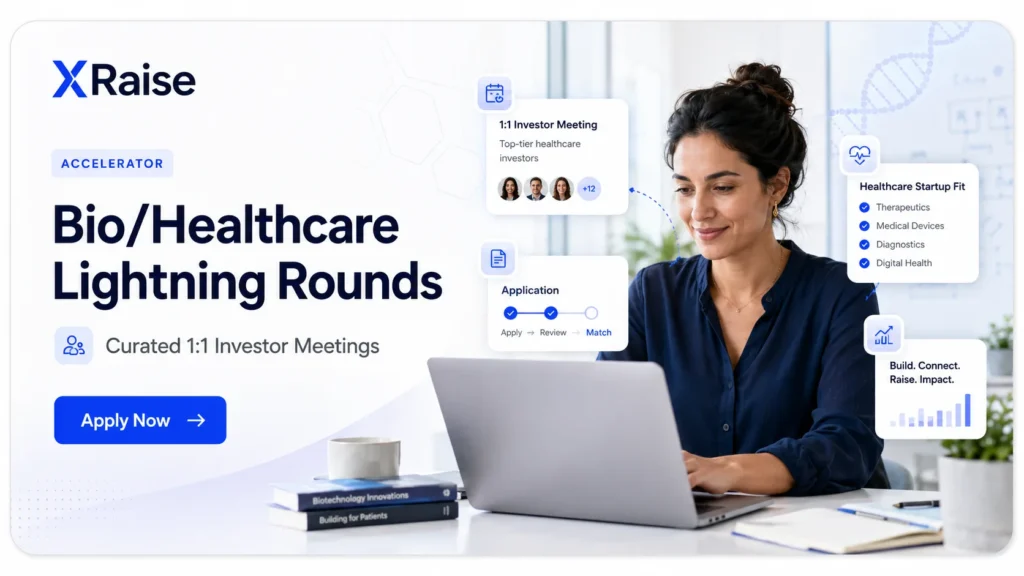
Bio Healthcare Lightning Rounds is not a long curriculum accelerator. It follows gener8tor’s Lightning Rounds model: selected startups meet investors in curated one-on-one pitch sessions, with matching based on investor selections from startup applications. gener8tor describes Lightning Rounds as curated 1:1 pitch sessions between selected startups and investors.
when is the 2026 deadline for Bio/Healthcare Lightning Rounds?
The key event date provided for this opportunity is June 10, 2026. The program notes also state that the application deadline is 10 days before the event, and that the meeting schedule is delivered the Friday before the event.
| Key Date | What It Means |
|---|---|
| June 10, 2026 | Bio/Healthcare Lightning Rounds event day |
| May 31, 2026 | Application deadline, 10 days before the event |
| June 5, 2026 | Expected meeting schedule delivery, the Friday before the event |
| Before May 31, 2026 | Prepare your XRaise profile, deck, company summary, and investor ask |
Therefore, founders should not treat June 10 as the day to start preparing.
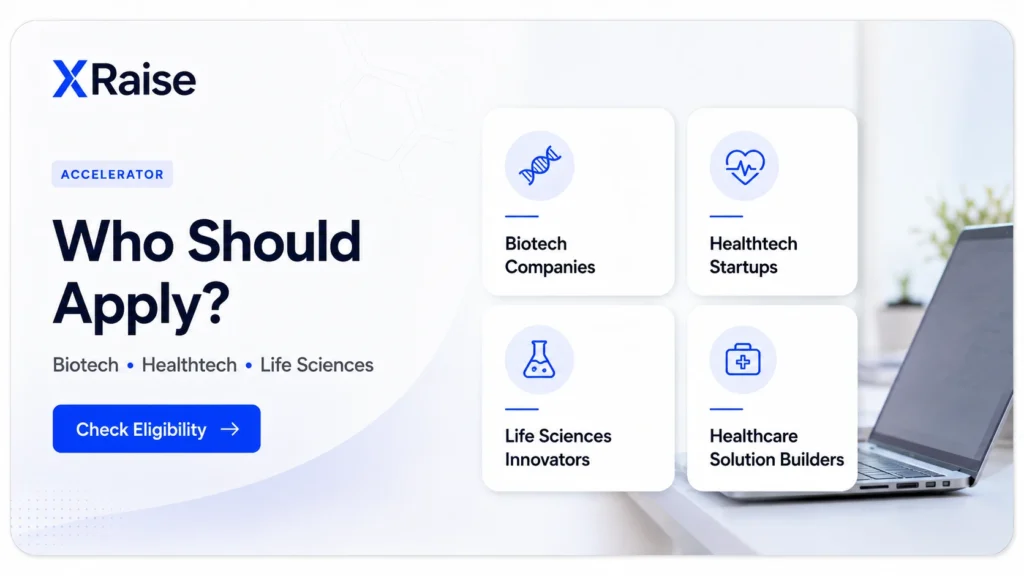
Prepare your XRaise profile, deck, short company description, and fundraising context well before the deadline window. In investor-matched events, late preparation weakens the application because investors decide which startups they want to meet based on the information you submit.
Who should wait before applying?
Wait if your company cannot explain the problem, buyer, market, and next milestone in five minutes. Lightning Rounds meetings move quickly. gener8tor’s FAQ says founders should have a five-minute pitch and slide deck ready, then use the rest of the meeting for conversation.
If your story is still too broad, use the XRaise Accelerator Directory to compare other programs first.
You can also read When You Should Apply to an Accelerator to understand whether your startup is truly ready for investor-facing opportunities.
How to Choose the Right Accelerator
Choose Bio/Healthcare Lightning Rounds for investor access, not curriculum
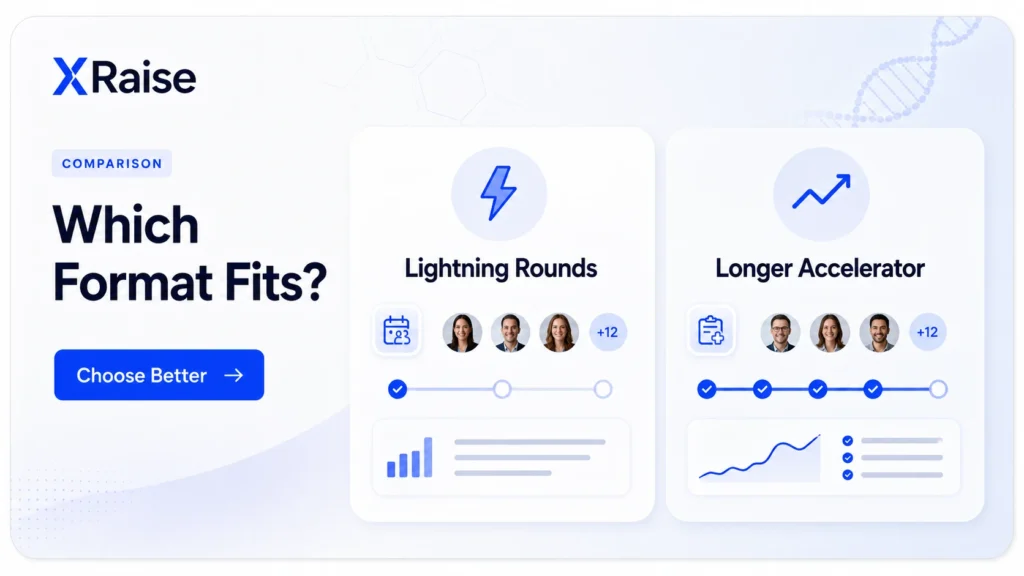
A traditional accelerator usually gives founders weeks of programming, mentor sessions, workshops, and a final showcase. Bio/Healthcare Lightning Rounds is different. It is more useful when you want concentrated investor exposure in a short format.
That distinction matters. If your startup needs deep customer discovery, product rebuilds, or weekly coaching, a longer accelerator may fit better. However, if your team already has a clear narrative and wants targeted investor feedback, this event can be more efficient.
Use this quick filter to decide if the format fits your startup:
| If you need… | Better fit |
|---|---|
| Weekly coaching | Longer accelerator |
| Product rebuilding | Full cohort program |
| Investor feedback | Lightning Rounds |
| Fast pitch meetings | Lightning Rounds |
So, this event is best when your pitch is ready and investor access is the priority.
gener8tor says Lightning Rounds can be virtual or in-person depending on the event, and that founders typically pitch briefly before moving into 10–15 minute conversations. For this Bio/Healthcare event, the provided format is online, with scheduled virtual one-on-one meetings on the event day.
Compare funding, equity, and application purpose
Do not judge this program like a funding accelerator. Funding details are not publicly disclosed. Equity terms are not publicly disclosed. In addition, the program duration is not publicly disclosed.
That does not make the opportunity weak. It simply means the main value is access, not a guaranteed check. If you need capital plus structured programming, compare it with healthtech accelerators that disclose investment terms. If you need investor conversations around a focused healthcare category, Bio/Healthcare Lightning Rounds may be a better fit.
A simple decision filter can help you choose the right accelerator format:
| Founder Need | Best Fit |
|---|---|
| Structured coaching | Choose a longer accelerator |
| Investor meetings | Consider Lightning Rounds |
| Guaranteed capital | Look for disclosed funding terms |
| Sector-specific feedback | Prioritize healthcare-focused programs |
In short, choose Bio/Healthcare Lightning Rounds if investor access matters more than long-term programming.
How to Apply to Bio/Healthcare Lightning Rounds Accelerator
Apply to Bio Healthcare Through XRaise First
The cleanest path is to Apply to Bio/Healthcare through XRaise first. This keeps your accelerator search organized and makes your founder profile reusable.
Follow this flow:
- Create your XRaise founder account on the XRaise startup platform.
- Open the Bio/Healthcare Lightning Rounds accelerator profile on XRaise.
- Click Apply Now and submit your application through XRaise.
- Use your XRaise dashboard to track this opportunity alongside other programs.
- Later, visit the official program page only for extra details.
This XRaise-first workflow matters because healthcare founders often apply to multiple programs at once. Reusing your company information, deck links, traction notes, and founder bios saves time. More importantly, it helps you avoid rewriting your story under deadline pressure.
What should you prepare before applying?
Prepare a short investor-ready application, not a long academic explanation. Investors need to understand what you do, why now, why your team, and what milestone you are raising toward.
Before you submit, prepare the essentials investors need to understand fast:
| What to Prepare | Why It Matters |
|---|---|
| One-line company description | Makes your startup easy to understand |
| Target customer or user | Shows who you serve |
| Healthcare or biotech category | Clarifies sector fit |
| Problem and market urgency | Explains why this matters now |
| Current traction or validation | Proves early market signal |
| Fundraising status | Shows where you are in the raise |
| Five-minute pitch deck | Keeps the meeting focused |
| Clear investor ask | Makes the next step obvious |
Strong applications make the investor case clear before the meeting starts.
For biotech and life sciences teams, include the development stage clearly.
For healthtech teams, include workflow, buyer, adoption friction, and evidence that the problem is painful enough to buy or pilot.
How does matching work?
Investor matching usually works in four simple steps:
| Step | What Happens |
|---|---|
| 1. Startups apply | Founders submit company information |
| 2. Investors review | Investors choose startups they want to meet |
| 3. Matches are made | Meetings are scheduled based on investor selections |
| 4. 1:1 meetings happen | Startups pitch and discuss potential investment fit |
Your application matters because investors may use it to decide whether they want to meet you.
Benefits of Applying to Bio/Healthcare Lightning Rounds Accelerator
Curated 1:1 investor meetings
The strongest benefit is simple: curated investor access. Instead of pitching into a crowded room, selected startups get scheduled one-on-one meetings with investors.
That format can help founders get sharper feedback faster. It also gives investors room to ask specific questions about market size, clinical need, regulatory path, reimbursement, technical defensibility, and fundraising timing.
| 1:1 Meeting Benefit | Founder Value |
|---|---|
| Scheduled investor time | More focused conversations |
| No crowded pitch room | Less noise, more relevance |
| Direct questions | Clearer investor feedback |
| Faster signal | Easier to spot what needs work |
This format helps founders test investor interest before a broader fundraising push.
Sector focus for healthtech, biotech, and life sciences
Bio/Healthcare Lightning Rounds is built for biotech, healthtech, and life sciences startups. That focus matters because healthcare investors do not evaluate companies like general SaaS investors.
A biotech company may need to explain science risk, timelines, and capital intensity. A healthtech company may need to explain buyer complexity, compliance, implementation, and clinical workflow. A life sciences platform may need to show why its data or technical moat can support a venture-scale outcome.
| Startup Type | What Investors Usually Check |
|---|---|
| Biotech startups | Science risk, timelines, data, and capital needs |
| Healthtech startups | Buyer complexity, compliance, workflow, and adoption |
| Life sciences platforms | Technical moat, data quality, and venture-scale potential |
That sector focus helps founders get feedback from investors who understand healthcare-specific risk.
Efficient fundraising feedback
The event can also help founders test investor readiness. Even if a meeting does not lead to funding, the questions can reveal what your next milestone should be.
That feedback is valuable before a broader raise. If multiple investors challenge the same weak point, you know what to fix. If several investors show interest, you know which part of your story is working.
| Investor Feedback | What It Tells You |
|---|---|
| Repeated objections | What you need to fix |
| Strong interest | What part of the story works |
| Questions about milestones | What proof investors still need |
| Follow-up requests | Where real funding interest may exist |
This makes the event useful even when a meeting does not immediately lead to funding.
No startup pitch fee disclosed by gener8tor
gener8tor’s Lightning Rounds FAQ states that startups are not charged to pitch at Lightning Rounds events. Still, founders should verify any event-specific requirements before final submission.
Top Accelerators to Consider
Compare Bio/Healthcare Lightning Rounds with related healthtech programs
You should build a shortlist before you Apply to Bio/Healthcare. One investor event can be useful, but it should not be your only path.
For healthcare-specific options, start with the XRaise guide to Top 20 Health Tech Accelerators in the United States. It gives a wider benchmark for healthtech, medtech, diagnostics, pharma, and digital health programs.
Also compare Prosper HealthTech Accelerator Summer 2026 if your startup wants a longer healthcare-focused accelerator structure. It may fit founders who need more programming, deeper mentorship, and a clearer accelerator arc.
For broader founder readiness, use the XRaise Accelerator Directory. In addition, read AI Startup Investment 2025 – Funding Boom and AI Investment Bubble 2025 – XRaise Analysis if your healthtech product uses AI. These pieces help founders separate real investor demand from market noise.
What alternatives fit different founder needs?
Choose based on the job you need the program to do.
Bio/Healthcare Lightning Rounds is relevant when you need investor exposure. For cohort structure, look at 7–12 week accelerators. If your startup needs non-dilutive research support, compare grants and lab-access programs. For fundraising discipline, prioritize accelerators with investor office hours and demo days.
| Founder Need | Better Option |
|---|---|
| Investor exposure | Bio/Healthcare Lightning Rounds |
| Cohort structure | 7–12 week accelerators |
| Non-dilutive research support | Grants or lab-access programs |
| Fundraising discipline | Accelerators with investor office hours and demo days |
Choose the program based on the outcome your startup needs most right now.
Challenges of Applying to Bio/Healthcare Lightning Rounds Accelerator
Short meetings require sharp positioning
The biggest challenge is speed. Lightning Rounds are built for short, focused conversations. That creates urgency, but it also punishes vague storytelling.
You need to explain the company fast. Then you need to leave enough time for investor questions. If your pitch takes the whole meeting, you lose the chance to learn what the investor actually thinks.
Investor selection creates uncertainty
Because investors select which startups they want to meet, applying does not guarantee a meeting with every investor. Your application must make the opportunity clear enough for investors to choose you.
This is where many founders lose momentum. They describe the technology but not the investment case. Instead, show the problem, buyer, timing, traction, and milestone.
Not every detail is publicly disclosed
Some details are not publicly disclosed, including program duration, funding details, equity terms, cohort size, acceptance rate, and startup success statistics for this specific event.
That is normal for many pitch events. However, founders should treat unknowns as diligence points. Ask about schedule, investor mix, selection process, follow-up expectations, and whether the event shares attendee or investor information before meetings.
Why Apply to Bio/Healthcare Lightning Rounds Accelerator in 2025–2026
Healthcare founders need faster investor signal
In 2026, healthcare startups face a tougher bar. Investors want proof that the product solves a real workflow problem, fits a buying path, and can survive long sales cycles.

Startup Perks AI Assistant
Have questions about credits? Let's chat instantly.
Therefore, Apply to Bio/Healthcare if your team needs concentrated investor signal before spending months on broad outreach. A curated pitch event can help you test whether your current story earns attention.
Biotech founders get sharper feedback on milestones and financing logic. Healthtech founders can learn whether investors believe the customer, market, and adoption story. Life sciences founders can identify what proof investors still need before moving forward.
| Founder Type | Investor Signal You Need |
|---|---|
| Biotech founders | Milestone clarity and financing logic |
| Healthtech founders | Buyer, market, and adoption confidence |
| Life sciences founders | Proof investors still need before funding |
The format rewards prepared founders
Lightning Rounds work best for founders who respect time. Come with a short deck, a clear ask, and a follow-up plan. After the meeting, send a focused email within 24–48 hours. gener8tor also recommends timely follow-up after Lightning Rounds to keep the conversation fresh.
Conclusion & Recommendations
Apply to Bio/Healthcare if your biotech, healthtech, or life sciences startup is ready for focused investor conversations around June 2026.
This event is not built for founders who need months of curriculum, guaranteed funding, or publicly disclosed equity terms. However, it can be a strong fit if your pitch is clear and your goal is curated 1:1 investor access in a healthcare-focused setting.
Start with XRaise to keep your application organized and compare this opportunity with other relevant accelerators before you commit.
Ready to pitch healthcare investors in focused 1:1 meetings? Start Your Accelerator Application.