TL;DR
- XRaise lists Microsoft Azure for Startups as up to $5,000 in Azure credits.
- Best for SaaS, AI, and technical founders building an Azure-backed MVP.
- Use credits across eligible compute, storage, databases, serverless apps, monitoring, and Azure AI services.
- Claim only after mapping workloads, budgets, alerts, and post-credit pricing.
- Start with one product environment before scaling traffic.
What Is Microsoft Azure for Startups?
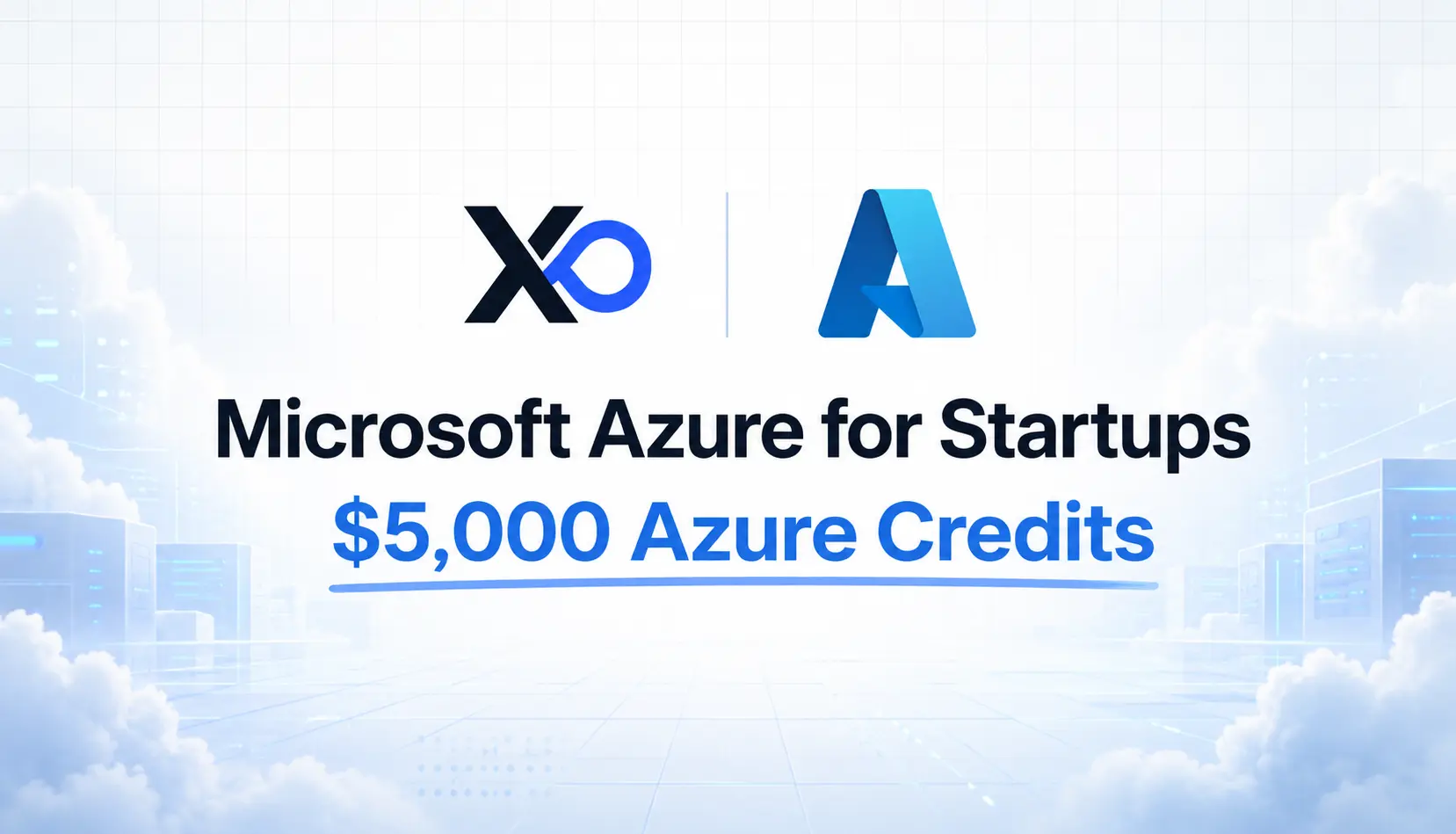
Microsoft Azure for Startups is an XRaise-listed cloud infrastructure perk that gives eligible founders up to $5,000 in Azure credits for building early products. The saved XRaise listing describes it as a cloud platform for scalable apps, making it relevant for Azure accounts, MVP infrastructure, SaaS backends, databases, AI workloads, and traffic tests.

Microsoft Azure for Startups
Up to $5,000 in Azure credits for scalable cloud apps.
The practical value is validating infrastructure decisions before revenue and usage patterns become predictable. Before claiming, founders should review the Microsoft Azure for Startups perk through XRaise, confirm eligibility, and decide which Azure services the credits need to prove.
Related Posts



Microsoft’s broader startup documentation describes credit paths that vary by program, milestone, investor network, account status, and activation route. Verify the XRaise-listed $5,000 offer first.
What Do the $5,000 Azure Startup Credits Include?
The XRaise listing confirms the offer value as up to $5,000 in Azure credits. Microsoft startup-credit guidance says credits are used through an eligible Azure sponsored subscription and generally apply to eligible Azure-billed services. Some non-Azure products, support plans, marketplace purchases, and third-party services may not be covered.
Useful workloads include:
- app hosting with App Service, Container Apps, Functions, or Virtual Machines;
- product data with Azure SQL Database, Cosmos DB, PostgreSQL, or managed data services;
- storage, backups, logs, and media assets;
- Azure OpenAI, Azure AI Foundry, Azure AI Search, and model-backed features where available;
- queues, events, networking, monitoring, and security;
- staging deployments and early traffic experiments.
The founder decision is simple: can this Azure architecture support the product at a cost the startup can afford after credits end?
Who Should Use Microsoft Azure Credits?
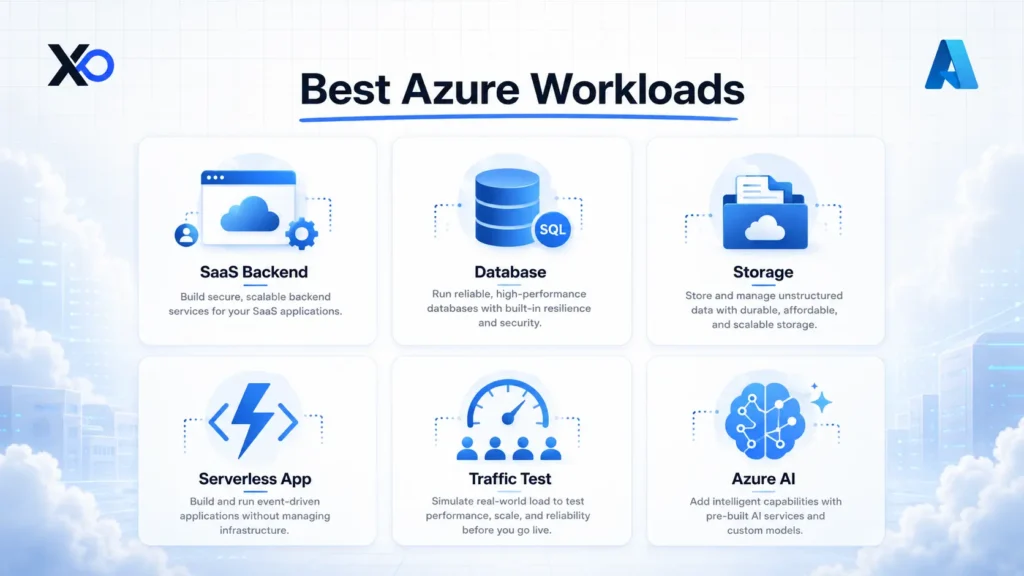
Microsoft Azure credits for startups are strongest for teams that know the product needs real cloud infrastructure. A pre-seed SaaS founder building an app, API backend, database, jobs, and analytics can test the stack without immediate runway pressure.
Strong fits include technical founders launching MVPs, AI founders building with Azure OpenAI or Azure AI Foundry, B2B SaaS teams that need Microsoft alignment, and startups that want managed databases, identity, compliance, and observability.
Wait if the team has not chosen a product workflow yet. Azure startup credits can disappear into idle virtual machines, oversized databases, duplicate environments, and experimental AI calls.
What Azure Eligibility and Requirements Should Founders Check?
The saved XRaise marketplace file verifies the perk name, value, description, and XRaise URL, but it does not publish every approval rule. Founders should verify the live XRaise claim flow and current Microsoft requirements before assuming approval.
Prepare legal company details, Microsoft and Azure account information, product description, startup stage, intended workloads, regions, estimated usage, required subscription path, and a billing owner for budgets, alerts, and post-credit spend.
Microsoft’s current activation guidance says startups that joined before May 29, 2026 use the Microsoft for Startups portal path, while net-new startups on or after May 29, 2026 activate through the Azure portal.
How Should Founders Use Azure Credits Without Wasting Them?
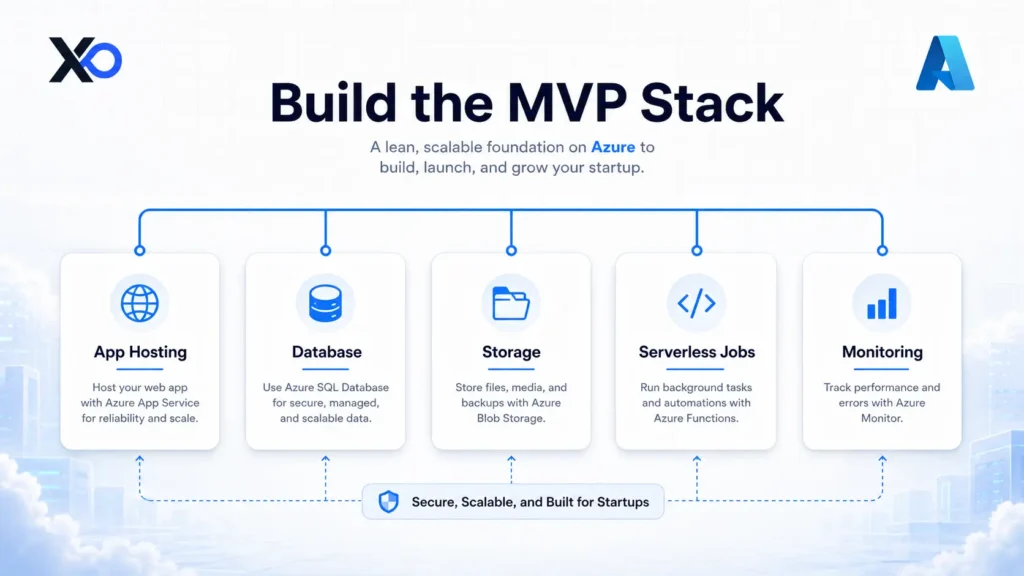
Use the $5,000 Azure credits like an infrastructure validation budget, not a blank check. Start with one measurable workload: an MVP backend, private beta, AI feature, database workflow, or traffic test.
Set a 30-day plan before provisioning services:
- define the workload to validate;
- choose the smallest production-like architecture;
- tag environment, feature, owner, and pilot;
- set budgets and cost alerts;
- review spend weekly;
- remove idle resources quickly.
For SaaS backends, spend first on hosting, database, storage, authentication, logs, and monitoring. For AI products, keep Azure OpenAI tied to a bounded workflow with cost per successful task, latency, retrieval quality, and output quality tracked.
Do not use credits to simulate scale before you understand demand. Use them to learn the smallest architecture that satisfies early customers.
How Do Startups Apply for Microsoft Azure for Startups Through XRaise?
- Open the Microsoft Azure for Startups perk through XRaise.
- Review the current offer value, claim instructions, and eligibility notes.
- Confirm whether the offer routes through XRaise, Microsoft for Startups, Azure, or a partner claim path.
- Prepare company details, product description, Microsoft account, and Azure setup information.
- Define the Azure workload you want to validate.
- Complete the claim or application flow.
- Activate credits and confirm the balance in the correct Azure subscription.
- Create budgets, alerts, tags, and shutdown rules.
- Run one controlled MVP, SaaS, database, serverless, or Azure AI workload and measure cost.
Do not launch traffic until the balance, expiration, eligible services, and pay-as-you-go behavior are clear.
How Does Azure Pricing Work After Startup Credits?
Azure pricing depends on services, region, instance type, storage, egress, database configuration, AI usage, support plan, and billing setup. Founders should check the official Azure pricing calculator and review Microsoft’s Azure startup-credit guidance before moving from credits into paid usage.
| Plan | Details | Best for |
|---|---|---|
| Startup credits | XRaise-listed up to $5,000 in Azure credits; covered services and live terms must be verified. | MVPs, SaaS backends, databases, and early Azure AI tests. |
| Pay-as-you-go | Usage-based Azure billing after credits are unavailable, exhausted, expired, or not applicable. | Early production workloads with strict budgets and alerts. |
| Compute and serverless | Costs depend on VM size, containers, function executions, runtime, and region. | App hosting, APIs, jobs, and traffic testing. |
| Storage and databases | Costs depend on capacity, operations, throughput, backups, replication, and region. | Product data, logs, files, analytics, and records. |
| Azure AI services | Pricing depends on service, model, region, token or transaction usage, and infrastructure. | GPT workflows, embeddings, search, agents, and AI features. |
Pricing depends on the official Azure pricing page and the startup’s usage model. Calculate the paid monthly run rate before credits end.
Which Related Startup Perks Should Founders Compare with Microsoft Azure?
These are related XRaise marketplace perks, not all direct replacements. Compare them when choosing a cloud-credit path or AI infrastructure stack.
Google Cloud for Startups
Google Cloud for Startups is listed by XRaise as up to $200,000 credits for cloud hosting, AI, and developer tools. Choose it when Google Cloud services or data tools fit the product better than Azure.
AWS Activate for Startups
AWS Activate for Startups is listed by XRaise as $1,000 in credits for cloud infrastructure. Compare it when your team wants an AWS-native MVP path.

Startup Perks AI Assistant
Have questions about credits? Let's chat instantly.
AWS for Startups
AWS for Startups is listed by XRaise as up to $100,000 credits for AI workloads. Consider it when AWS infrastructure or large AI workload credits matter more than Azure fit.
OpenAI for Startups
OpenAI for Startups is listed by XRaise as $5,000 Azure credits for AI models on Azure. Compare it when the core decision is model usage rather than a full cloud buildout.
| Alternative | Best for | When to choose it |
|---|---|---|
| Google Cloud for Startups | Google Cloud, data, and AI platform credits | Google Cloud is the stronger product, team, or customer ecosystem fit. |
| AWS Activate for Startups | AWS MVP infrastructure | You want a smaller AWS credit path for early app hosting and cloud setup. |
| AWS for Startups | AWS-native AI workloads | Your infrastructure or AI workload is better suited to AWS and related partner programs. |
| OpenAI for Startups | AI models on Azure | You mainly need Azure-billed model experimentation rather than a broad cloud stack. |
Also compare AWS Activate, Google Cloud credits, Azure for Startups, and HubSpot for Startup when planning the build, sell, and support stack.
FAQ?
How do startups get Microsoft Azure credits in 2026?
Review the XRaise-listed Microsoft Azure for Startups perk, then complete the claim route. Confirm eligibility, activation path, and credit balance before deploying workloads.
Who is eligible for Microsoft Azure startup credits?
Eligibility depends on the live XRaise claim flow and current Microsoft startup program rules. Verify company stage, account status, region, Microsoft account requirements, and Azure subscription setup.
How long do Azure credits last?
The saved XRaise listing does not state an expiration period. Confirm the credit window during activation, then plan milestones around it before paid Azure pricing becomes the real budget.
What can startups use Azure credits for?
Use credits for eligible Azure-billed services such as compute, storage, databases, serverless apps, monitoring, networking, Azure AI services, Azure OpenAI, and search. Confirm coverage in your subscription.
Is Microsoft Azure for Startups worth it for early-stage SaaS founders?
Yes, when the startup needs real cloud infrastructure and has a controlled MVP or customer pilot to validate. It is less useful if the team provisions services before defining workloads, budgets, or usage metrics.
What happens after Azure credits expire or run out?
Your Azure subscription may move into paid usage depending on setup, spending protection, and billing configuration. Review budgets, alerts, payment settings, and pay-as-you-go pricing before credits reach zero.
Can Azure credits be used for Azure OpenAI?
Microsoft guidance says startup credits apply to eligible Azure-billed services, and Azure AI workloads may be part of the build path. Verify availability, quota, region, model access, and coverage before relying on Azure OpenAI.
Should You Claim Microsoft Azure for your Startups?
Claim Microsoft Azure for Startups if your team is ready to build or test a real Azure-backed product environment. The up to $5,000 Azure credit offer can help founders validate compute, storage, databases, serverless workloads, traffic assumptions, and Azure OpenAI usage before cloud costs become recurring burn.
Claim the Microsoft Azure for Startups perk through XRaise before scaling cloud infrastructure. Set budgets first, run one controlled workload, and continue only when the post-credit Azure pricing supports your startup’s unit economics.
Microsoft Azure for Startups
Up to $5,000 in Azure credits for scalable cloud apps.