
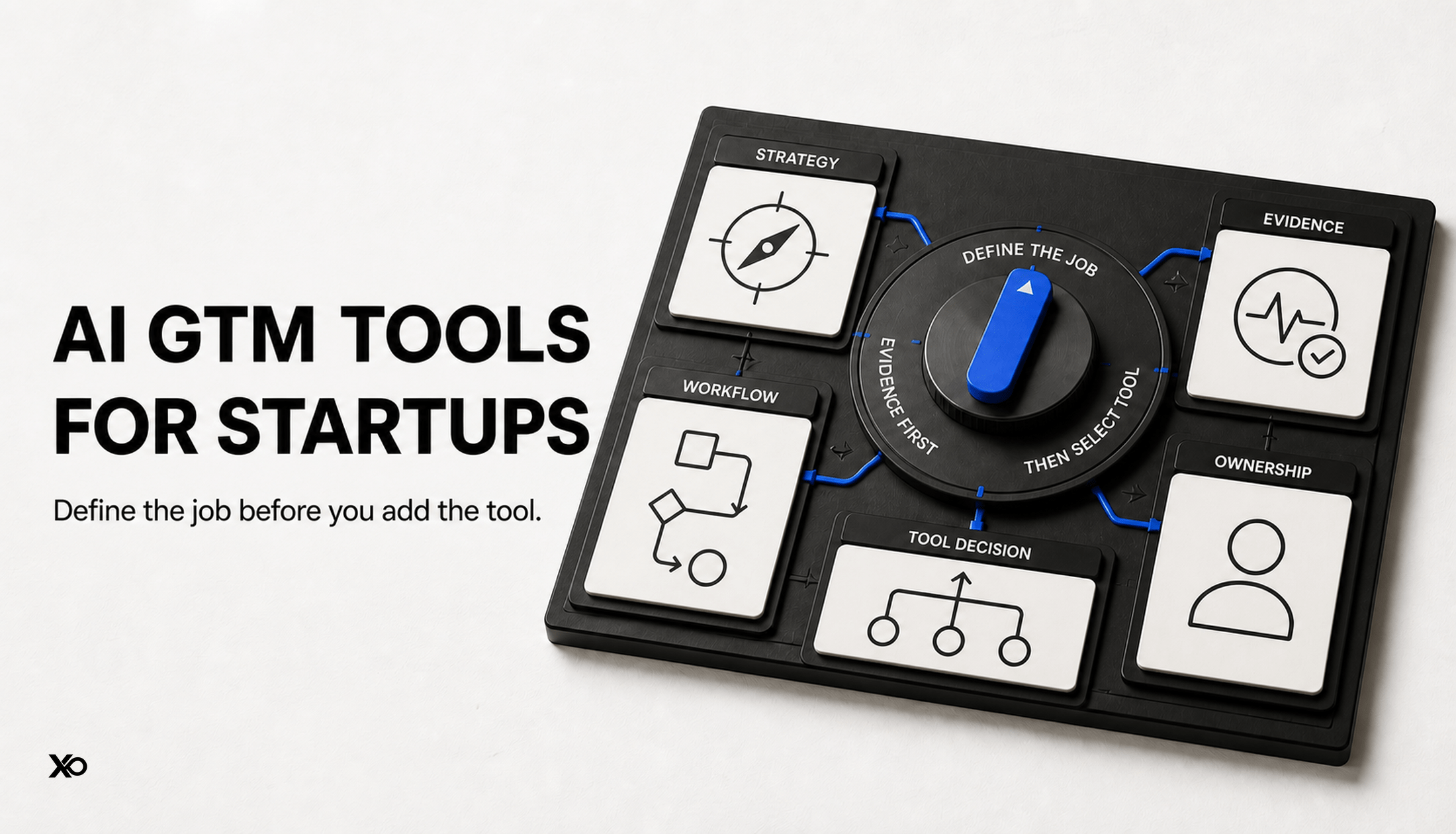
Most startups do not waste runway because they choose one terrible GTM tool. They waste it because they assemble a stack before they know which go-to-market job is actually slowing them down. A CRM, prospecting database, AI writer, meeting recorder, scheduler, automation layer, and SEO platform can look like progress while creating more setup, duplicated data, and monthly commitments than the team can manage.
TL;DR
- Choose AI GTM tools for startups by bottleneck, output, proof, and owner—not by the size of the feature list.
- A lean stack usually needs one operating workspace, one customer system, one acquisition or sales workflow, and only the automation required to connect them.
- HubSpot is the broadest CRM and marketing starting point in this guide; its free tier and startup program should be evaluated separately.
- Notion AI is useful for GTM planning and internal operations, but it is not a CRM, sales database, or analytics system.
- Clay and Apollo fit outbound and account research after the ICP and message are clear; they can create data and usage costs quickly.
- Fathom, Buffer, Zapier, and Semrush are useful when a repeatable meeting, social, automation, or search workflow already exists.
- Start with one measurable 30-day proof test, then keep, consolidate, delay, or cancel the tool before adding another subscription.
Why AI GTM tools matter for startups in 2026
AI has moved into nearly every part of go-to-market work: research, positioning, content, prospecting, sales calls, CRM updates, social distribution, reporting, and workflow automation. That makes the category powerful, but it also makes the buying decision harder. “AI GTM tool” can describe a CRM assistant, a data-enrichment platform, an AI writing system, a meeting notetaker, a social scheduler, or an agent that triggers actions across other software.
Results for AI GTM tools tend to fall into three groups: large ranked roundups, vendor-led platform explanations, and directories that list dozens of products. Those pages are useful for discovery, but they often leave a founder with harder questions: Which tool should come first? What can be tested for free? Does a startup discount create a good long-term decision? What will the stack cost after a trial or offer ends?



This guide treats AI go-to-market tools as operating choices. It focuses on the job each tool supports, the evidence needed before buying, the current public pricing or free access visible on official pages, and the founder situation where the tool is most likely to fit.
The founder problem: a GTM stack can become a second product
A startup’s GTM system is not just software. It is a set of decisions about who to target, what to say, how to capture learning, how to follow up, and how to measure progress. Software can make those decisions easier to execute, but it cannot decide the ICP, prove demand, or repair a weak message by itself.
The common failure pattern is predictable:
- The founder starts with an attractive tool category rather than a known bottleneck.
- The team imports data before agreeing on fields, ownership, or qualification rules.
- AI produces more drafts, contacts, summaries, or tasks than the team can review.
- Automation moves incomplete information between systems.
- The startup keeps paying because cancelling feels like losing progress.
The result is activity without learning. A useful AI startup tool should create a clear output: a qualified account list, a reviewed message, a reliable CRM record, a call insight, a published experiment, or a decision-ready report. If the output cannot change a founder decision, the tool is probably premature.
The core framework: Bottleneck → Output → Proof → Owner
Use this four-part filter before adding any startup GTM tool.
1. Bottleneck
Name the slow or unreliable part of the workflow. Is the problem finding the right accounts, writing follow-up, remembering customer objections, publishing consistently, connecting forms to the CRM, or understanding which pages attract demand? “We need more AI” is not a bottleneck.
2. Output
Define the artifact the tool must produce. Examples include a cleaned account list, a sales-call brief, a CRM record, a landing-page variant, a weekly content queue, or a search opportunity report. Avoid buying a tool whose only output is “assistance.”
3. Proof
Choose one measurable sign that the workflow improved. Possible proof includes shorter research time, higher completion of follow-up, cleaner CRM records, more qualified conversations, faster content publication, lower manual handoffs, or more useful organic-search experiments. Do not use logins or AI-generated volume as proof.
4. Owner
Assign someone to maintain the workflow, review outputs, control access, watch usage, and make the renewal decision. A two-person startup still needs an owner. Without one, every tool becomes everyone’s responsibility and nobody’s job.
What should a startup GTM stack actually cover?
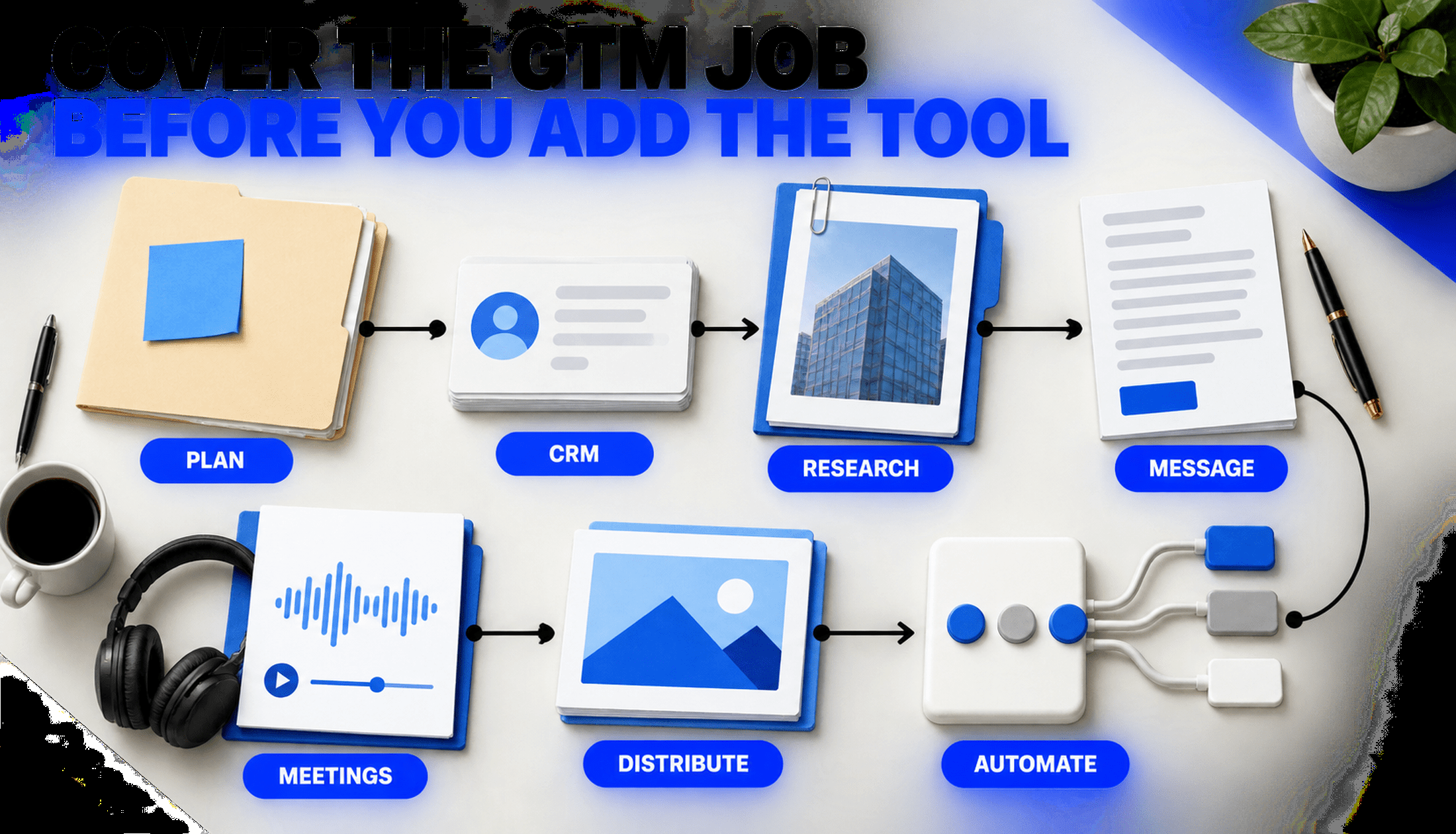
A practical stack covers jobs, not software categories. Think through these layers in sequence.
GTM planning and internal operations
Use a shared place for positioning notes, research, briefs, launch checklists, and decisions. Notion AI can preserve context; it should not replace the customer system.
CRM and customer history
Make the CRM the source of truth for contacts, accounts, opportunities, lifecycle stages, and follow-up ownership. HubSpot is a broad option; a smaller team may start free and add paid functionality after the pipeline is real.
Research, enrichment, and prospecting
Clay and Apollo support account identification, enrichment, company research, contacts, and outbound work. They become more valuable after the ICP, qualification rule, and outreach hypothesis are specific.
Messaging and content production
AI can create landing-page variants, email drafts, collateral, social repurposing, and briefs. The bottleneck is usually a useful point of view and review, not more words.
Meetings and customer learning
An AI meeting tool can transcribe calls, summarize objections, capture actions, and sync selected notes. Fathom fits when conversation volume makes memory unreliable; it does not turn patterns into decisions.
Distribution and search
Buffer supports lightweight social publishing, while Semrush supports SEO and AI-visibility research. Use either when a repeatable motion and measurable question already exist.
Automation and handoffs
Zapier can connect forms, CRM records, notifications, spreadsheets, and apps. Automate only after the manual workflow is stable.
Taken together, these categories form an AI startup tool stack, but AI GTM tools for startups should be added one job at a time. AI CRM tools for startups support records; AI sales tools for startups support research; AI marketing tools for startups support distribution; AI meeting intelligence tools support memory; AI automation tools support handoffs; and AI SEO tools support visibility. Do not buy everything described as GTM software for startups.
AI GTM tools for startups: practical comparison
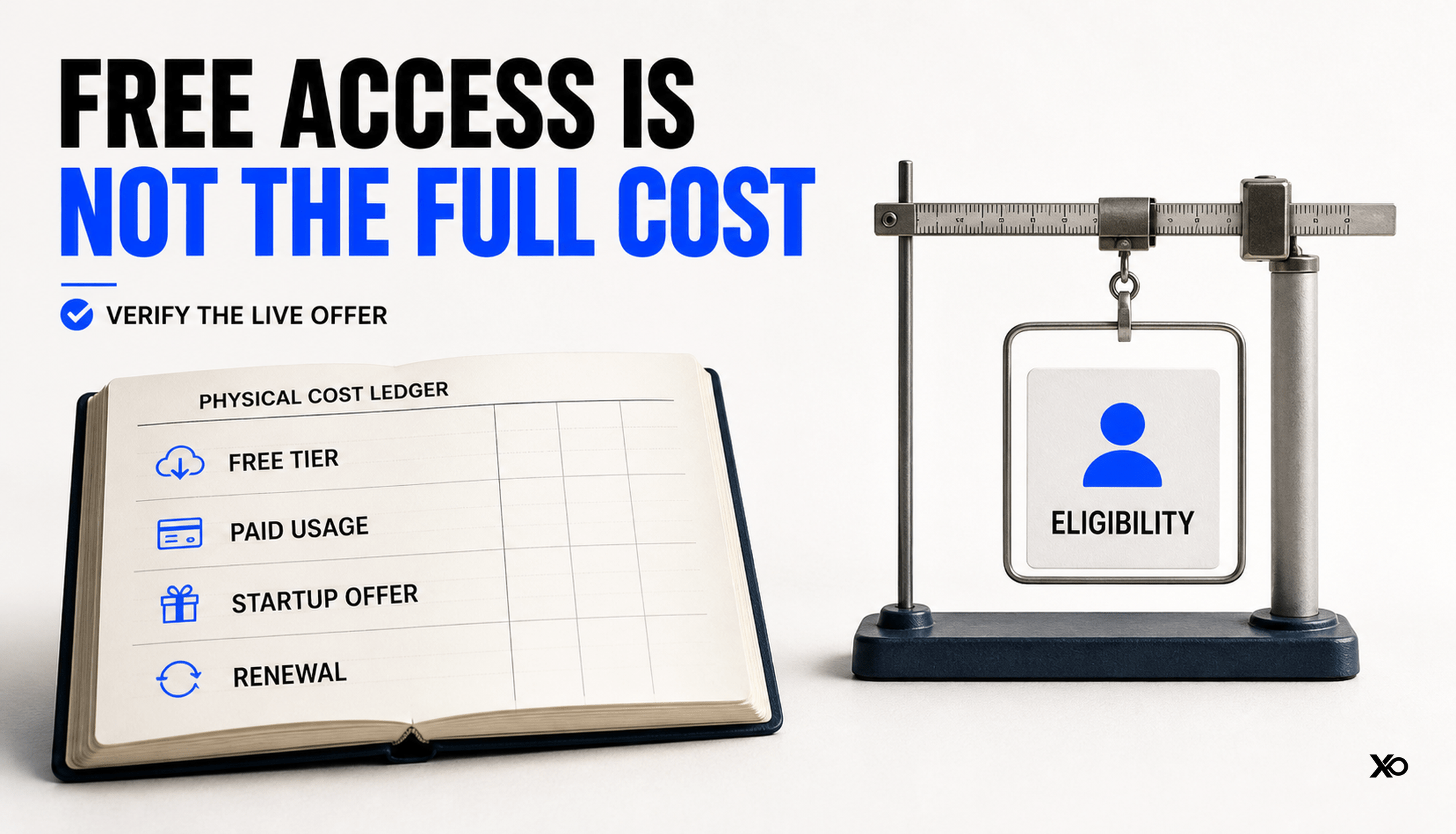
Prices and program terms below were checked on August 28, 2026. Pricing, limits, and startup offers can vary by billing period, region, account, usage, and eligibility. A free tier is not the same thing as a complete GTM system.
| Tool | Best for | Starting cost or free access | Startup offer / eligibility signal | Best-fit stage |
|---|---|---|---|---|
| HubSpot | CRM plus connected marketing and sales workflows | Free tier; official CRM pricing currently shows $0 for up to 2 users and 1,000 contacts; paid Starter displayed from $7/seat/month | Current HubSpot for Startups pages show up to 90% off for eligible pre-seed, seed, or Series A startups with verified venture funding; partner and funding paths vary | Early traction through growth |
| Notion AI | GTM planning, research, documentation, and operations | Free/Plus users get limited complimentary AI responses; AI is included more fully on Business and Enterprise | Notion for Startups offers eligible new, non-paying customers 1–6 months free Business, including Notion AI, depending on path | Pre-launch through early team |
| Clay | Account research, enrichment, signals, and outbound workflows | Free plan includes 500 actions/month and 100 data credits/month; paid pricing is usage-based | No verified general startup discount identified in the reviewed official sources | Founder-led outbound through growth |
| Apollo | Prospecting, contact data, AI research, and outreach | Free plan with 900 credits per seat/year; paid Basic displayed at $49/seat/month billed annually | No verified general startup program identified in the reviewed official sources | Clear-ICP outbound |
| Fathom | Meeting transcription, summaries, follow-up, and CRM notes | Free plan with unlimited recordings/transcription; advanced AI summaries are limited on free access; Premium displayed at $15/user/month | No verified startup-specific offer identified | Customer discovery through sales team |
| Buffer | Lightweight social scheduling, AI-assisted copy, and channel management | Free up to 3 channels with 10 scheduled posts/channel; paid Essentials displayed from $5/channel/month on annual billing | No verified startup discount identified | Content-led or founder-led distribution |
| Zapier | Connecting forms, CRM, alerts, and repeatable app workflows | Free plan includes 100 tasks/month and two-step workflows; paid cost depends on task and plan usage | No verified startup offer identified | Stable recurring operations |
| Semrush | SEO research and AI-visibility measurement | Free AI visibility features are available; SEO pricing displayed from $139/month monthly or $117.33/month billed annually | No verified startup offer identified | Content-led growth and early traction |
Which tools are worth considering by founder situation?
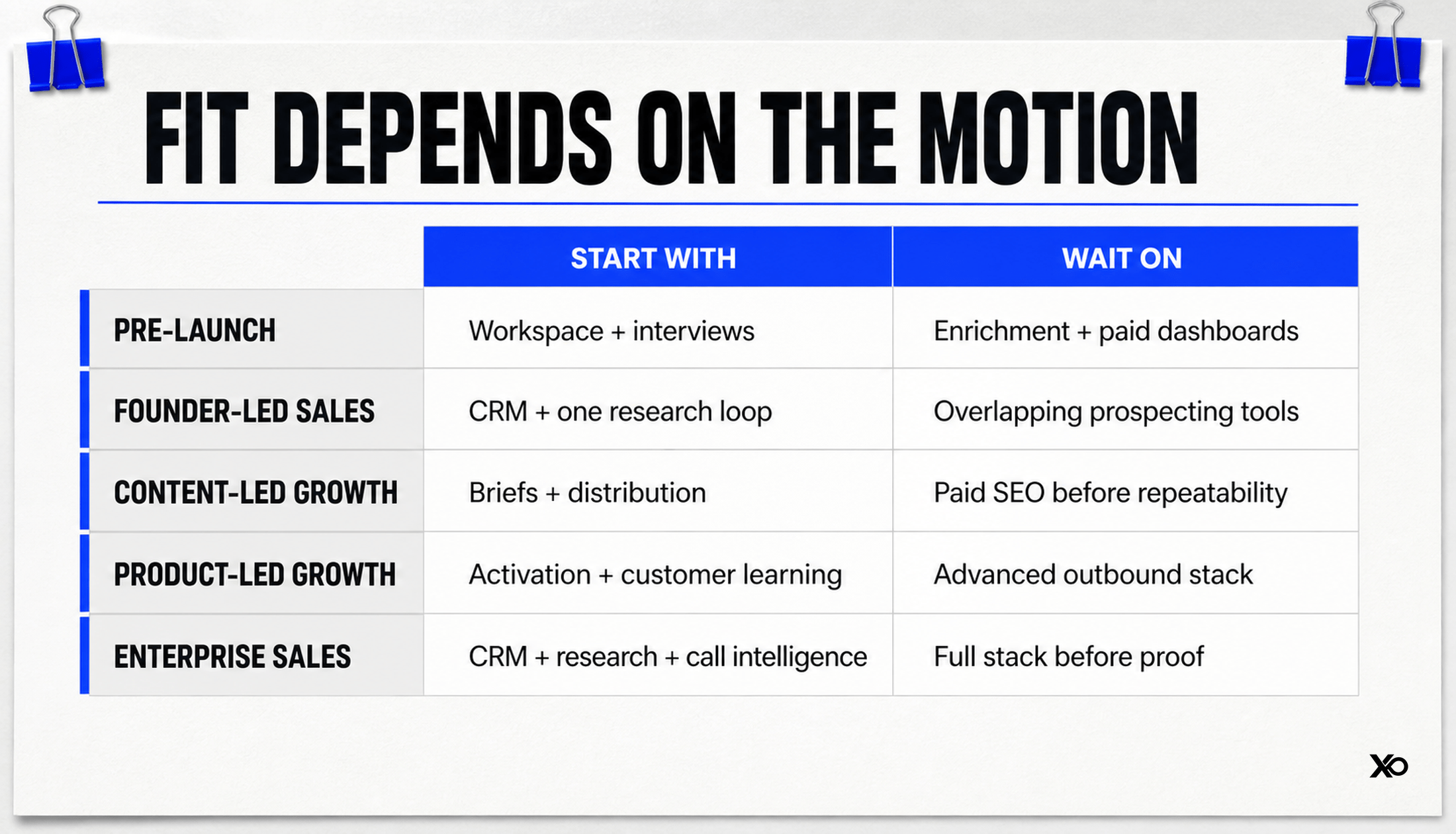
Pre-launch founder
Start with a workspace, research system, landing page, and conversation record. Notion AI can turn notes into briefs and experiment plans. A full CRM, enrichment database, or SEO suite is premature without volume. Proof is a clearer ICP and sharper message, not lead count.
Founder-led sales
Start with one CRM and one research or meeting workflow. HubSpot can own the pipeline; Apollo or Clay can help after the target account is clear; Fathom fits when follow-up is slipping. Compare output, data quality, usage model, and ownership before adding a second prospecting tool.
Content-led growth
Use a workspace, Buffer if channel management creates friction, and Semrush when a repeatable search question exists. AI can accelerate briefs and analysis; proof is qualified attention, sign-ups, activation, or research—not asset volume.
Product-led growth
Prioritize instrumentation, activation feedback, lifecycle communication, and customer learning before outbound. Add a CRM or meeting intelligence when accounts or conversations matter; automate a known handoff, not a missing event definition.
Enterprise or high-consideration sales
A structured CRM, account research, meeting intelligence, and automation layer may be justified. Include implementation, governance, security, deliverability, permissions, and training. Prove fit with one bounded workflow first.
HubSpot for Startups discount eligibility: how to evaluate it
HubSpot is a CRM, marketing, sales, service, content, and data platform. That breadth is its advantage and its risk. It can give a startup one customer system, but it can also introduce more configuration and future expansion cost than a founder needs at the beginning.
HubSpot’s official free-tools page currently shows a free Smart CRM tier with no time limit, up to 2 users, and up to 1,000 contacts. The same page displays paid Starter pricing from $7 per seat per month in the current view. Treat those figures as a starting point, not as a complete cost estimate: paid hubs, contacts, seats, usage credits, onboarding, and annual commitments can change the bill.
The HubSpot for Startups program page shows a 90% first-year discount path for pre-seed, seed, or Series A startups with verified venture funding, and describes 50% in the second year and 25% in the third year. It also describes a 30% first-year path for startups associated with approved entrepreneurial organizations. Another official Series A page narrows the 90% path to verified venture funding above $2 million. These pages indicate that HubSpot for Startups discount eligibility depends on the funding, partner, and application path. Verify the offer shown to your company before treating any percentage as guaranteed.
The decision rule is simple: use the free CRM to test whether the team will maintain one customer record and pipeline. Apply for the startup program only if the paid platform supports a workflow you are ready to run, and model standard pricing before the discount ends.
Notion AI for startup operations: useful boundary, real eligibility
Notion is a workspace and operations platform. Notion AI is a set of AI capabilities inside that workspace, not a standalone CRM. The official Notion AI help documentation describes features including writing assistance, Notion Agent, connected-app search, research mode, meeting notes, database creation, autofill, and formulas or automations. Users on Free and Plus plans get limited complimentary AI responses, while fuller AI access is tied to Business and Enterprise plans.
The Notion for Startups guidance says eligible companies can receive 1–6 months free of the Business Plan, including Notion AI. Partner-affiliated startups may receive 6 months, qualifying non-partner startups may receive 3 months, and SMBs or teams under 10 employees may receive 1 month. The program requires a new, non-paying Notion customer; the 3- and 6-month paths are intended for scalable, tech-related products or services, and the company must be verifiable.
Use Notion AI for research synthesis, positioning notes, campaign briefs, meeting memory, launch checklists, and internal knowledge. Do not use it as a substitute for CRM stages, contact ownership, source-of-truth revenue data, or product analytics. The startup offer is useful when the team will genuinely centralize operations there; it is not a reason to move every workflow into Notion.
Outbound and sales intelligence: Clay versus Apollo
Clay is a data-enrichment and GTM workflow platform. Its official pricing page currently shows a Free plan with 500 actions per month, 100 data credits per month, unlimited seats and tables, multi-provider waterfalls, Claygent research, and a native sequencer. It also separates platform Actions from Data Credits used for data and AI. That matters because the headline subscription is not the whole cost. Your spend depends on rows, enrichments, providers, AI model usage, and workflow volume.
The reviewed Clay page displays Launch pricing from $167 per month in the plan selector, while the page’s plan-selection FAQ describes Launch as starting at $185 per month and Growth at $495 per month. That is a live-page pricing inconsistency, so the exact paid figure should be confirmed at checkout. Clay’s AI pricing can also be fixed or variable depending on the model and token use.
Apollo is a sales-intelligence and engagement platform. Its current pricing page shows a free plan with 900 credits per seat per year, Basic at $49 per seat per month billed annually, Professional at $79, and Organization at $119 with a three-seat minimum. Apollo’s credits cover items such as emails, phone numbers, enriched data, and AI research. That makes the usage model easier to understand, but it still requires a data-quality and deliverability review.
Choose Clay when you need flexible enrichment, signals, and custom research workflows. Choose Apollo when you want a more packaged prospecting and outreach system. Use neither before defining the segment, qualification rule, message, and review process. Automated targeting magnifies a clear hypothesis; it does not create one.
Meetings, content, distribution, and automation
Fathom for customer and sales conversations
Fathom’s official pricing page presents a free tier with unlimited recordings, storage, and transcription, while limiting advanced AI summaries to the first five calls each month. Paid plans add broader summaries, follow-up emails, action items, and CRM sync. Use it as a memory system for repeated conversations, then review the output and route only useful decisions into the CRM or product backlog.
Buffer for social distribution
Buffer’s current official pricing page shows a Free plan for up to three channels, 10 scheduled posts per channel, an AI Assistant, insights, API access, and a community inbox. Essentials is displayed from $5 per month for one channel on annual billing; monthly pricing can differ. It fits a startup with recurring social formats, but it is a distribution layer rather than a content strategy.
Zapier for stable handoffs
Zapier’s current Free plan includes 100 tasks per month, two-step workflows, one user, and a 15-minute polling interval. Paid usage is task-based, and AI or tool calls can consume different task amounts. Start with one handoff, define retries and ownership, and add more systems only after the manual process is stable.
Semrush for search and AI visibility
Semrush combines SEO and AI-visibility tools for keyword research, site audits, competitor analysis, and content optimization. Current pricing pages display SEO from $139 per month monthly or $117.33 billed annually, and AI Visibility from $99 per month. Use it when you have a visibility question worth measuring, not because every competitor has a dashboard.
Start small: the lean AI GTM stack
Pre-launch: the minimum viable system
Use one workspace, one simple contact record, a landing page, and repeatable interview notes. Add enrichment, social scheduling, or paid SEO only after the audience and message are defined.
Founder-led GTM: the core system
Use one CRM, one research tool, meeting memory when calls justify it, and automation for one stable handoff. HubSpot plus Apollo or Clay plus Fathom is one possible configuration. Keep systems of record few.
Growing GTM team: the expanded system
Add role-specific workflows only when volume and ownership justify them. Define fields, permissions, retention, approvals, budget alerts, and renewal ownership before expanding.
What to do at each startup stage
Idea stage
Test whether an audience has a specific problem. Use a research workspace and lightweight contact record; avoid enrichment and paid dashboards. Measure repeated evidence and message clarity.
MVP stage
Connect product learning to one outreach or activation loop. Keep one source of truth and measure qualified conversations, activation, and time from insight to change.
Pre-seed
Find a motion the small team can repeat. A free CRM, focused research workflow, and meeting memory may be enough. Measure pipeline quality and follow-up; verify offers and renewal terms directly.
Seed
Improve throughput without losing judgment. Add one defined CRM and enrichment path, then automation. Measure conversion, data quality, completion, and cost per useful outcome.
Early revenue
Document the working motion for the next operator. Use ownership rules and measurement where evidence exists. Check qualified opportunities, retention signals, time saved, and post-discount economics.
Growth stage
Add permissions, retention, approvals, budget alerts, and a renewal owner. Choose specialized tools only when the team can act on output. Measure efficiency, adoption, reliability, and total cost.
How to choose without overlapping subscriptions
Ask these questions before starting a trial:
- Which exact workflow is too slow or unreliable today?
- Which tool is the source of truth for the resulting record?
- Does another paid tool already perform most of this job?
- What is the free-tier limit, and what happens when the team crosses it?
- Is the cost seat-based, contact-based, credit-based, task-based, token-based, or usage-based?
- What data will be copied into the tool, and how will it be removed if the tool is cancelled?
- Who reviews AI outputs and owns the renewal decision?
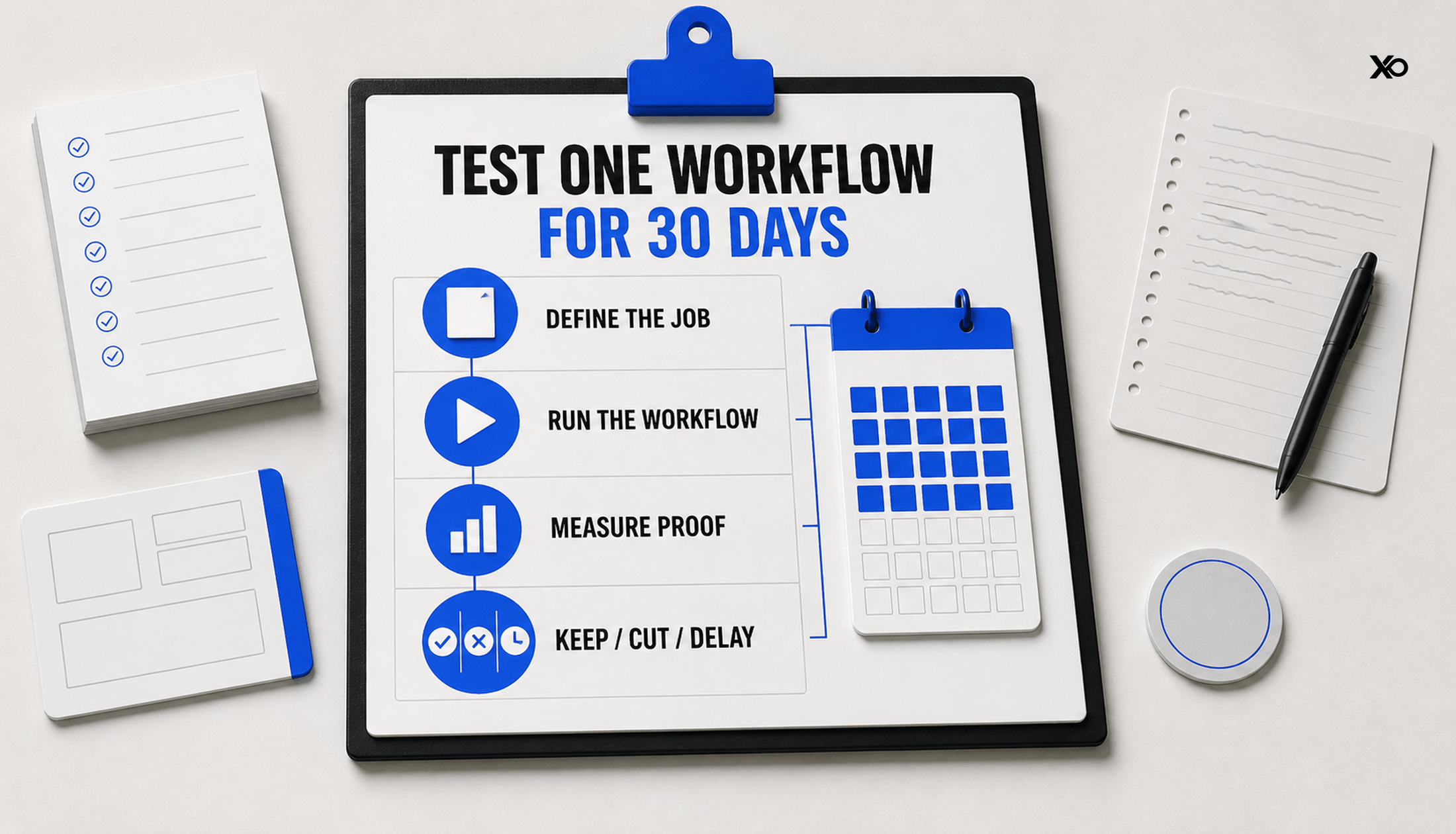
- What result must improve within 30 days for the tool to stay?
Startup programs make the price easier to enter, not necessarily easier to exit. Record the end date, standard renewal price, eligible products, minimum commitment, data export path, and the workflow you will keep if the offer expires. Compare the full cost of the operating system, not just the discounted line item.
Examples and use cases
A founder testing a B2B segment
Start with a research workspace and simple CRM. Use Notion AI to synthesize interviews and record ICP evidence. Test Apollo or Clay only after a segment and message repeat. Proof is a better conversation, not a larger list.
An AI SaaS team with growing demos
Use HubSpot for the pipeline and Fathom for meeting memory, with narrowly scoped automation for selected tasks. Measure follow-up, stage movement, and recurring objections before adding prospecting software.
A founder publishing every week
Keep a workspace for briefs, an AI assistant, Buffer if distribution creates drag, and Semrush when search testing is ready. Proof is qualified traffic or conversations, not publishing volume.
Mistakes and anti-patterns
Buying before defining the job
Founders buy the most complete platform before understanding the workflow. Define the bottleneck and output first; a smaller tool may be enough.
Treating free access as proof of fit
Free access lowers test cost but does not prove data quality, adoption, or economics. Set a measurable test and stop date.
Using two systems of record
When contacts or pipeline stages live in multiple tools, AI can accelerate duplication. Choose one source of truth.
Scaling weak outreach
Enrichment and sequencing can increase messages while reducing relevance. Validate the segment and message with a small sample.
Ignoring usage economics
Credits, tasks, tokens, contacts, storage, commitments, and post-discount pricing can dominate the bill. Model the next usage tier.
Confusing summaries with insight
An AI transcript is not a decision. Review calls, identify evidence, and write the change that follows.
Buying a dashboard before a decision exists
If nobody has a decision to make from an SEO, social, or attribution report, delay the subscription and use a simpler measurement loop.
Practical playbook
Step 1 — Map the GTM bottleneck
Write one sentence describing the slow or unreliable job. Name the specific handoff or decision, not “marketing” or “sales.”
Step 2 — Define the output and owner
Specify what the tool must produce and who reviews it: an account list, follow-up task, campaign brief, or search experiment.
Step 3 — Choose one tool and one proof metric
Run one workflow for 30 days. Track time, quality, completion, conversion, or decision speed. Do not trial five products for one job.
Step 4 — Check free, startup, and full-price economics
Compare free limits, eligibility, discount duration, renewal price, and export or cancellation. Review the offer shown in your account.
Step 5 — Connect only stable handoffs
Add automation only after the manual process works. Define errors, permissions, ownership, and incomplete-record handling.

Startup Perks AI Assistant
Have questions about credits? Let's chat instantly.
Step 6 — Review the evidence
At the end, decide whether the tool improved the workflow. Keep, consolidate, downgrade, or remove it, and record why.
Step 7 — Use XRaise to compare relevant offers
Once the workflow is proven, use XRaise startup perks to check whether a verified offer changes the economics. The offer should support the decision, not choose the product.
Related XRaise resources
General guides
CRM and operations
Startup perks
FAQ
What are the best AI GTM tools for startups in 2026?
There is no universal best tool. HubSpot fits CRM work; Notion AI planning; Clay and Apollo outbound; Fathom conversations; Buffer distribution; Zapier handoffs; and Semrush search work. Choose by bottleneck, output, proof, and owner.
What should be in a startup GTM tech stack?
A startup GTM tech stack should cover shared planning, a customer or pipeline record, one acquisition or sales workflow, measurement, and necessary handoffs. Add meeting intelligence, social publishing, enrichment, or SEO software only when volume creates a bottleneck.
What AI GTM tools can startups use for free?
Limited free access includes HubSpot CRM, Notion AI responses, Clay actions and credits, Apollo credits, Fathom recording, Buffer’s three channels, Zapier’s 100 tasks, and Semrush visibility features. Check limits and terms.
Does HubSpot offer a startup discount?
Yes, but the discount depends on funding, partner, and verification route. Official pages describe up to 90% off in year one, lower later-year discounts, and an entrepreneurial-organization tier. Confirm your offer and model standard pricing.
Who qualifies for HubSpot for Startups?
HubSpot describes eligibility for some pre-seed, seed, and Series A startups with verified venture funding, plus startups affiliated with approved partners or entrepreneurial organizations. Requirements and discount levels differ by route. Treat “eligible” as something the live application must confirm, not a guarantee based on company age or a founder’s description.
Is Notion AI useful for startup operations?
Yes, for research, briefs, decisions, meeting memory, and documentation. It can synthesize context, but should not replace a CRM, revenue system, warehouse, or product analytics.
Can Notion AI replace a CRM?
No. Notion AI can help create or analyze databases and notes, but a CRM is designed around customer records, ownership, lifecycle stages, pipeline activity, and sales workflows. A startup may use Notion for context and a CRM for customer history. If one tool appears to cover both, define which system is authoritative before adding automation.
How much should an early-stage startup spend on GTM tools?
Spend enough to remove a proven bottleneck, not enough to imitate a later-stage team. An early founder can often begin with free or low-cost tools, then add a paid system after a workflow repeats and its output can be measured. Include seats, usage, data, implementation, renewal, and post-discount pricing in the decision.
Which GTM tools should founders use first?
Start with a shared research and decision system, a simple customer record, and the one workflow closest to learning or revenue. For founder-led sales that may be a CRM plus a small research or meeting workflow. For content-led growth it may be a brief system plus publishing and search measurement. Delay anything that does not support the next proof milestone.
Final takeaway
AI GTM tools for startups are most valuable when they make a real workflow clearer, faster, or more measurable. Start with the job, define the output, assign the owner, and test one tool before building a stack around it. Then use XRaise to compare startup perks and GTM resources after the workflow is proven not before.