Last verified: June 18, 2026
TL;DR
- Lovable for startups is a strong fit when you need to turn early product ideas into working web app prototypes quickly.
- The main benefit is speed, but the main risk is shipping AI-generated code without enough technical review.
- It is best for founders, product teams, operators, and lean engineering teams testing MVPs, internal tools, and early workflows.
- Start with a focused prototype, review pricing and usage credits, then compare adjacent startup stack savings through XRaise.
What is Lovable?
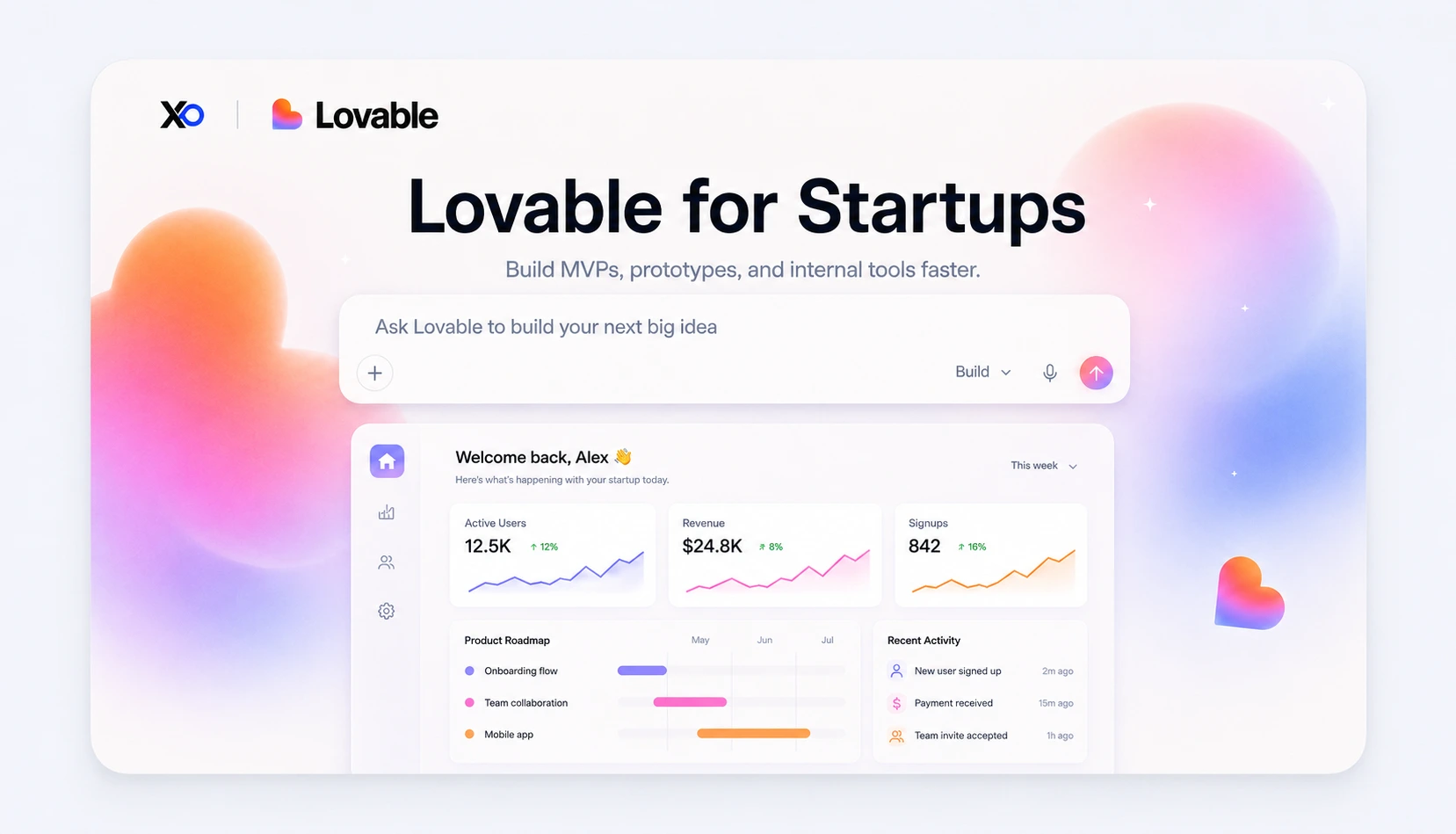
Lovable is a full-stack AI development platform that helps you build web applications by describing what you want in plain language. Instead of starting from a blank repo or static design file, you prompt Lovable, review the generated app, refine it, and decide whether the result is good enough for a prototype, internal workflow, or early product experiment.
For founders, the strongest use case is speed to learning. Lovable can help you test an MVP concept, show a clickable product flow to customers, build an internal dashboard, or turn a product spec into something more tangible before you commit a full engineering sprint.



That does not make Lovable a replacement for product judgment or software ownership. If the app touches real users, payments, sensitive data, customer records, permissions, or production infrastructure, you still need technical review. The XRaise guide to startup tools for founders is useful context when deciding where an AI app builder belongs in your wider stack.
How Does It Work?
You Describe the Product You Want to Build
Lovable starts with a prompt. You can describe an app, landing page, dashboard, workflow, or feature set, then guide the builder with follow-up instructions. This is most useful when you already know the customer problem, the core workflow, and what the first version should prove.
Lovable Generates a Working Web App
Lovable can generate app structure, interface screens, backend logic, database-related pieces, authentication flows, integrations, and deployable web experiences depending on the project. You review the result in a live preview and keep iterating until it matches the test you want to run.
You Decide What Deserves Real Engineering
The founder move is to treat Lovable as a learning accelerator, not a magic production shortcut. Use it to reduce ambiguity, validate flows, and create internal momentum. Then decide what needs code review, security review, custom engineering, or a more mature architecture before launch. If your prototype may become infrastructure, read XRaise’s guide to cloud credits for AI startups before you lock in the surrounding stack.
The Main Features and Benefits of Lovable
1 Natural-Language App Building
Lovable lets you build by describing what you want, which helps non-technical founders and product teams move from idea to working prototype faster.
2 Full-Stack Web App Generation
Lovable is built for more than simple static pages. It can support web apps with frontend, backend, database, authentication, integrations, and deployment workflows.
3 Live Preview and Iteration
You can review the generated product as it changes, then refine the app with feedback instead of waiting for a long handoff cycle.
4 Code Ownership and GitHub Workflow
Lovable says projects produce editable code and can connect to GitHub, which matters if your prototype needs to move into a more technical workflow later.
5 Startup-Friendly Experimentation
Lovable is useful for MVPs, customer demos, internal tools, landing pages, dashboards, and workflow tests where speed matters more than perfect architecture on day one.
6 Team and Governance Features
Paid tiers add more controls for collaboration, roles, permissions, SSO, security center, and enterprise needs, which matter once more people touch product work.
Is Lovable Right for Your Business? Pros and Cons
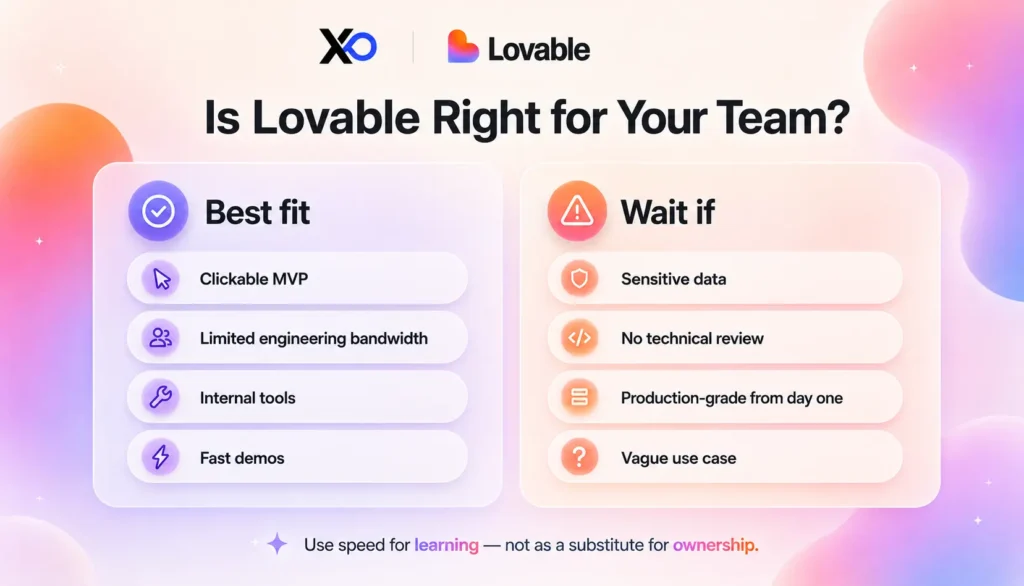
Lovable fits your company when your priority is faster product learning, especially if your team wants to test app ideas, MVP flows, internal tools, and product experiments without turning every early idea into a full engineering project.
Pros
- Fast path from idea to prototype: Lovable can help you test product flows before a full build.
- Useful for non-technical founders: You can create working app concepts without starting in code.
- Strong MVP fit: It is practical for demos, internal tools, landing pages, and early web apps.
- Real code matters: Code ownership and GitHub workflow can help teams avoid pure no-code lock-in.
- Good for product clarity: A working prototype reveals gaps that documents and mockups often hide.
Cons
- Security review still matters: AI-generated apps can expose data or permissions if nobody checks them.
- Complex products need engineers: Lovable is not a substitute for architecture, QA, and production ownership.
- Credit usage can be hard to predict: More iteration, hosting, and AI features can consume credits.
- Output quality depends on prompts: Vague instructions usually create vague products.
- Tool excitement can create sprawl: You still need a clear owner, review date, and shutdown rule.
Use Lovable when it helps you answer a real product question faster. Wait when the app would create security, compliance, or maintenance risk that your team cannot responsibly own yet.
Pricing Plans
Lovable’s official pricing page lists free access plus paid Pro, Business, and Enterprise options. Pricing is credit-based, and credits can be used across building, Lovable Cloud hosting, and AI features inside apps. Pricing can change, so review Lovable’s official pricing page before committing.
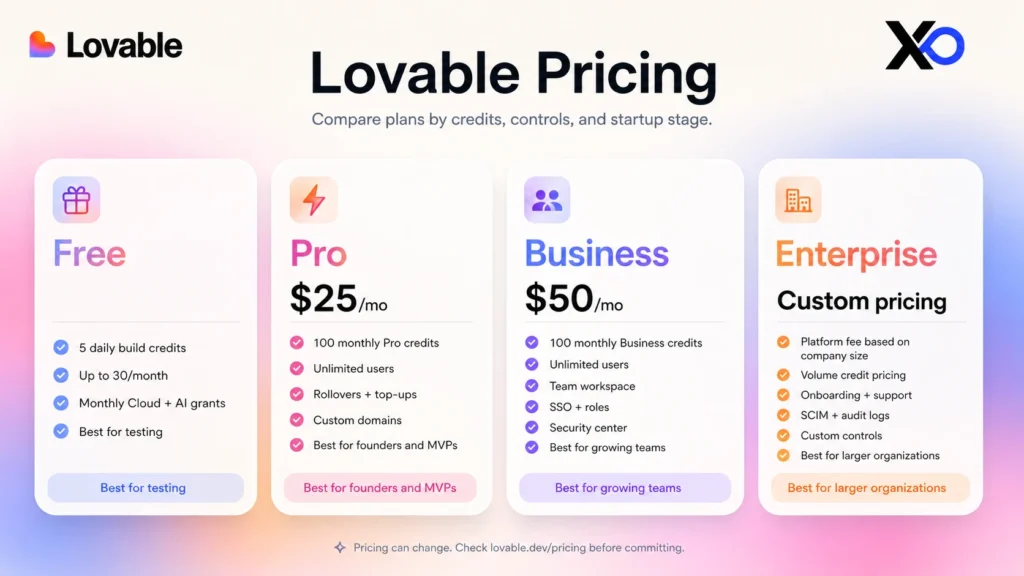
The important pricing question is not only the monthly plan. You should also understand how credits are consumed, whether unused credits expire, how hosting costs work as traffic grows, and whether your app will need paid top-ups. For broader cost discipline before adding new tools, XRaise’s guide to startup runway extension gives a useful way to evaluate recurring spend.
What Is the Best Alternative to Lovable for AI App Builders?
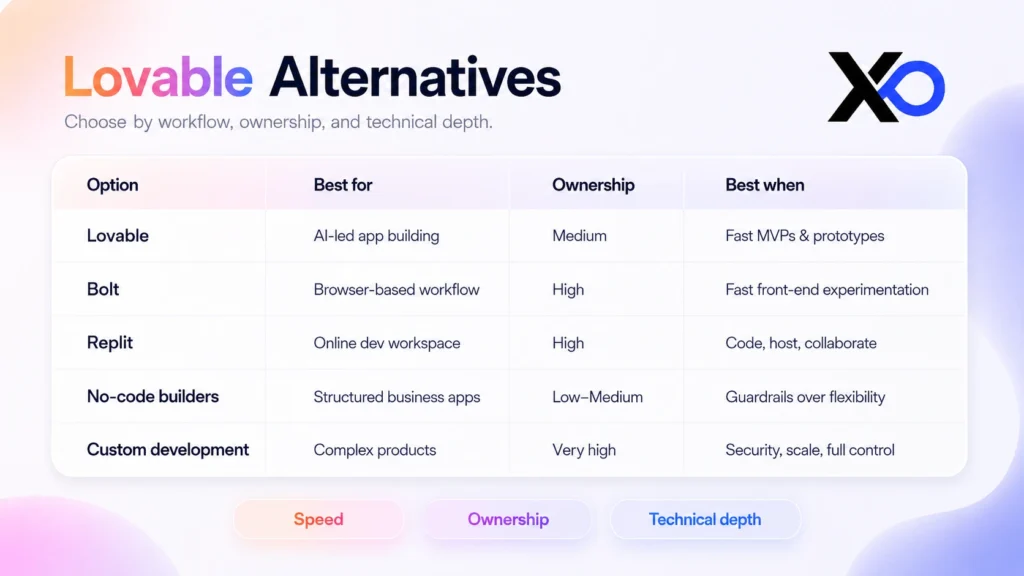
Lovable may be the right fit if you want to build web apps, prototypes, and internal tools through an AI-led development workflow. But it is not the only path. If you are comparing Lovable vs Bolt or Lovable vs Replit, think less about hype and more about ownership, workflow, and technical depth.
Bolt
Choose Bolt if your priority is browser-based app generation with a developer-oriented workflow and fast front-end experimentation. It can be useful when you want a coding environment that feels closer to building and editing in the browser.
Replit
Choose Replit if you want an online development workspace with coding, hosting, collaboration, and AI assistance in one place. It is usually a better fit when someone technical will own the code and environment.
Softr, Bubble, or no-code builders
Choose a no-code builder if your need is a structured business app, portal, directory, or internal workflow and you prefer guardrails over code ownership. This can be calmer for non-technical teams, but less flexible when the product becomes custom.

Softr for Startups
Build AI-powered apps and get 2 months free when choosing a yearly plan.
Custom software development
Choose custom engineering when the product has complex security, data, performance, compliance, or architecture requirements. XRaise’s guide to custom software development for startups can help you decide when building properly is worth the extra time.
If your team is specifically comparing no-code and AI-assisted build tools, the XRaise guide to no-code tools for startups is a useful next read.
What Customers Say About Lovable
What people generally like about Lovable
Verified product coverage and Lovable’s own documentation point to a clear positive pattern: people value the speed of turning ideas into working apps, the ability for non-engineers to participate in building, and the chance to produce real code instead of only static mockups. This is why Lovable for founders is especially attractive at the MVP and prototype stage.
What people generally dislike about Lovable
The main concerns are reliability, security, code quality, and production readiness. Public reporting on AI app builders and vibe-coded apps has highlighted data exposure, privacy, and security risks when generated applications are deployed without enough review. For startups, the lesson is simple: Lovable can accelerate learning, but production software still needs ownership.
Key Takeaways
- Lovable for startups is best for MVPs, prototypes, demos, internal tools, and early product experiments.
- Lovable AI app builder workflows are fastest when your team has a clear use case, customer problem, and review owner.
- Lovable vs Bolt vs Replit is mainly a workflow decision: AI app builder, browser coding flow, or broader online development environment.
- Pricing is credit-based, so monitor usage, hosting, AI features, top-ups, and credit expiration before scaling.
FAQ
Is there a Lovable promo code or startup offer available?
A dedicated Lovable startup perk was not present in the XRaise startup perks.You can still use XRaise to review adjacent perks for cloud, developer tools, automation, collaboration, analytics, and infrastructure before building around your prototype.

Startup Perks AI Assistant
Have questions about credits? Let's chat instantly.
What is Lovable?
Lovable is a full-stack AI app builder that lets you create web apps and websites by describing what you want in natural language, then iterating through a live product workflow.
What do startups typically use Lovable for?
Startups use Lovable for MVPs, clickable prototypes, landing pages, internal tools, dashboards, product experiments, workflow tests, and early demos for customers or investors.
Lovable vs Bolt: what is the practical difference?
Lovable is often strongest when you want an AI-led path from idea to working app. Bolt is often compared as a browser-based development workflow for fast coding and front-end experimentation.
Lovable vs Replit: what is the practical difference?
Lovable is more focused on generating and iterating web apps from prompts. Replit is broader as an online coding, hosting, collaboration, and AI-assisted development environment.
Is Lovable easy to use for non-technical founders?
Yes, Lovable is approachable for non-technical founders at the prototype stage. The harder part is knowing when the app needs engineering review, security checks, QA, and clearer ownership before real users depend on it.
Should You Choose Lovable for Your Team?
If your priority is faster MVP learning with a system your team will actually use, Lovable is one of the most practical AI app builders for startups to consider. It is especially strong for founders and product teams that want working prototypes, internal tools, early customer demos, and product experiments without waiting for every idea to become an engineering sprint.
If you’re on the fence, run a real two-week test with live workflows, real users, and real follow-ups. Do not judge it from a sandbox demo only.
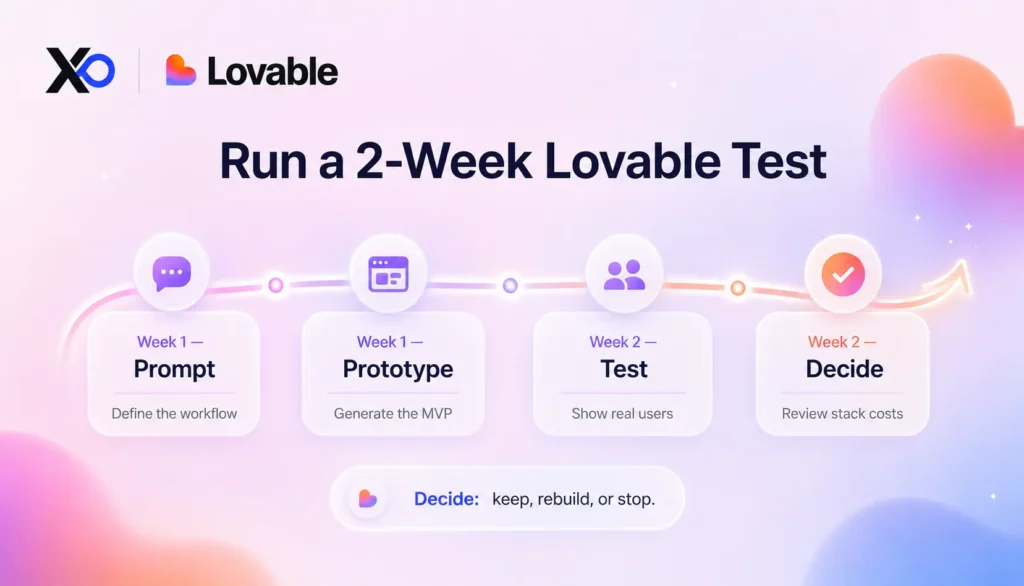
Before you commit, check adjacent startup perks on XRaise to see whether the surrounding cloud, developer, automation, and collaboration stack can be tested with less runway pressure.
Lovable features, pricing, credit rules, usage limits, eligibility paths, security settings, and deployment behavior can change. Before you commit, review Lovable’s official pricing page, documentation, trust and security materials, and any XRaise listing you plan to use for adjacent startup stack savings. Product names, logos, and trademarks belong to their respective owners. This article should not imply a verified relationship between XRaise and Lovable unless that relationship is separately confirmed.