Last verified: June 13, 2026
TL;DR
- A startup accelerator application checklist should cover fit, timing, traction, team, market, product, documents, founder availability, and the tradeoffs behind the program.
- The main benefit is not just submitting faster; it is applying only when the accelerator can help the startup reach a real next milestone.
- This is best for founders preparing for accelerators, pre-seed programs, startup fellowships, founder communities, and investor-backed application processes.
- Before applying, organize your materials, compare supporting startup tools through XRaise, and verify the official accelerator terms before committing time, equity, or attention.
What a Startup Accelerator Application Checklist Should Do
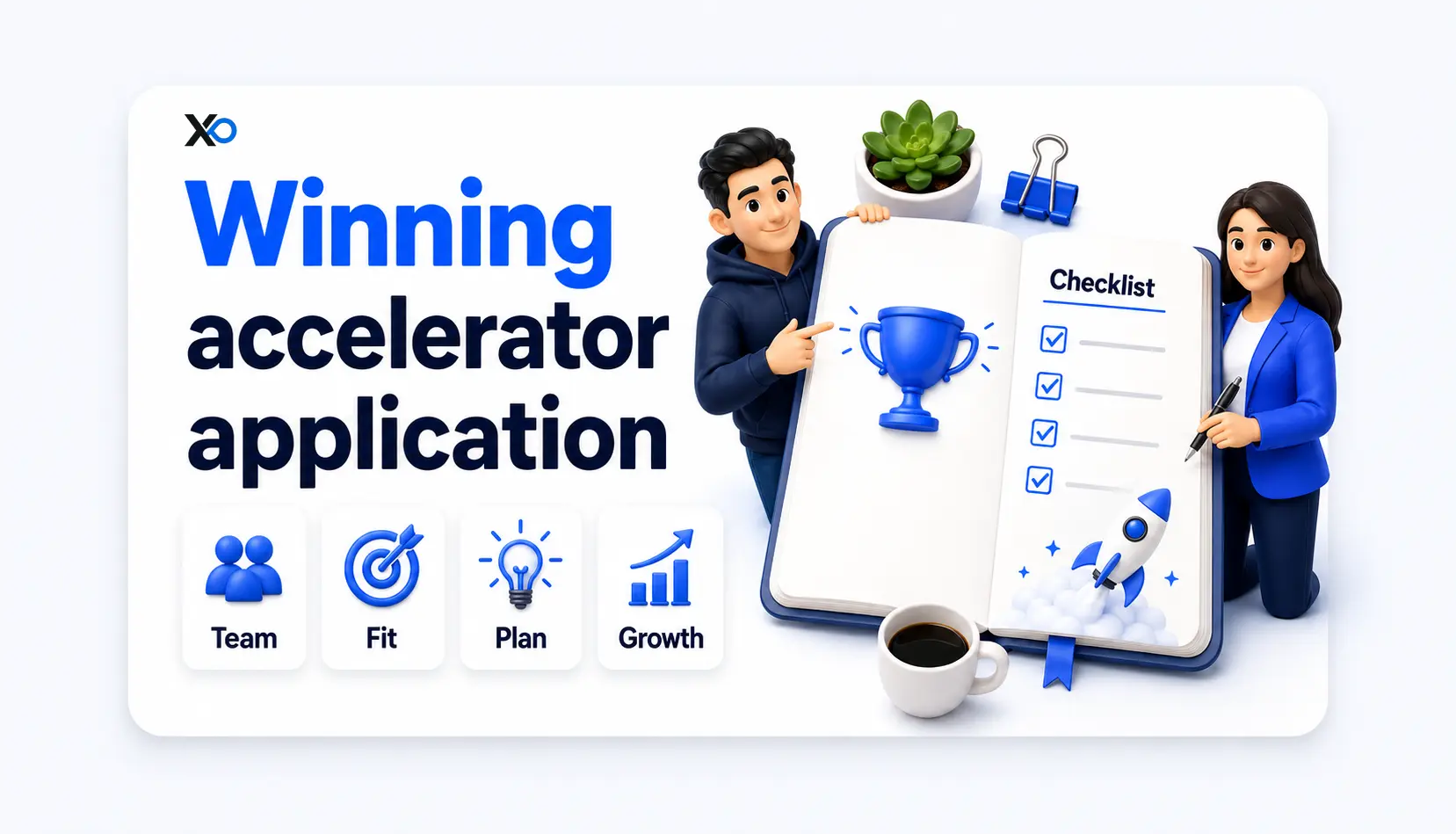
A startup accelerator application checklist is a practical system for deciding whether to apply, preparing the right materials, and submitting a focused application before the deadline.
✓ It should help founders answer four questions:
- Are we a strong fit for this accelerator?
- Can we explain the startup clearly?
- Do we have enough evidence to support the application?
- Is the program worth the time, terms, and opportunity cost?
The best checklist is not just a document list. A pitch deck, application form, product demo, and founder bios matter, but they only work if the underlying story is clear.
Related Posts

Accelerators usually look for speed, founder quality, market insight, product clarity, customer evidence, and ambition. The exact criteria vary by program, but strong applications tend to make the same things easy to understand: what problem the startup solves, why now, why this team, what traction exists, what the company needs next, and why the accelerator is the right path.
Founders should use the checklist as a readiness filter. If the application reveals gaps in traction, customer clarity, financial planning, or team commitment, that is useful signal. It may mean apply now, wait one cycle, or choose a different founder opportunity.
Accelerator Fit Comes Before the Application
The first step is deciding whether the accelerator is the right program for your startup. Prestige can be useful, but fit matters more.
Accelerators vary significantly in what they expect from applicants. Some are designed for idea-stage founders, while others look for a product, early customers, revenue, or a technical founding team. Requirements may also depend on industry focus or geographic location. In return, programs can offer capital in exchange for equity, startup credits, mentorship, office hours, investor introductions, customer access, or a structured curriculum.
Use this first fit check before spending hours on the form:
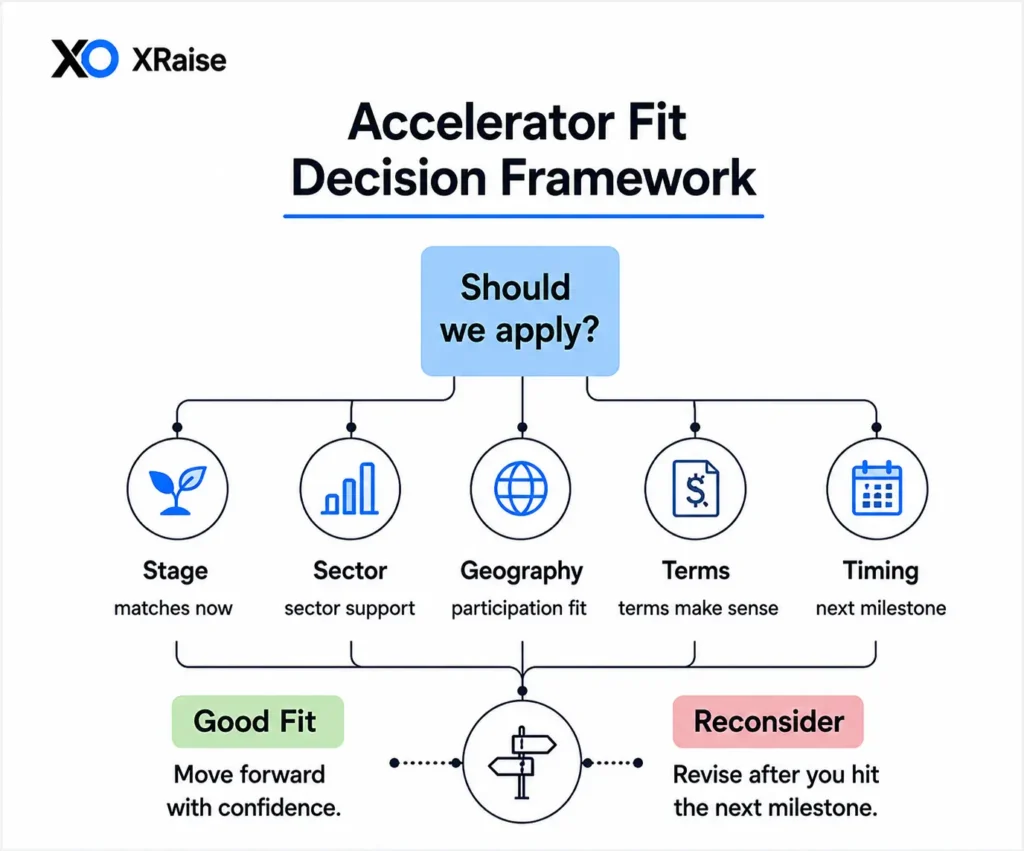
If the answer is unclear, do not force it. A weak-fit accelerator application can drain founder attention at exactly the wrong moment.
A good accelerator should support a current milestone. That milestone might be validating a market, shipping an MVP, closing pilots, preparing for fundraising, refining go-to-market, hiring early operators, or expanding into a new customer segment.
The Core Startup Accelerator Application Checklist
Use this checklist before you submit. It keeps the process practical and helps your team avoid last-minute scrambling.
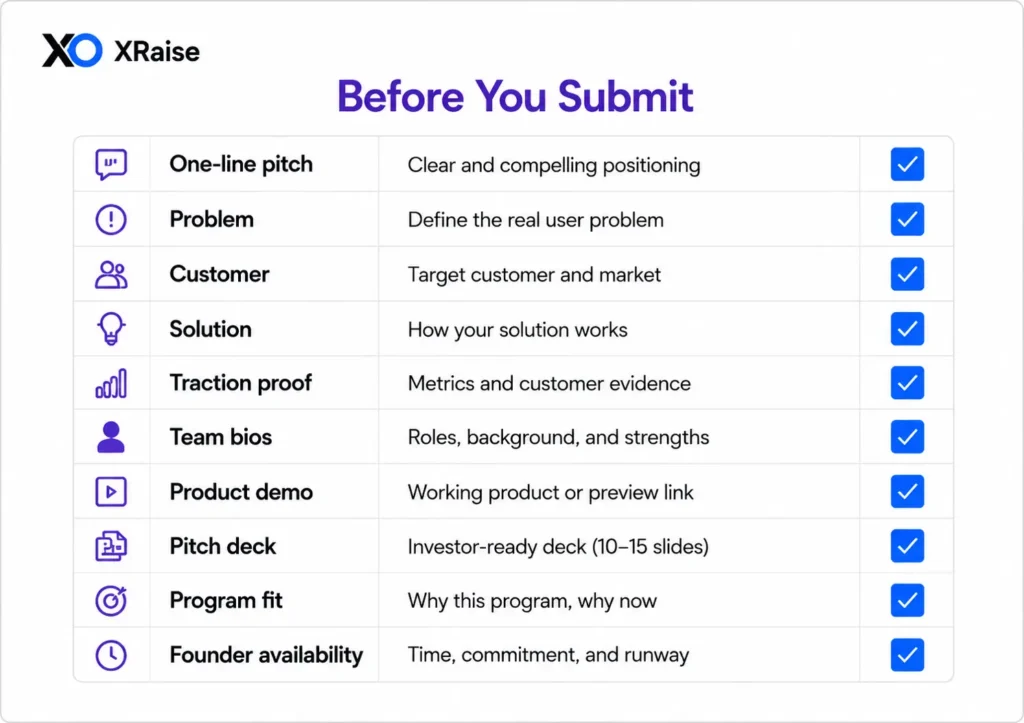
Not every accelerator requires every item, but founders should have them ready. A reusable application folder saves time across multiple programs and makes the startup sound more consistent.
Before You Apply: Clarify the Startup Story
Many applications fail because the story is too broad. Founders try to explain everything at once: the vision, the product, the roadmap, the market, the business model, the future platform, and every feature they could build.
Accelerator reviewers need the sharper version.
Write a simple application narrative:
“We are building [product] for [customer] who struggles with [specific problem]. We have [traction signal] and are applying because this accelerator can help us [next milestone] through [specific program value].“
✓ This Does Three Things:
- It names the customer.
- It shows evidence.
- It explains why the program matters now.
Your application should also be honest about stage. If you are pre-revenue, do not bury that fact. Explain what proof you do have: interviews, pilots, letters of intent, usage, community demand, waitlist quality, prototype testing, or founder-market fit.
Founders often underestimate non-revenue traction. A clear pattern from customer discovery can be more persuasive than vague revenue claims.
Documents and Assets to Prepare
Most accelerator applications are lighter than a full investor data room, but founders still need organized materials.
Create a simple folder with:
- Pitch deck.
- Product demo or prototype link.
- Founder bios and LinkedIn profiles.
- Company one-liner and short description.
- Website or landing page.
- Traction snapshot.
- Customer proof or pilot notes.
- Financial snapshot if relevant.
- Cap table or funding summary if requested.
- Incorporation details if required.
- Program-specific answers.
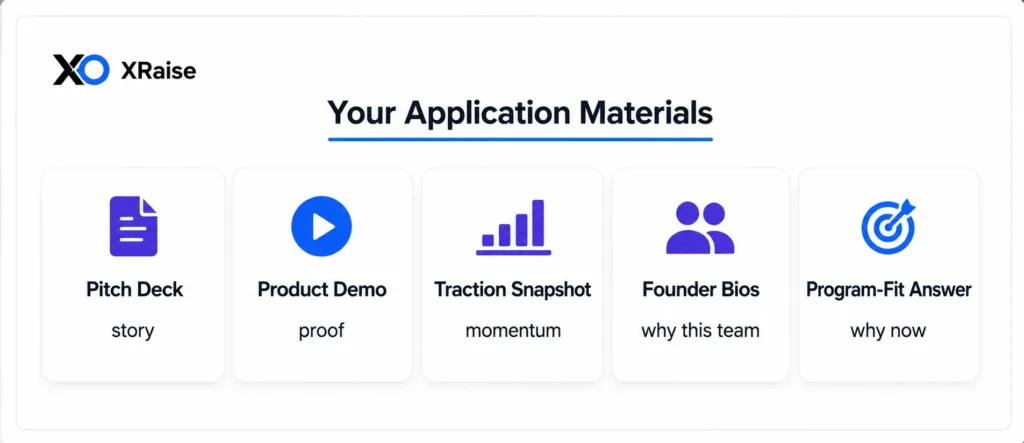
Use a clean workspace so the team can update materials quickly. If your startup already uses knowledge-base tools, a resource like Notion for Startups through XRaise can help organize application notes, founder bios, program deadlines, and reusable answers.
For application forms, tools like Tally Startup Program through XRaise may also be useful when founders need lightweight forms for customer research, mentor intake, or internal review workflows before applying.
The goal is not tool collecting. The goal is one accurate source of truth.
Traction Signals Accelerators Care About
Traction does not always mean revenue, especially for early-stage accelerators. But it does need to show that the startup is learning fast and moving toward a real market.
Common traction signals include:
- Paying customers.
- Active users.
- Pilot customers.
- Letters of intent.
- Waitlist growth.
- Customer interviews.
- Usage frequency.
- Revenue pipeline.
- Product demo requests.
- Retention or repeat usage.
- Community adoption.
- Technical milestones.
- Strategic partnerships.
Reviewers want to see momentum, not just activity. “We interviewed 80 finance leaders and 23 asked for a pilot” is stronger than “we are exploring fintech.” “Our beta users complete 4 workflows per week” is stronger than “we launched a beta.”
Before applying, turn your traction into a short evidence table:
| Evidence type | Strong version | Weak version |
|---|---|---|
| Customer discovery | Named segment, pattern, quotes, next step | Random calls with no insight |
| Product usage | Active users, frequency, retention signal | Total signups only |
| Revenue | Paid pilots, MRR, expansion potential | Vague future monetization |
| Demand | Qualified waitlist, demo requests, LOIs | Social likes or broad interest |
| Execution | Shipped product, fast learning cycles | Roadmap without proof |
If you do not have enough traction yet, that does not mean the startup is not promising. It may mean the best next step is customer discovery, prototype testing, or early sales before submitting.
Team, Founder Commitment, and Why You
Accelerators invest heavily in the founding team. Even when a program is non-dilutive, the reviewer still wants confidence that the founders can learn, execute, and use the program well.
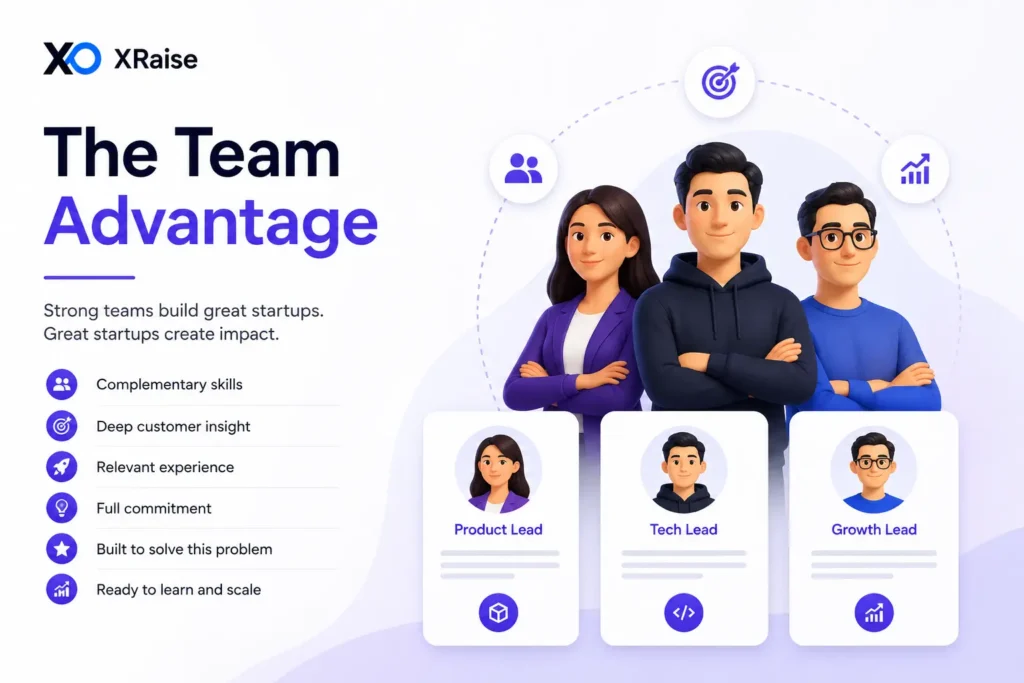
Your application should clearly show each founder’s role. Explain who leads product, sales, technology, and operations. Highlight which founder understands the customer best and why.
If the team is incomplete, say what is missing and how the accelerator can help. A thoughtful gap is better than pretending everything is covered.
This is also where founders should be honest about availability. Accelerator programs can be intense. If the program requires weekly sessions, relocation, demo day preparation, or investor meetings, the founding team needs room to participate without breaking customer delivery.
Pitch Deck and Application Answers
For many accelerators, the application form matters more than the deck. The deck may be reviewed later, but the form is usually the first filter.
Keep application answers direct. Answer the question asked. Use specifics. Avoid long strategy essays unless the prompt invites detail.
Your pitch deck should usually include:
| Section | What to Include |
|---|---|
| Problem | What problem are you solving and why it matters |
| Customer | Who experiences the problem and why they care |
| Solution | How your product solves the problem |
| Product or Demo | Product overview, screenshots, demo, or prototype |
| Market | Market size, opportunity, and target segment |
| Traction | Users, revenue, growth, pilots, or other evidence |
| Business Model | How the company makes money |
| Go-to-Market | Customer acquisition and growth strategy |
| Competition | Alternatives and your differentiation |
| Team | Founder backgrounds and relevant expertise |
| Why Now | Why this is the right time for the company to exist |
| Accelerator Goals | What you want from the accelerator (capital, mentorship, customers, partnerships, etc.) |
For early-stage programs, a 8-12 slide deck is usually enough. The deck should support the application, not replace clear written answers.
Founders can use collaborative planning tools like Miro through XRaise to map customer journeys, program priorities, and pitch story structure before the deck is finalized. Again, use tools only if they reduce friction.
Operational Readiness: Can You Actually Use the Accelerator?
Getting accepted is not the finish line. The real question is whether the accelerator will help the company make faster progress.
Before applying, check operational readiness:
| Readiness area | Question to answer | Risk if ignored |
|---|---|---|
| Founder time | Can the team attend and act on feedback? | Program becomes distraction. |
| Customer delivery | Will accelerator work hurt active customers? | Trust and revenue suffer. |
| Metrics | Can you measure progress during the cohort? | Mentorship becomes vague. |
| Fundraising plan | Do you know whether you want capital soon? | Investor access may be wasted. |
| Tooling | Can the team track tasks and deadlines? | Application and cohort work scatter. |
If you need a lightweight operating system, tools like Asana, ClickUp, or Slack can support application coordination, mentor follow-up, and cohort execution.
Do not add tools because you are applying. Add structure because the work needs ownership.
Common Accelerator Application Mistakes
The most common mistake is applying with a vague story. “We are building an AI platform for businesses” does not explain the customer, pain, wedge, or urgency.
Other mistakes include:
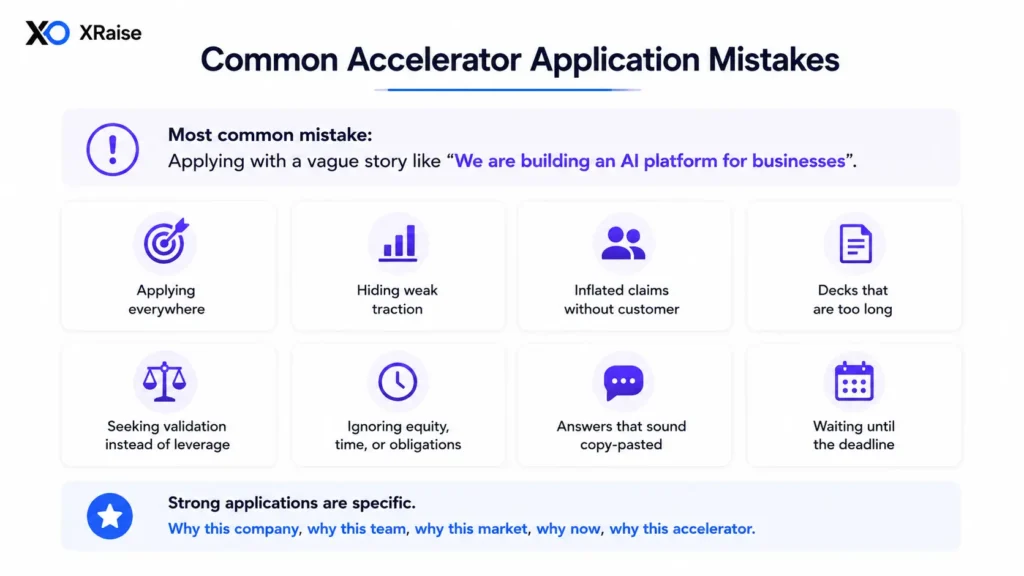
Strong applications are specific. They help a reviewer quickly understand why this company, why this team, why this market, why now, and why this accelerator.

Startup Perks AI Assistant
Have questions about credits? Let's chat instantly.
A 7-Day Accelerator Application Sprint
If the deadline is close, use a focused sprint instead of panic-writing the application.
Day 1
Confirm fit, terms, deadline, required materials, and whether the program supports your current stage.
Day 2
Rewrite the one-line pitch, problem statement, customer segment, and solution description.
Day 3
Gather traction evidence, customer notes, usage data, revenue data, demo links, and proof points.
Day 4
Update founder bios, team roles, company details, incorporation information, and public links.
Day 5
Draft application answers and remove vague language.
Day 6
Review the pitch deck, demo, and program-specific “why us” answer.
Day 7
Final review, link checks, founder approval, submission, and follow-up tracker.
This sprint is also useful if you decide not to apply. You still leave with cleaner positioning, better metrics, and a stronger founder narrative for the next opportunity.
Check Accelerator Readiness Through XRaise
Before applying to an accelerator, founders should compare the program against stage, traction, team readiness, product clarity, terms, timing, and the tools needed to execute during the cohort.
Use XRaise to explore startup perks, founder resources, and supporting tools that can help your team prepare application materials, manage deadlines, and reduce operating costs while you focus on the right opportunities.
Key Takeaways
- A startup accelerator application checklist should help founders decide fit before preparing materials.
- Strong applications connect problem, customer, traction, team, timing, and the specific value of the accelerator.
- Founders should prepare reusable assets such as a one-line pitch, traction snapshot, product demo, pitch deck, founder bios, and program-specific answers.
- Use XRaise to compare supporting startup tools and opportunities, then verify official accelerator terms before applying.
FAQ
What should be included in a startup accelerator application checklist?
A startup accelerator application checklist should include fit review, deadline, terms, one-line pitch, problem, customer, solution, traction, team bios, product demo, pitch deck, and a clear reason for applying.
When should a startup apply to an accelerator?
A startup should apply when the program matches its stage and can help the company reach a real next milestone, such as validating customers, closing pilots, improving go-to-market, or preparing for fundraising.
Do accelerators require revenue?
Not always. Some accelerators accept idea-stage or MVP-stage startups. Others prefer revenue, active users, pilots, or strong traction signals. Founders should check official program eligibility before applying.
How long should a startup accelerator pitch deck be?
For most early accelerator applications, a focused 8-12 slide pitch deck is enough. The deck should explain the problem, customer, solution, traction, market, business model, team, and why the accelerator matters now.
What is the biggest mistake in accelerator applications?
The biggest mistake is submitting a vague application that does not show customer focus, traction evidence, founder-market fit, or why the accelerator is useful for the startup’s next milestone.
Final Thoughts
A startup accelerator application checklist is most useful when it protects founder time. It should help your team prepare a better application, but also decide when to wait, pass, or focus on a stronger-fit opportunity.
If an accelerator can help your startup move faster toward a real milestone, prepare the materials carefully, keep the story specific, and review supporting founder resources through XRaise before submitting.
This article is written for XRaise.ai and is intended to help founders prepare and evaluate startup accelerator applications more clearly. Accelerator terms, eligibility rules, cohort deadlines, funding structures, and participation requirements can change, so readers should verify official terms before applying, accepting, or committing founder time.