TL;DR
- Credits should support proof, not tool collection.
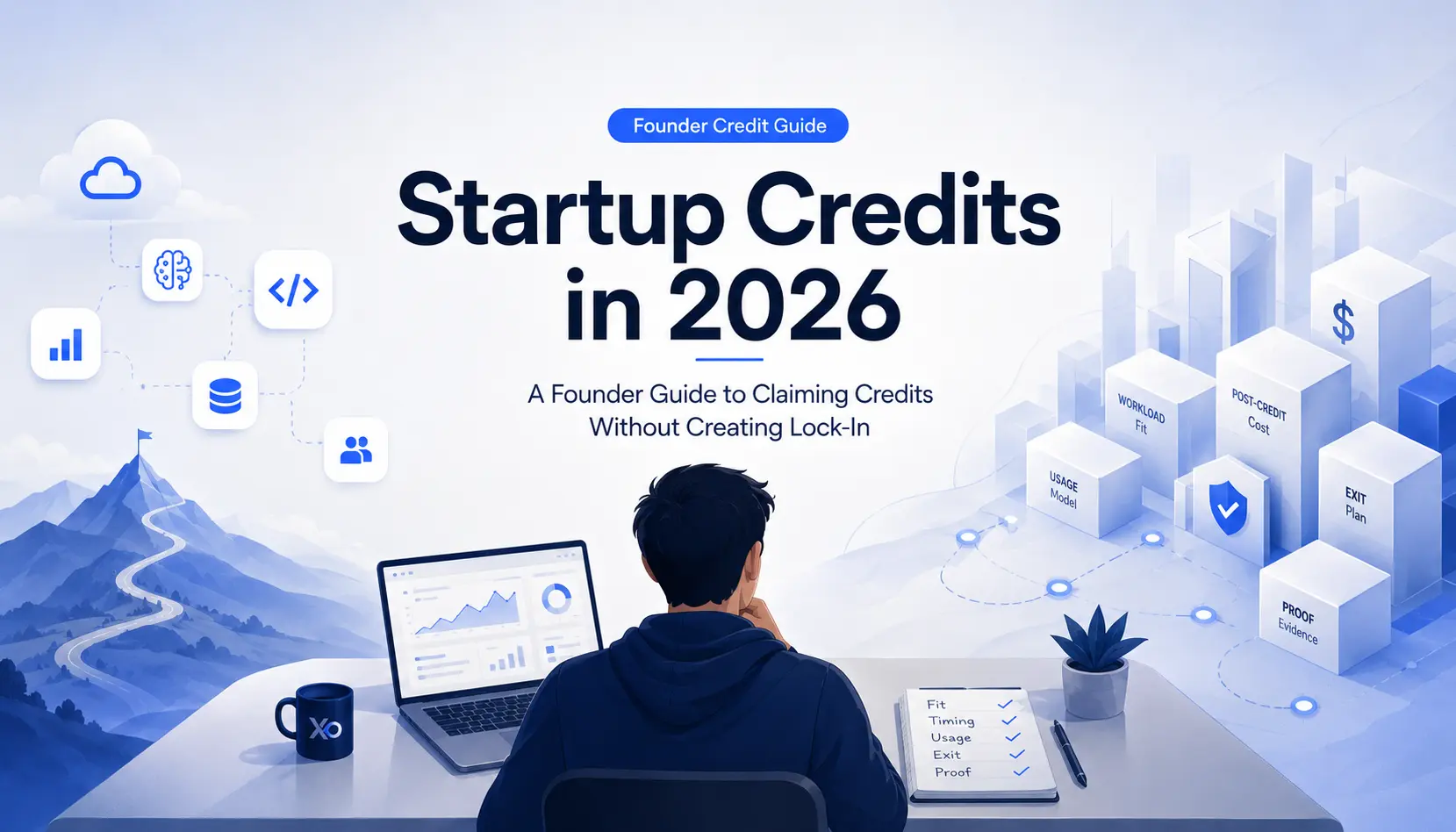
- Use Fit -> Timing -> Usage -> Exit -> Proof before claiming.
- Cloud, AI, API, infrastructure, analytics, CRM, and SaaS credits all behave differently.
- The biggest risk is building around credits that expire before the business model works.
- Early founders should delay credits until the workflow is ready.
- Technical and AI founders should model post-credit unit economics early.
- Use XRaise to compare credit offers before paying full price or committing to a vendor.
Why Startup Credits Matter Now
These credits are no longer a small bonus founders check after incorporation. In 2026, credits can shape early product decisions, infrastructure choices, AI experiments, sales workflows, analytics stacks, and runway planning.
Startup credits cover more than cloud infrastructure: they can include AI, API, developer, analytics, CRM, and SaaS benefits. Use this guide to decide which credit category fits the next real workflow; for a dedicated AWS, Google Cloud, and Azure comparison, see XRaise’s cloud credits comparison.
That makes them powerful. It also makes them risky.



A cloud credit can help a technical founder launch without burning cash on compute. AI credits for startups can make it cheaper to test transcription, inference, voice, agents, embeddings, data enrichment, or model workflows. API credits can lower the cost of testing maps, payments, messaging, identity, communication, or automation. SaaS credits can reduce early spend on CRM, analytics, productivity, support, design, finance, and operations tools.
But credit offers are not the same as free money. They usually come with eligibility rules, expiration windows, covered-service limits, billing setup requirements, usage caps, support terms, and post-credit pricing. Some credits are easy to claim but hard to use well. Others are generous but only valuable for a narrow workload. A few can quietly pull founders into a platform before the team understands whether that platform fits the product.
That is why the founder question should not be, “Which credit is biggest?”
The better question is:
Which credit offers help us prove the next thing without creating a cost or migration problem later?
This guide is built around that question. It explains what startup credits are, how they differ from discounts, which credit categories matter most in 2026, when founders should claim them, what risks to check, and how to use XRaise to find credit offers that match stage, stack, workload, and runway goals.
The Founder Problem: Credits Claimed Before the Company Knows What It Needs
Founders are naturally drawn to credit offers because the early company is resource-constrained. Every dollar saved feels like more experiments, more time, and more options.
The problem is that credits often arrive before the startup has enough operating clarity.
An idea-stage founder claims cloud credits before choosing an architecture. An AI founder activates model or voice credits before defining usage volume. A SaaS team picks analytics software before deciding which product questions matter. A bootstrapped founder signs up for multiple software programs because each one looks harmless in isolation. A seed-stage team accepts infrastructure credits that make the first six months cheaper, then discovers the second-year bill changes margin assumptions.
The surface issue is cost. The deeper issue is sequencing.
Credits work when they reduce spend on a workflow the team is already ready to use. They create drag when they make a premature decision feel responsible. The founder sees a credit balance and thinks, “We should use this.” The company starts building around it. Later, when credits expire, the stack is no longer a choice. It is a dependency.
That is how credit-driven lock-in happens. It is rarely dramatic. It usually looks like normal progress:
- a cloud service adopted because the credit made it cheap,
- an AI API embedded before cost per user was understood,
- an analytics stack implemented before decisions were defined,
- a CRM rolled out before sales motion repeated,
- a productivity tool added before process ownership existed,
- a time-limited benefit activated months before the team could use it.
The best credits protect runway and improve learning. The wrong credits create hidden complexity.
The Core Framework: Fit -> Timing -> Usage -> Exit -> Proof

Use this central framework before claiming any credit:
Fit -> Timing -> Usage -> Exit -> Proof
This is the credit version of a founder operating check. It keeps the team from confusing a generous offer with a good decision.
Fit
Fit asks whether the credit matches the company you are actually building.
Fit means something different in each category. For cloud credits, the platform should support your workload, team skill, latency needs, database choices, AI services, compliance expectations, and future scale. SaaS credits should support a real workflow your team already owns. API credits make sense when the API is part of a product, sales, support, or automation flow you can test soon.
Do not claim credits because the provider is famous. Claim them because the category maps to a bottleneck.
Timing
Timing asks whether the startup can use the credit before it expires.
Time-limited credits can be wasted if founders claim too early. A twelve-month credit sounds generous until six months disappear during customer discovery. If you are still interviewing users, validating pricing, or mocking workflows, free tiers may be enough. The better moment to activate a credit is when you have a clear use case for the next 30 to 90 days.
Usage
Usage asks how the credit will be consumed.
For usage-based products, founders should model expected traffic, requests, seats, compute hours, storage, events, contacts, messages, minutes, or API calls. Without a usage model, a credit is just a number. With a usage model, it becomes runway math.
Exit
Exit asks what happens after the benefit ends.

Startup Perks AI Assistant
Have questions about credits? Let's chat instantly.
Before a credit becomes part of the stack, check the exit path. The team should know whether it can downgrade, migrate data, switch vendors, cap spend, and survive the monthly bill after credits expire. If those answers are unclear, the credit is not ready to become part of the operating system.
Proof
Proof asks what decision the credit should help you make.
The answer should be concrete: lower infrastructure cost per active user, faster MVP launch, validated AI quality, working sales follow-up, clearer activation funnel, lower support load, better conversion tracking, or cleaner team operations.
If a credit does not help create proof, it may only create activity.
Credits vs Startup Discounts vs Free Trials
Founders often group credits, discounts, free trials, and perks together. That is understandable, but the differences matter.
Credits usually reduce a specific amount of eligible usage. They are common in cloud, AI, API, infrastructure, analytics, automation, and usage-based products. A credit balance may cover only certain services, plans, regions, or account types.
Startup discounts reduce pricing by a percentage or fixed amount. They are common in SaaS tools, CRM, productivity software, hiring platforms, finance tools, support products, and marketing software. Discounts are useful when the team expects ongoing use and understands renewal pricing.
Free trials give temporary access, often before purchase. They are useful for evaluation but can be too short for deep infrastructure or product adoption decisions.
Startup perks is the umbrella term. It can include credits, SaaS discounts for startups, free months, founder programs, partner benefits, accelerator offers, cloud support, technical enablement, or community access. To browse current offers, use the XRaise startup perks directory.
The practical difference is this:
| Offer type | Best for | Main risk | Founder question |
|---|---|---|---|
| Credits | Usage-based spend | Expiration, exclusions, overages | Will we use this credit on a real workflow? |
| Startup discounts | Ongoing software costs | Renewal pricing, seat growth | Would we still want this tool later? |
| Free trials | Short evaluation | Rushed decisions | Can we test the key workflow quickly? |
| Founder programs | Broader support | Eligibility and operational drag | Does the program match our stage? |
Credits are most valuable when they replace spend the company already expected to incur. They are least valuable when they encourage new usage the team cannot sustain.
Main Startup Credit Categories Founders Should Compare in 2026
The best credit category depends on the startup’s stage, product, workload, and operating priorities. A bootstrapped B2B founder, an AI infrastructure founder, and a product-led SaaS founder should not claim the same credits in the same order.
Cloud credits for startups
Cloud credits for startups reduce eligible cloud infrastructure spend. They can support compute, storage, databases, networking, AI services, app hosting, developer tooling, and production infrastructure depending on the provider and program terms.
This category matters most for SaaS, AI, developer tools, marketplaces, data products, infrastructure startups, and product-led companies that are moving from prototype to real usage.
Founders should compare AWS, Google Cloud, Microsoft Azure, DigitalOcean, Cloudflare, and other infrastructure paths based on workload fit, team familiarity, credit coverage, expiration, support, cost controls, and post-credit pricing. Official pages for AWS Activate Credits, Google for Startups Cloud, and Microsoft for Startups show how major programs frame startup credit access and eligibility.
Use cloud credits when you have a real workload coming soon. Wait if customer discovery can still happen with mockups, no-code tools, or a tiny free-tier setup.
Founders can also compare cloud credits for AI startup workloads before choosing infrastructure around a headline number.
AI credits for startups
AI credits for startups matter when AI is part of the product, workflow, or operating leverage. This category can include model platforms, voice APIs, transcription, inference, embeddings, image or video systems, agent workflows, data enrichment, AI infrastructure, and AI automation.
Use AI credits when you need to test model quality, latency, accuracy, privacy, evaluation, customer experience, and cost per successful output. Wait if the plan is only “we might add AI later.”
The key comparison is not just the credit amount. Founders should compare data policy, model quality, availability, speed, usage limits, fallback options, observability, and production pricing. AI credits can hide weak unit economics if the product works only while subsidized.
Voice AI founders can review Deepgram credits for voice AI startups, while AI product teams may also review Hugging Face startup access or compare ElevenLabs credits for voice workflows.

Deepgram for Startups
Up to $100K credits for APIs for voice and audio.
API credits and usage-based credits
API credits reduce spend on products charged by request, transaction, message, contact, minute, lookup, enrichment, or event. This category includes communications APIs, maps, identity, payments-adjacent services, data APIs, scraping, enrichment, automation, email, SMS, voice, video, support, and product analytics.
API credits are useful when the API is tied to product value or a repeated operational workflow. They are dangerous when the startup tests a vendor without modeling volume.
Compare rate limits, reliability, documentation, SDK quality, compliance, logs, support, pricing tiers, and overage controls. The founder should know what happens when requests increase. A cheap test can become expensive if the API sits inside the core product experience.
Infrastructure and developer credits
Developer and infrastructure credits can cover code tools, hosting platforms, database services, CI/CD, security, monitoring, observability, testing, deployment, and developer productivity products.
Use these credits when engineering throughput or reliability is becoming a bottleneck. Wait if one founder can still ship safely with a simple setup. Compare seat cost, usage limits, developer workflow fit, security needs, team onboarding, and data portability.
This category is especially relevant for technical founders who are choosing the build layer of the startup tool stack. It should support shipping and reliability, not create an enterprise-grade system before the product needs one.
Product analytics credits
Product analytics credits help founders understand activation, retention, funnels, cohorts, feature adoption, user behavior, and experiment results.
They matter when the product has enough usage to measure. Before usage exists, analytics credits can create dashboards with no decisions behind them.
Compare event volume, monthly tracked users, session replay, warehouse export, governance, implementation effort, and price after the credit ends. If founders are deciding whether a product loop works, product analytics credits can be very useful. If no one owns the metric, wait.
Founders can compare Mixpanel startup analytics credits when product behavior is becoming decision-critical.
CRM, sales, and growth credits
CRM and growth credits reduce costs around sales systems, pipeline management, customer records, marketing automation, enrichment, landing pages, ads, email, and sales intelligence.
Use them when founder-led sales or growth experiments have enough repetition to justify a system. Wait if all customer learning still lives in direct founder conversations.
CRM discounts for startups and growth credits can be useful, but they can also create seat growth and process bloat. Compare contact limits, automation, reporting, integrations, migration options, sales motion fit, and renewal pricing.
Founders with repeated pipeline activity can review HubSpot for Startups before building sales operations too early.

HubSpot for Startups
Up to 90% discount on an AI-powered customer platform.
SaaS credits for team operations
SaaS credits for startups cover productivity, collaboration, forms, docs, project management, design, support, finance, legal, payroll, and operations tools.
These credits are useful when work is getting lost, handoffs are breaking, customers need support, hiring has started, or finance workflows need control. They are wasteful when founders collect tools because each one feels cheap.
Compare seats, guests, admin controls, AI add-ons, storage, integrations, exports, security, and second-year pricing. The best SaaS credits for startups reduce the cost of systems you already need; they should not become an excuse to add another dashboard.
Founders can explore startup perks through XRaise before paying full price for software.
Practical Credit Comparison
| Credit category | Best for | Use when | Wait if |
|---|---|---|---|
| Cloud credits | SaaS, AI, data, infrastructure | A real workload is coming in 30-90 days | You are still validating manually |
| AI credits | AI-native products and AI workflows | You need to test quality, latency, and cost | The AI use case is vague |
| API credits | Product features and repeated workflows | Usage volume can be estimated | You cannot model requests or overages |
| Developer credits | Technical teams shipping product | Engineering speed or reliability matters | One simple setup still works |
| Analytics credits | Product-led learning | Users are active and metrics matter | There is no behavior to measure |
| CRM and growth credits | Founder-led sales and early GTM | Leads, follow-ups, or campaigns repeat | A spreadsheet still captures reality |
| SaaS operations credits | Collaboration, support, finance, ops | Workflows have owners | Tools are being collected speculatively |
What to Do at Each Startup Stage
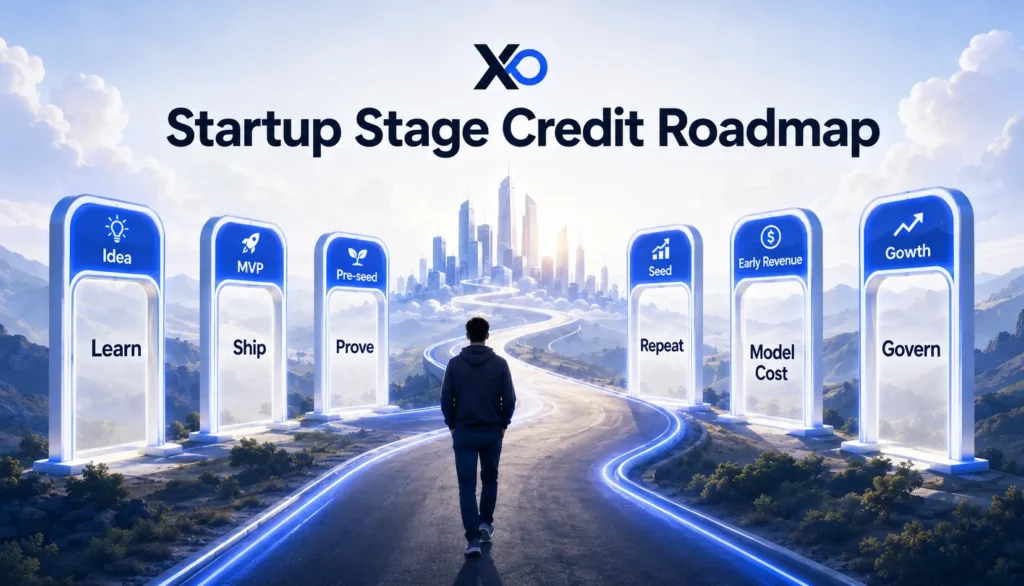
Idea stage
At idea stage, the most valuable resource is clarity, not credits. Use free plans, lightweight docs, customer interviews, landing pages, and manual workflows. Do not activate time-limited credits unless you can use them immediately.
At this stage, the main focus is problem validation, customer language, willingness to pay, and founder-market insight.
Use free tiers, simple research tools, lightweight forms, manual outreach, and a basic landing page.
Avoid claiming cloud, AI, API, or SaaS credits before the workflow exists.
Measure problem frequency, urgency, customer segment clarity, and response quality.What to measure: problem frequency, urgency, customer segment clarity, and response quality.
MVP stage
At MVP stage, founders can begin checking cloud credits, developer credits, API credits, and AI credits if the product requires them. The key is timing. Claim the credit when the MVP is ready to consume it, not when the idea first appears.
At MVP stage, the priority is shipping, user feedback, reliability, and early usage.
Use cloud credits, AI credits, developer credits, and lightweight analytics only when they support product work already in motion.
Avoid overbuilding infrastructure just because credits make it feel affordable.
Measure activation, usage, cost per test, error rates, latency, and customer feedback.
Pre-seed
At pre-seed, founders should connect credit decisions to runway planning. The team may be building product, testing GTM, running pilots, and preparing for fundraising or revenue.
At pre-seed stage, the priority is proof of demand, product usage, early sales process, and cost discipline.
Use cloud credits, AI credits, API credits, analytics credits, CRM credits, and startup software discounts only when they support active workflows.
Avoid building around a vendor before modeling post-credit pricing.
Measure runway impact, conversion, retention signals, infrastructure cost per user, and sales follow-up quality.
Seed
At seed stage, credits can support repeatability. The company likely has more users, more team members, more systems, and more vendor exposure. Credit decisions should move from opportunistic savings to operating discipline.
At seed and early revenue stage, the priority is repeatable workflows, margins, security, customer delivery, and decision visibility.
Use more serious cloud programs, analytics, CRM, support, security, observability, operations, and finance tools when they support workflows the team already depends on.
Avoid expanding the stack just because budget increased.
Measure gross margin, CAC payback, activation, retention, support load, cloud spend, and renewal exposure.
Early revenue
At early revenue, credits should support the economics of delivery. If a credit hides margin problems, founders need to know that before sales scale.
What matters most: cost to serve, pricing, retention, customer support, and revenue operations.
What to use: credits that reduce cost in core delivery workflows, analytics, support, CRM, finance, and infrastructure.
What to avoid: subsidized unit economics that collapse after credits expire.
What to measure: gross margin, cost per customer, expansion, churn, support cost, and post-credit monthly spend.
Growth stage
At growth stage, credits become less about survival and more about procurement, consolidation, governance, and vendor strategy.
What matters most: security, compliance, ownership, procurement, integrations, and predictable cost.
What to use: credits or programs that support scaling workloads, enterprise selling, security, international operations, and infrastructure optimization.
What to avoid: keeping early-stage tools only because they were initially discounted.
What to measure: vendor concentration, renewal risk, migration cost, admin burden, and cost efficiency.
How to Choose Credits Without Creating Lock-In
Use these decision rules before claiming credits:
- Start with the workflow, not the offer.
- Check whether the startup is eligible today.
- Confirm which services, plans, regions, and usage types are covered.
- Activate only when the team can use the credit within 30 to 90 days.
- Set billing alerts before usage starts.
- Model the monthly bill after the credit expires.
- Keep an exit path for data, infrastructure, and workflows.
- Assign an owner to each credit.
- Define one proof metric before adoption.
- Review usage monthly until the benefit ends.
These rules are simple, but they prevent most credit mistakes. The goal is not to avoid credits. The goal is to use them as runway tools instead of vendor traps.
Founder Use Cases
AI SaaS founder
An AI SaaS founder may need cloud credits, AI credits, API credits, and analytics credits early. The product might depend on inference, storage, embeddings, voice, transcription, or workflow automation.
The key is to model cost per active user before growth. If credits make the first pilots cheap but production usage is uneconomic, the founder needs to know before pricing and architecture harden.
Bootstrapped B2B founder
A bootstrapped B2B founder should prioritize credits and discounts that reduce planned spend. CRM, landing pages, forms, analytics, support, productivity, and email tools may matter more than large infrastructure credits.
The rule is: do not let credits create a paid stack before revenue discipline exists. Use them to extend runway, not to imitate a larger company.
Technical founder building a developer tool
A technical founder building a developer tool may need cloud, database, observability, API, security, and developer workflow credits. These can materially reduce early infrastructure costs.
The risk is over-optimizing around one provider before customer usage patterns are clear. Keep architecture as portable as practical, track consumption weekly, and test the cost of the core workflow under realistic usage.
Product-led SaaS team
A product-led SaaS team should use credits around analytics, cloud, lifecycle messaging, support, experimentation, and data workflows once users exist.
The danger is measuring everything before deciding what matters. Product analytics credits help only when the team defines the activation, retention, and conversion decisions the data should improve.
Mistakes and Anti-Patterns
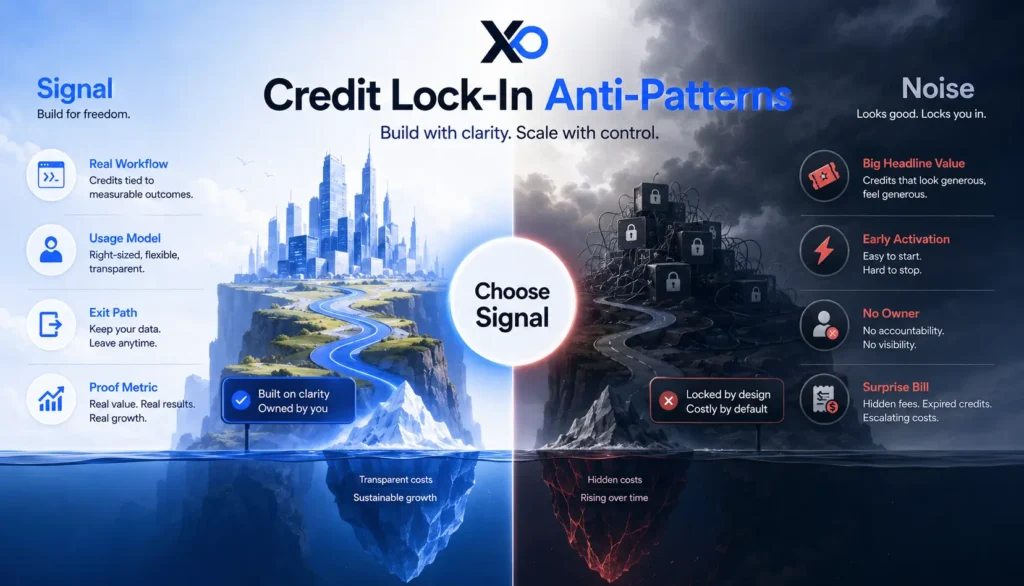
Mistake 1: Claiming credits because the number is large
Founders do this because a big balance feels like leverage. It hurts because headline value can hide poor fit, exclusions, expiration, or expensive post-credit pricing.
Do this instead: compare the credit to expected usage, not theoretical maximum value.
Mistake 2: Activating credits too early
Founders activate credits during excitement, then lose months before the workflow is ready. The expiration clock starts before the company can benefit.
Do this instead: wait until the startup has a concrete use case for the next 30 to 90 days.
Mistake 3: Ignoring eligible spend
Not every product, API, support plan, marketplace service, region, or overage is covered by a credit.
Do this instead: confirm covered services before architecture or workflow decisions depend on the credit.
Mistake 4: Building around subsidized usage
Credits can make unhealthy economics look fine. This is especially dangerous for AI products, infrastructure-heavy products, and API-based workflows.
Do this instead: calculate cost per user, cost per workflow, and gross margin after credits expire.
Mistake 5: Creating credit-driven lock-in
Founders sometimes choose a vendor because credits are available, then build data, integrations, and workflows that are hard to move.
Do this instead: define the exit path before the system becomes core.
Mistake 6: Treating SaaS credits as harmless
SaaS credits often create seats, processes, integrations, automations, and renewal dates. Even cheap tools create ownership.
Do this instead: assign an owner and proof metric to every tool.
Mistake 7: Forgetting renewal timing
Credit periods and renewals can end at awkward moments, often when usage is finally growing.
Do this instead: put expiration, renewal, and review dates in the operating calendar.
Practical Playbook
Step 1 – Map the workflows
List the workflows your startup will actually run in the next quarter: hosting, AI inference, user analytics, customer follow-up, support, automation, payments, finance, team operations, or marketing experiments.
Step 2 – Estimate usage
Estimate the unit that drives spend: users, requests, events, minutes, messages, seats, contacts, storage, compute hours, or transactions. A rough model is better than no model.
Step 3 – Search for credits before paying
Use XRaise startup perks to compare credit offers, startup discounts, SaaS credits, and founder programs before entering a credit card or committing to a vendor.
Step 4 – Verify eligibility and terms
Check stage, funding status, region, incorporation, company age, prior usage, partner requirements, expiration, covered services, payment method rules, and post-credit pricing. The XRaise startup eligibility guide can help founders think through fit before applying.
Step 5 – Set controls before usage grows
Set billing alerts, usage dashboards, owners, renewal reminders, and review dates. For usage-based credits, define a maximum monthly spend after credits expire.
Step 6 – Keep, switch, or exit
At least one month before the credit ends, decide whether to keep the vendor, downgrade, negotiate, migrate, or replace the workflow. Do not wait until the first full-price invoice arrives.
FAQ
What are startup credits?
They are promotional credits that reduce eligible usage or spend for startups. They often apply to cloud infrastructure, AI tools, APIs, analytics, developer tools, SaaS products, and founder programs. The exact value depends on eligibility, covered services, activation timing, expiration, and how much of the credit your team can actually use.
Are startup credits the same as startup discounts?
No. Credits usually cover a specific amount of eligible usage, while startup discounts reduce the price of a product or plan. Credits are common in usage-based products like cloud, AI, APIs, and analytics. Discounts are common in SaaS tools where founders pay by seat, plan, or subscription period.
What credit offers should founders check first in 2026?
Founders should check the credits tied to their next real workflow. Technical and AI founders may start with cloud credits for startups, AI credits for startups, API credits, and developer tools. Product-led and sales-led founders may prioritize analytics, CRM, support, automation, and SaaS credits for startups.
When should founders claim cloud credits for startups?
Claim cloud credits when the startup has a real infrastructure workload coming soon, such as an MVP, beta, production launch, AI pipeline, database, or customer-facing app. Wait if the company is still validating with interviews, mockups, or manual workflows. Timing matters because many credits expire.
How should AI founders compare AI credits for startups?
AI founders should compare more than credit amount. Check model quality, latency, privacy, data retention, evaluation workflow, production pricing, rate limits, observability, and fallback options. The real question is whether the product can work economically after the credits expire.
Are SaaS credits for startups worth using?
SaaS credits are worth using when they reduce spend on a tool your team already needs. They are less useful when they create extra seats, dashboards, workflows, and renewal dates. Assign an owner, define the workflow, and check the second-year price before adopting another tool.
How can credits extend runway?
Credits extend runway when they replace spending the company already planned to take on. They do not help if they push founders into tools, vendors, or workloads that were not necessary. The strongest credits lower the cost of learning, building, selling, or operating without adding avoidable complexity.
What is credit-driven lock-in?
Credit-driven lock-in happens when a startup chooses a vendor mainly because credits are available, then builds architecture, data, integrations, or workflows that are hard to move. The credit makes the first phase cheaper, but the company pays later through migration cost, renewal pricing, or weak unit economics.
Should bootstrapped founders use credits?
Yes, but carefully. Bootstrapped founders should use credits that reduce planned spend and extend runway. They should avoid credits that create unnecessary tools or infrastructure. Free tiers, manual workflows, and small paid plans may be better until a workflow is ready.
How can XRaise help founders find credit offers?
XRaise helps founders compare credits, startup perks, SaaS discounts, cloud programs, AI tool offers, and founder resources in one place. Founders can use XRaise to find relevant offers, check fit, and avoid paying full price before reviewing available startup programs.
Final Takeaway
The best credits in 2026 are not the largest credits. They are the credits that match your stage, workload, stack, and runway goals.
Use Fit -> Timing -> Usage -> Exit -> Proof before claiming anything. If the credit supports a real workflow, can be used in time, has clear cost controls, and helps create evidence, it can be a meaningful runway advantage. If it creates lock-in, hides weak unit economics, or adds a tool with no owner, wait.
Before paying full price or building around a vendor, use XRaise to compare credits, SaaS credits, cloud programs, and founder perks against the company you are actually building.