Last updated: June 2026
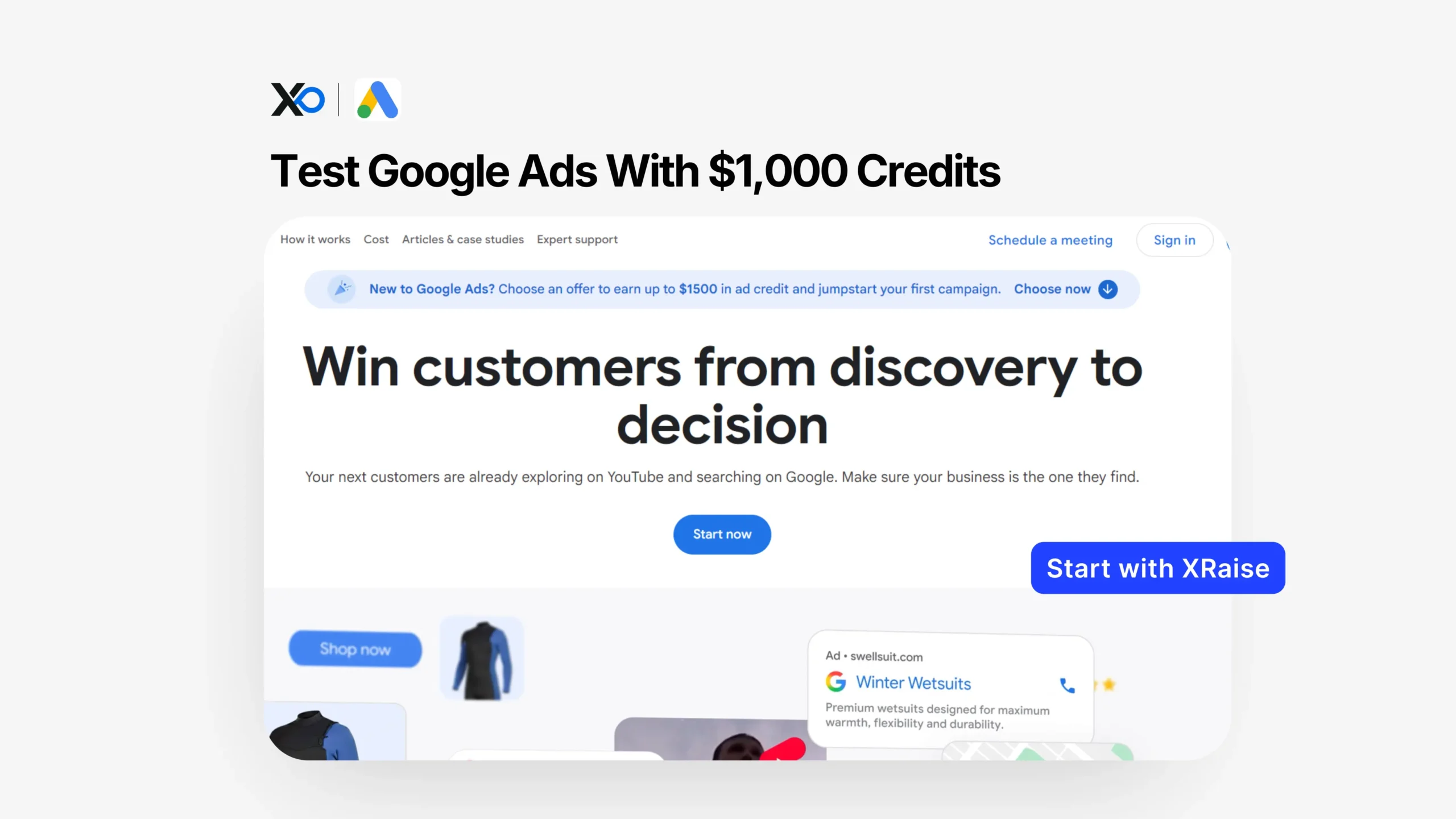
The Google Ads promo code can help eligible startups access up to $1,000 in Google Ads credits through the XRaise-listed startup offer. The final value, eligibility rules, spend threshold, activation timing, and expiration window depend on the live Google Ads promotion terms.
This guide explains what the offer includes, who it fits, what founders should verify, and how to avoid wasting the credit on broad campaigns.
Related Posts

Before you spend, use XRaise to check the current startup offer. Then verify the official Google Ads promotion terms inside Google Ads before launching campaigns.
TL;DR
- What it is: Eligible startups can access up to $1,000 in Google Ads credits through XRaise.
- Who qualifies: Usually new Google Ads advertisers with billing set up and no prior advertising history for the same business.
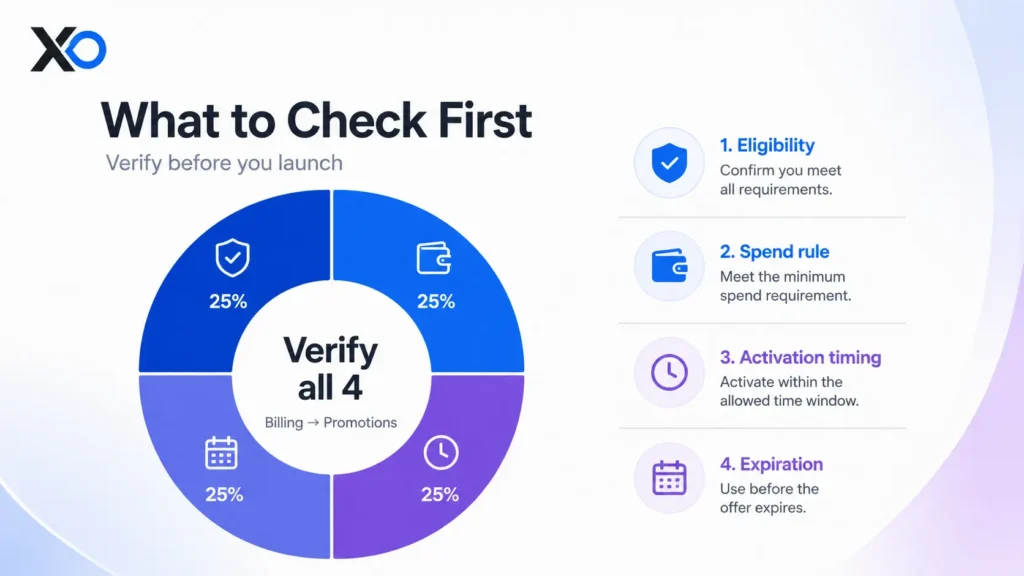
- What to check: Spend thresholds, activation timing, region rules, credit expiration, and Billing → Promotions status.
- How XRaise helps: XRaise helps founders find startup credits, perks, and software discounts before paying full price.
Google Ads promo code offer snapshot
The Google Ads promo code is most useful when your startup already has a clear campaign goal. It can help you test search demand, landing page conversion, and early customer acquisition without taking on the full cost of the first test.
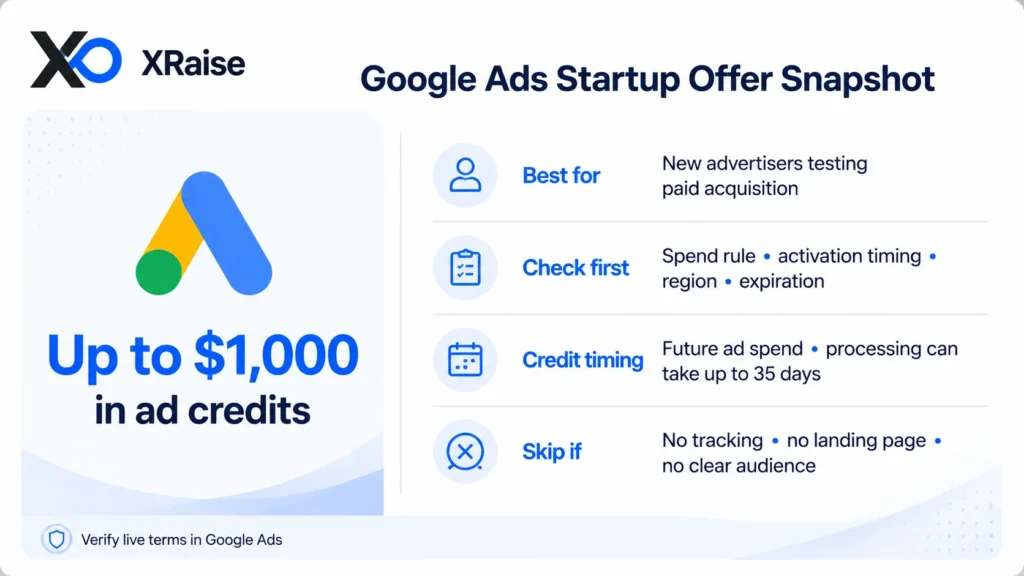
Google says promotional-offer criteria vary by promotion, so founders should review the exact spend requirement and credit amount before enrolling. Google also notes that the credit is applied to future ad spend after the account meets the offer requirements.
If you are comparing this with other savings programs, review XRaise’s broader startup perks and credits directory before choosing where to spend first.

What is Google Ads and why do startups use it?
Google Ads helps startups reach potential customers across channels like Search, Display, YouTube, and Shopping. For founders, the value is not only traffic. The real value is fast market feedback.
Search ads can show whether people are already looking for the problem you solve. You can test keywords, landing pages, offers, and conversion paths quickly.
That matters because early-stage teams need evidence. A founder can use a small campaign to answer practical questions:
| Startup question | What Google Ads can test |
|---|---|
| Do buyers search for this problem? | Keyword demand |
| Which message gets clicks? | Ad copy response |
| Can the landing page convert? | Lead or signup rate |
| What is early CAC? | Cost per lead or customer |
| Should we scale paid ads? | Repeatable acquisition signal |
However, Google Ads can burn cash quickly. The credit is only useful if your startup has a focused test.
Do not start with broad keywords, vague messaging, or a homepage as the landing page. Start with one audience, one offer, and one measurable goal.
What do startups get with this promo code?
The Google Ads promo code gives eligible startups ad credit that can be used toward Google Ads campaigns after the offer requirements are met. XRaise describes the startup offer as up to $1,000 in Google Ads credits through its partner program.
If your team is also managing infrastructure costs, compare this offer with AWS Activate Credits for Startups before deciding where credits can protect the most runway.
Promotional offers are not cash or refunds. Instead, Google applies them as ad credits toward future advertising costs once the account meets the offer requirements.
| Offer detail | What it means |
|---|---|
| Up to $1,000 in credits | Extends your first campaign test |
| Spend-match model | You may need to spend first |
| Future ad spend | Credit applies after qualification |
| Processing delay | Credit can take up to 35 days |
| Expiration | Earned credits often have a limited use window |
| Billing required | Payment method setup may be needed |
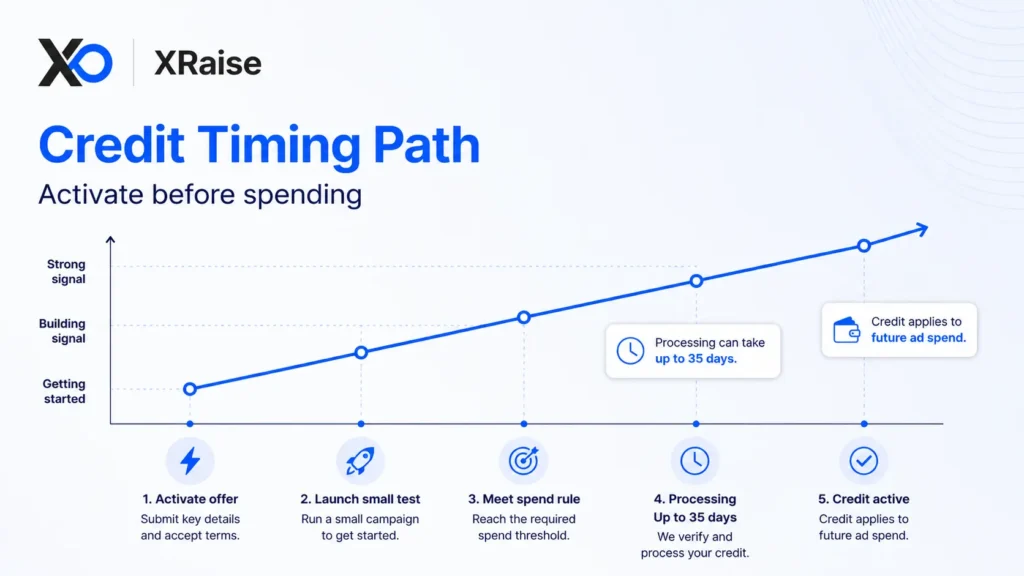
Google explains that, after the spend requirement is met, credit processing can take up to 35 days. Google also says promotional credits cannot pay for costs before the credit was applied or cover the spend requirement itself.
That timing matters. Founders should activate the offer before spending, track the promotion status, and avoid assuming the credit will appear instantly.
Who qualifies for the Google Ads promo code?
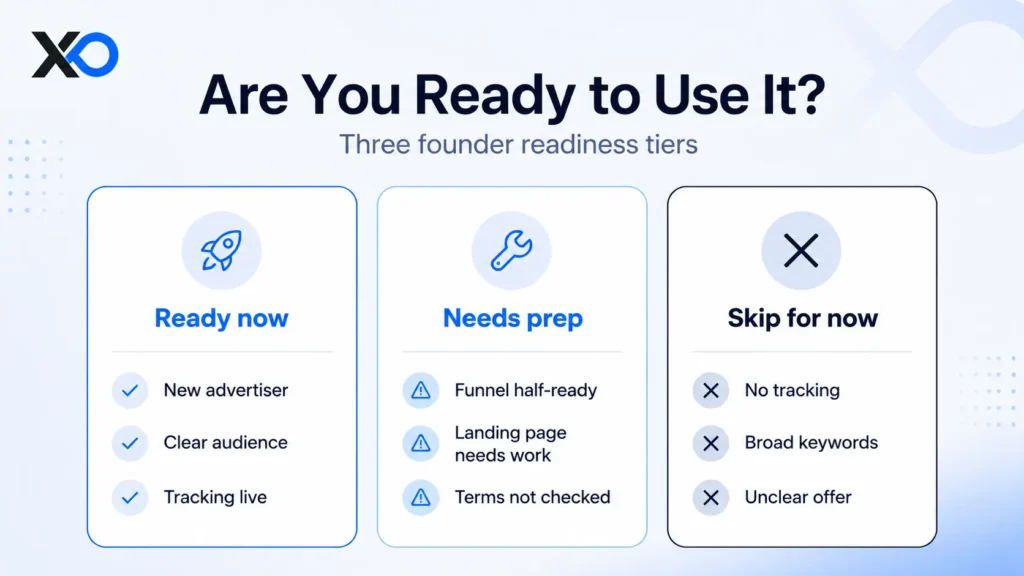
The strongest fit is usually a new Google Ads advertiser with a startup-ready campaign plan. Google says new advertiser offers generally require the account to be less than 14 days old at redemption, have a valid payment method, and not have advertised with Google Ads before for the same business through another account.
| Eligible founder profile | What this means |
|---|---|
| New Google Ads advertiser | Best fit for first campaign tests |
| Billing-ready startup | Google usually requires payment setup |
| Clear campaign goal | Track demos, leads, trials, or purchases |
| Policy-compliant business | Ads must follow Google Ads rules |
| Eligible region | Country rules may vary by offer |
This offer is not ideal for every startup.
| Not a fit | Why it may fail |
|---|---|
| Existing advertiser | Prior billing or promo use may block eligibility |
| No conversion tracking | You may spend without learning |
| Weak positioning | Ads will not fix unclear messaging |
| No landing page | Traffic has nowhere useful to convert |
| Tiny margins | Paid clicks may hurt unit economics |
Use the offer when your funnel can teach you something. Skip it when your audience, message, or offer still needs basic work.
Is the Google Ads promo code worth it for early-stage startups?
Yes, the Google Ads promo code is worth it if your startup can turn paid traffic into useful learning. It is not worth it if the team treats the credit like free money and launches broad campaigns without tracking.
The best use case is a narrow acquisition test.
For example, a SaaS founder can test demo requests from high-intent search terms. An ecommerce founder can test Shopping campaigns. A local service startup can test demand in one city.
| Startup stage | Worth it? | Why |
|---|---|---|
| Pre-seed with no landing page | Not yet | Build the funnel first |
| Pre-seed with clear ICP | Maybe | Test narrow search demand |
| Seed-stage SaaS | Yes | Validate CAC and demo intent |
| Ecommerce startup | Yes | Test Shopping or Search demand |
| Enterprise startup | Maybe | Paid search may support high-intent pages |
The key is discipline. Set daily budget caps. Choose one conversion goal. Review search terms weekly. Pause weak keywords before they drain the budget.
If you are still building your early software stack, the XRaise guide to 25 Best Startup Tools for Founders in 2026 can help you decide which tools deserve budget first.
How to access the Google Ads promo code through XRaise
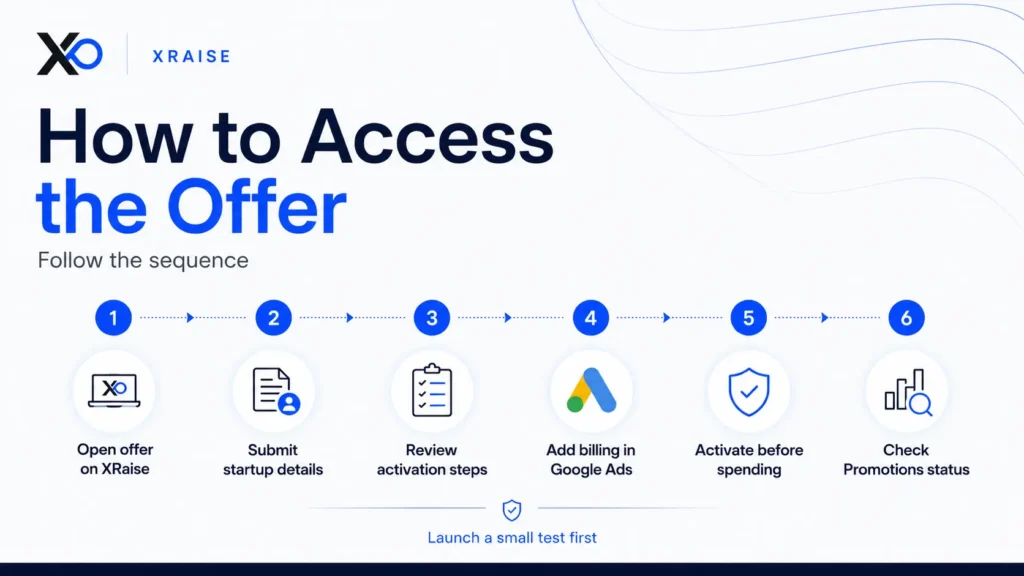
Use XRaise to check whether your startup can access the current Google Ads startup offer before paying full price.
Here is the clean claim path:
- Open the Google Ads offer through XRaise, confirms the startup path.
- Submit startup details, helps check eligibility.
- Review activation steps, avoids missed requirements.
- Add billing in Google Ads, required for most campaigns.
- Activate before spending, earlier spend may not count.
- Check Billing → Promotions, tracks credit progress.
Google says advertisers can monitor promotional-credit progress on the Google Ads homepage or in the Promotions section. It also notes that only spend after redeeming the offer counts toward the promotional requirement.
After activation, launch a small test campaign. Do not scale until you know which keywords, messages, and landing pages are working.
How to maximize the Google Ads promo code
The best way to maximize the Google Ads promo code is to treat it like a controlled experiment. Do not try to test every channel at once.
| Tip | What to do | Why it matters |
|---|---|---|
| Activate first | Accept or enter the offer before spending | Helps eligible spend count |
| Start with Search | Use high-intent keywords first | Cleaner demand signal |
| Set one goal | Track leads, demos, trials, or sales | Clicks alone are not enough |
| Add negatives | Block irrelevant searches | Protects budget |
| Use one landing page | Match the ad to one offer | Easier conversion reading |
| Review weekly | Pause weak ads and keywords | Prevents silent waste |
| Keep caps low | Scale only after signal improves | Reduces burn |
First, choose one campaign goal. Then choose one audience. Then test a small keyword group.
Avoid changing everything at once. If the campaign underperforms, adjust one variable at a time: keyword, ad copy, landing page headline, or offer.
Even if the first campaign fails, the startup should leave with better keyword data, sharper messaging, and clearer funnel insight.
If you need a dedicated landing page before running ads, compare the Unbounce Discount for Startups before paying full price.
When should startups consider alternatives?
Google Ads works best when people already search for what you sell. If your startup is creating a new category, you may need demand creation before demand capture.
| Situation | Better option to consider |
|---|---|
| Buyers do not search for the category | Founder-led content or community |
| You sell a visual consumer product | Meta Ads or TikTok Ads |
| You target enterprise accounts | Outbound or ABM |
| You have no landing page | Build the funnel first |
| You have no analytics | Set up tracking before ads |
| You need long-term demand | SEO and partnerships |
For many startups, the smartest move is not choosing one channel forever. It is using the Google Ads credit to learn where paid acquisition fits in the broader growth mix.

Startup Perks AI Assistant
Have questions about credits? Let's chat instantly.
FAQ
Is there a Google Ads promo code for startups?
Yes, eligible startups may access a Google Ads promo code or promotional credit through XRaise. The offer is up to $1,000 in Google Ads credits for startups. Founders should still verify the live offer terms because Google says promotion criteria vary by offer.
How much can startups get with Google Ads credits?
Startups can access up to $1,000 in Google Ads credits through the XRaise startup offer. The final value may depend on the active promotion, region, account eligibility, billing setup, and spend threshold. Always check the offer details before launching campaigns.
Does the Google Ads credit apply immediately?
Usually, no. Google says that after the spend requirement is met, the system processes the ad credit and this can take up to 35 days. If all requirements are met, the credit becomes active on the Promotions page and applies to future ad spend.
Can startups use the credit for old ad spend?
No. Google says promotional credits cannot be used for costs accrued before the credit was applied, and only spend after redeeming the offer counts toward the requirement. Activate the offer first, then start spending.
Who should use this offer?
This offer fits startups with a clear audience, a focused landing page, and conversion tracking. It is especially useful for SaaS, ecommerce, local services, and B2B startups with existing search demand. It is weaker for startups that still need to define positioning or build their funnel.
Can I combine this with other Google Ads offers?
Do not assume you can combine Google Ads offers. Google says promotion criteria and requirements vary by offer, so founders should check the specific terms before trying to stack credits, coupons, or partner offers.
Should your startup use the Google Ads startup offer?
The Google Ads promo code is a practical startup credit for founders who want to test paid acquisition with lower upfront risk.
It works best when your startup has a clear audience, a focused landing page, conversion tracking, and a narrow campaign goal.
The main tradeoff is timing. Google says promotional credits can take up to 35 days to process after requirements are met, and credits apply to future advertising costs rather than previous spend.
Check the current offer through XRaise before spending. Then verify the official Google Ads promotion terms, activate the offer, and track every campaign from day one.
Related reading: Google Cloud credits for startups · check if your startup is eligible for founder perks and credits · best startup perks for founders in 2026